
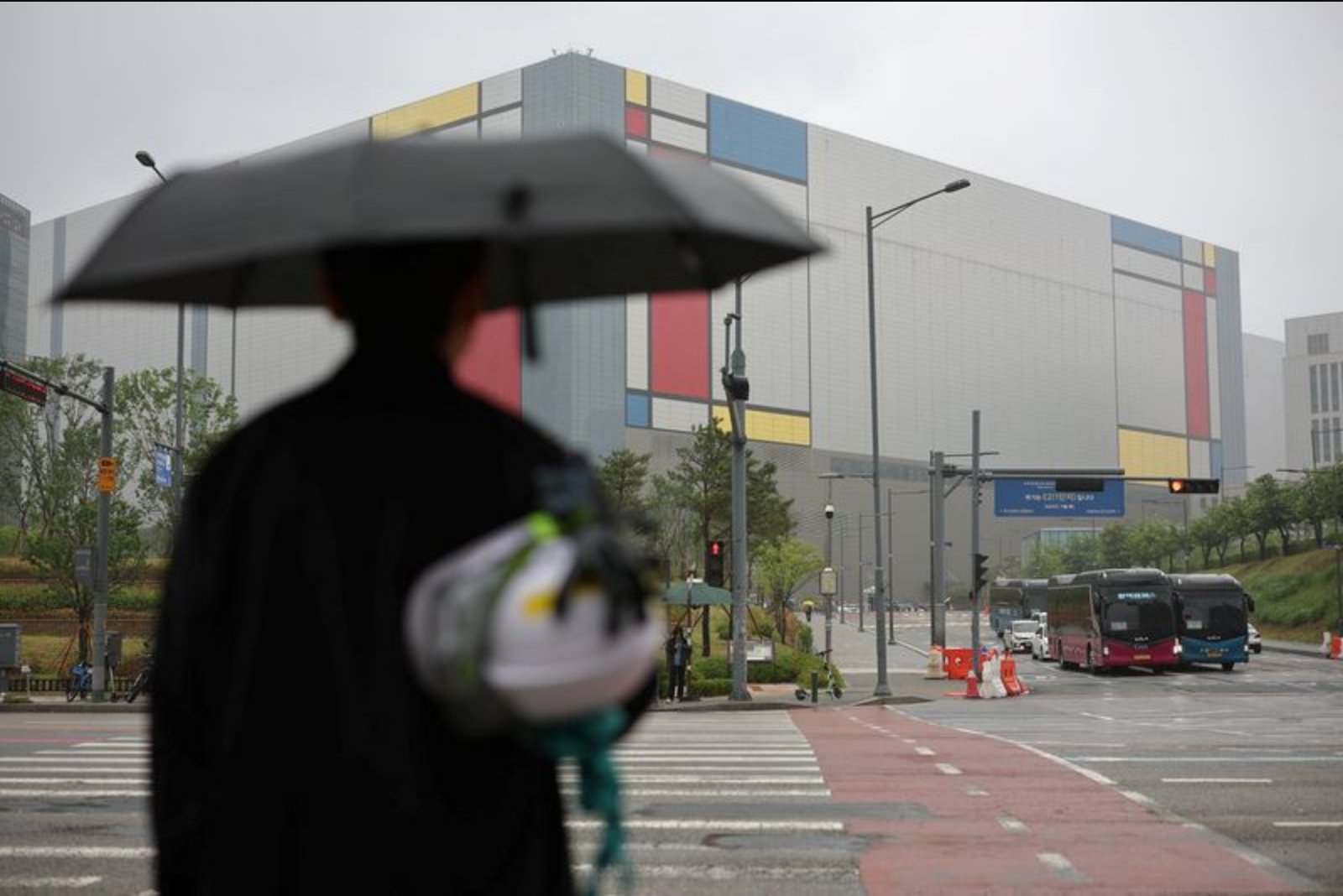
The dispute over pay at Samsung Electronics is not fully resolved despite a last-minute deal that averted a strike set to begin today. The agreement, reached late last night, prevented industrial action at the 11th hour. However, a faction of dissatisfied shareholders has threatened to challenge the agreement, creating uncertainty about whether the settlement will stand.
Details of the arrangement have attracted attention. The package includes bonuses for some employees amounting to about $416,000, predominantly delivered in stock. The structure and size of those awards have been a focal point for scrutiny and have contributed to the shareholder backlash.
Investors, for now, appear to have looked past the internal dispute. Samsung shares rose by more than 7% following the announcement, and broader South Korean equities climbed over 7.5%. Rival memory chipmaker SK Hynix, whose bonus scheme initially sparked the wider pay conflict at Samsung, surged by more than 11%.
Oil flows and regional tensions
Markets also took comfort from the passage of three supertankers carrying a combined 6 million barrels of oil through the Strait of Hormuz, even as reports indicated Iran is tightening its control over the waterway. The successful transit eased some near-term supply concerns, supporting risk-on positioning in equity markets.
Chipstocks and mixed signals from Nvidia
MSCI’s index of Asia-Pacific shares outside Japan rallied about 3%, helped by stronger-than-expected revenue guidance from Nvidia, which buoyed chipmaker shares across the region. Despite that, Nvidia itself fell 1.3% in after-hours trading as some investors sought more from the company’s update - a reaction that left S&P 500 e-mini futures broadly unchanged at the last check.
Japan data lifts Nikkei
Japan’s Nikkei 225 jumped 3.6% after S&P Global’s flash manufacturing PMI signaled expansion in May, though at a slower pace than in April. Separately, exports in April rose by an annual 14.8%, a rebound that has reduced immediate worries about stagflation and has strengthened market expectations that the Bank of Japan may raise interest rates next month.
Macro backdrop and market backdrop
With AI-related trades remaining robust and investors digesting the anticipated SpaceX initial public offering, markets have shown a tendency to look past new geopolitical flashpoints. One such development is U.S. President Donald Trump’s announcement that he would speak with Taiwan’s Lai Ching-te - a move described in the market context as likely to anger China. Taiwan’s foreign ministry said Lai would welcome such a conversation, which would represent the first direct talks since Washington shifted diplomatic recognition from Taipei to Beijing in 1979. China’s foreign ministry had not issued a response at the time of the report.
Early European trade and the day’s calendar
In early European trading, pan-region futures were up 0.1%, FTSE futures were down 0.1% and German DAX futures were flat. Corporate announcements due include Auto Trader, Easyjet, QinetiQ, Sage Group, BT and Walmart.
Economic releases slated for the day include HCOB flash manufacturing and services PMIs for France and Germany for May, and the UK’s flash manufacturing and services PMIs for May along with CBI Trends Orders for May. Sovereign debt supply will also be in focus: France is auctioning 3-year, 4-year, 6-year, 8-year, 10-year and 21-year notes; Germany has a 10-year sale; and the UK is selling 10-year government debt.
Promotional note on NVDA evaluation
The piece also included a reference to an AI-based stock evaluation tool that assesses whether a $2,000 investment in Nvidia is warranted. That tool evaluates companies using more than 100 financial metrics and highlights stocks based on fundamentals, momentum and valuation. It noted past winners from its strategies and invited readers to check whether Nvidia appears in any current AI-generated portfolios.
Overall, the mix of company-specific labor issues, commodity transit developments, mixed corporate guidance and a busy economic calendar is providing both directional drivers for markets and sources of near-term uncertainty.