
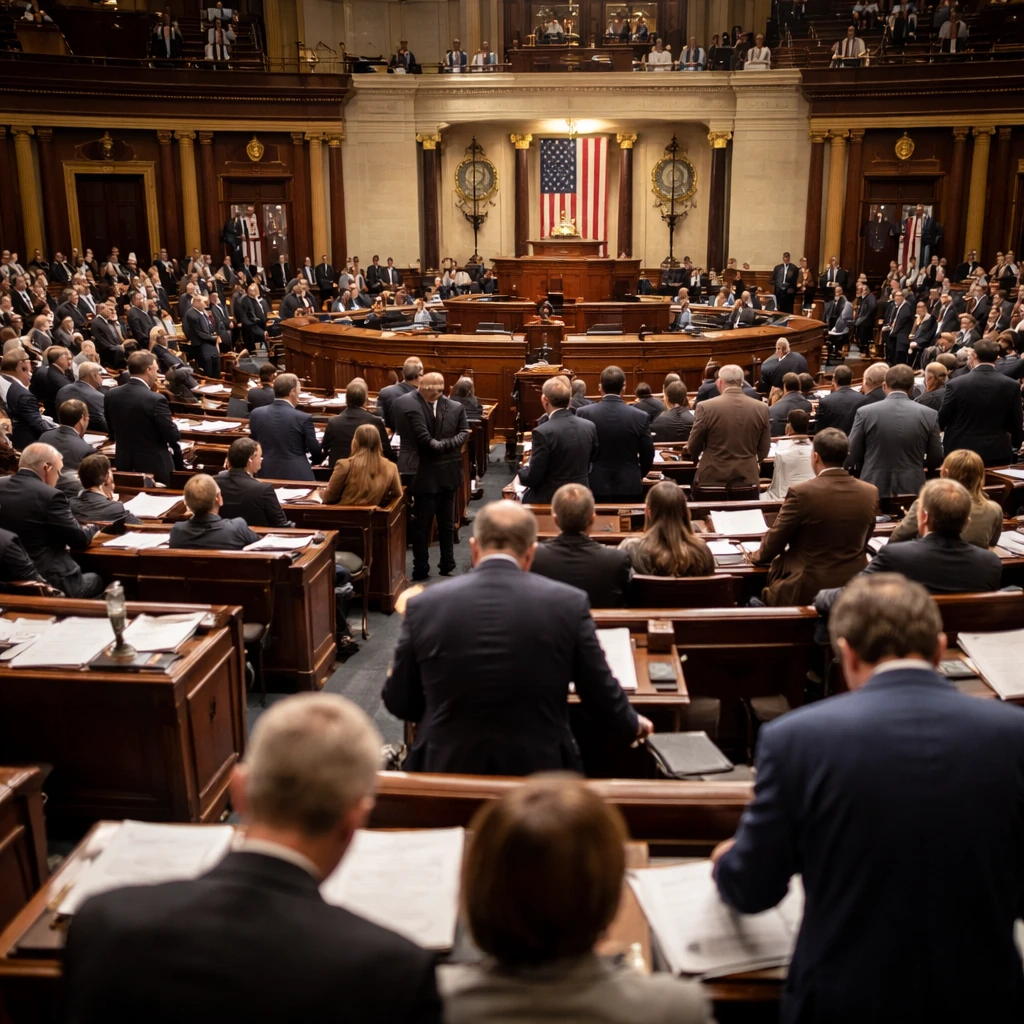
WASHINGTON - The House of Representatives narrowly approved its version of the fiscal 2027 National Defense Authorization Act (NDAA) on Wednesday, advancing a package that authorizes $1.15 trillion for military programs and activities. The final tally was 216 in favor and 212 against.
The roll call largely mirrored partisan divisions. All but seven Republicans voted for the measure, while all but six Democrats voted against it. Democratic lawmakers voiced sharp objections to the sheer scale of the Pentagon spending authorization at a time when the White House and congressional Republicans are pursuing deep cuts to social program budgets.
Members on the left also criticized several policy choices embedded in the bill. One point of contention is a provision that would significantly broaden military technology collaboration between the United States and Israel, which some Democrats oppose as pressure grows on U.S. support for Israel in the wake of high civilian casualties in Gaza. Another divisive factor is the ongoing U.S. military engagement in Iran; the Pentagon has said that the war has cost the United States $37.5 billion so far, a figure Democrats cited in opposing the authorization.
Republican supporters framed the spending as necessary to sustain the military through sustained operations in Iran, to fund development of defense systems and equipment purchases, and to support troop welfare. The House bill includes provisions for service member pay increases of up to 7% and funding for barracks and family housing construction.
NDAA's political headwinds
The NDAA has long been considered must-pass legislation, enacted for 65 consecutive years, but this year's installment encountered unusually steep political obstacles. Deep divisions run across several fronts: the overall size of the military budget, the U.S. role in the Iran conflict, assistance for Israel and Ukraine, and so-called culture-war issues such as policies on transgender service members.
Complicating matters further, House Republicans voted to attach the bill to the "SAVE America Act," a Trump-backed voting restriction measure, before forwarding the NDAA to the Senate. That strategic move left the bill's prospects uncertain in the upper chamber because there currently are not enough votes in the Senate to pass the voting legislation.
The Senate had blocked its own version of the NDAA last week. Senate Republican leaders said they would attempt to advance the bill again before leaving Washington for their August recess, but the path forward remains uncertain.
Next steps in the process
The current action is an early stage in the NDAA cycle. Each year the House and Senate pass separate versions of the defense authorization. Following those approvals, negotiators from the Armed Services committees in both chambers will meet to craft a compromise bill. If the negotiators reach agreement and both chambers pass the compromise, the final measure would be sent to the White House for the president to sign into law or veto.
For now, the House measure stands as the chamber's authorized position, but substantial negotiation remains before any final legislation is completed.