
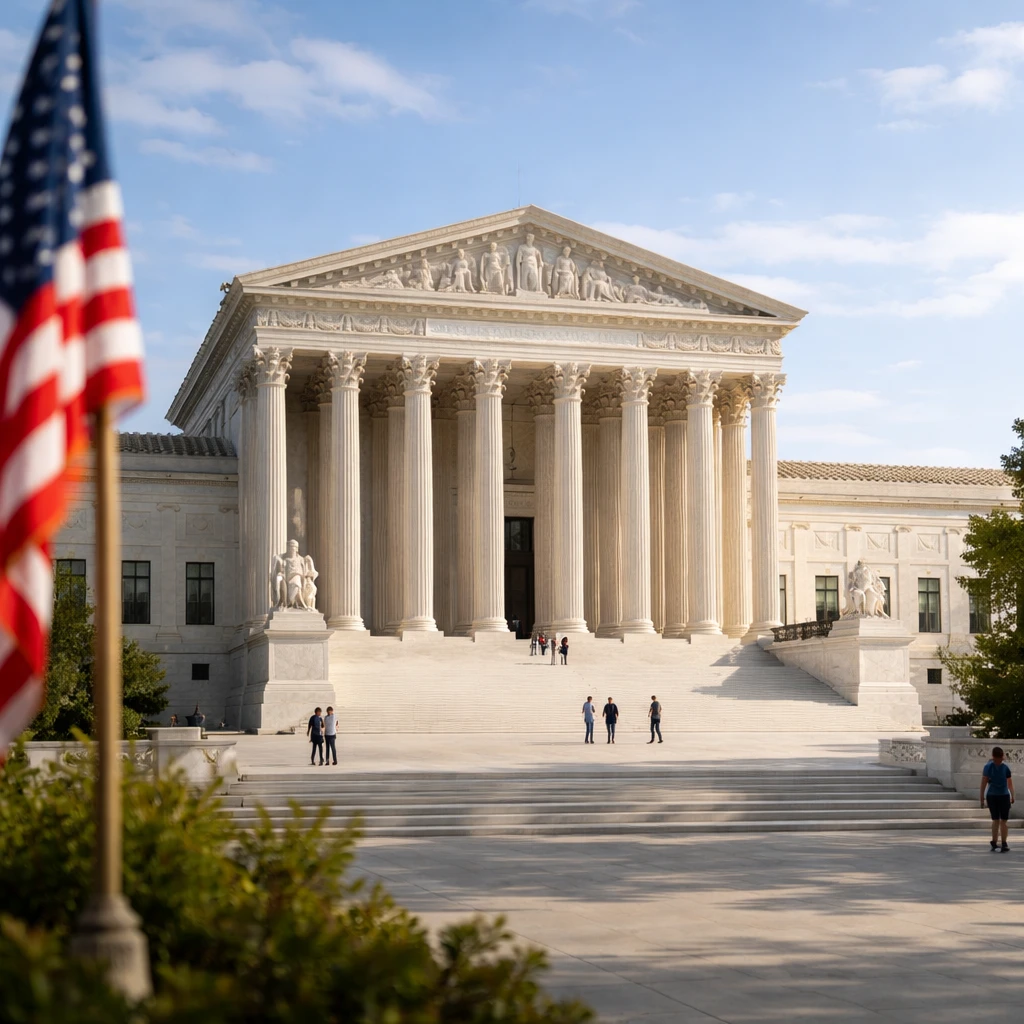
The U.S. Supreme Court on Friday accepted review of a dispute over the Trump administration’s restrictions on asylum at the U.S.-Mexico frontier, taking up an appeal of a lower court ruling that had found the president exceeded his authority by denying some migrants the chance to apply for protection.
The case centers on a policy announced hours into President Trump’s second term, on January 20, 2025, that bars migrants who are caught crossing the southern border unlawfully from pursuing asylum claims. The proclamation that introduced the restrictions also outlined fast-track deportation procedures the administration says the policy is designed to enable, and stated it would remain in place until the Republican president determines that the "invasion at the southern border" has ended.
The prohibition reaches beyond those intercepted between official crossings. It also applies to individuals who arrive at authorized ports of entry but lack certain medical or criminal history information that the administration requires, a standard that advocates for migrants contend is frequently impossible to meet for people fleeing violence.
Immigrant rights organizations filed a class-action lawsuit on behalf of would-be asylum seekers who they say were denied what are known as "credible fear" interviews by U.S. immigration officials before being deported. Such interviews are intended to establish whether an applicant faces persecution in their home country on grounds including race, religion, nationality, membership in a particular social group or political opinion.
A federal judge sitting in Washington, D.C. ruled in favor of the immigrant rights groups in July 2025. The U.S. Court of Appeals for the District of Columbia Circuit largely affirmed that ruling but agreed to stay its effect so the administration could take the matter to the Supreme Court. The high court will hear arguments in the dispute in the months ahead and is expected to issue a decision by the end of June.
The Trump administration has framed the asylum limits as one part of a broader set of immigration actions it has pursued since the president returned to office. Officials have also sought to persuade other nations to participate in what the administration describes as a global effort to roll back asylum protections and to reshape international approaches to humanitarian migration established after World War Two.
The Supreme Court, now with a 6-3 conservative majority, has in several cases during Trump’s second term shown deference to the administration’s immigration policies. In June, the court upheld federal authority to refuse asylum seekers entry when officials determine U.S.-Mexico border crossings are too overburdened to process additional claims. In September, the court allowed the administration to resume deportations of migrants to countries other than their own without first giving them the opportunity to demonstrate the harms they might face, reinforcing a mechanism used for rapid expulsions.
The justices are scheduled to hear arguments in a related challenge to the legality of that deportation policy on December 9.
The Supreme Court’s forthcoming review of the asylum restrictions will determine whether the administration exceeded its statutory authority by denying certain migrants access to asylum procedures at the southern border, and whether the procedural safeguards associated with "credible fear" interviews must be observed before deportation. The litigation underscores ongoing legal and policy tensions over border management and asylum eligibility that have persisted through recent administrations.