
Prime Minister Narendra Modi said on Thursday that special fast-track courts will be established to prosecute individuals implicated in recent exam paper leaks, marking his first public statement since a wave of youth-led demonstrations pressed for the education minister's resignation.
Modi posted on X that protecting the welfare and future of young people is paramount and that the government has decided to set up fast-track courts to ensure speedy and strict punishment for those involved in paper leaks. "This continues our series of steps for safeguarding the interests of students. Those who try to harm the future of our youth will not be spared," he wrote.
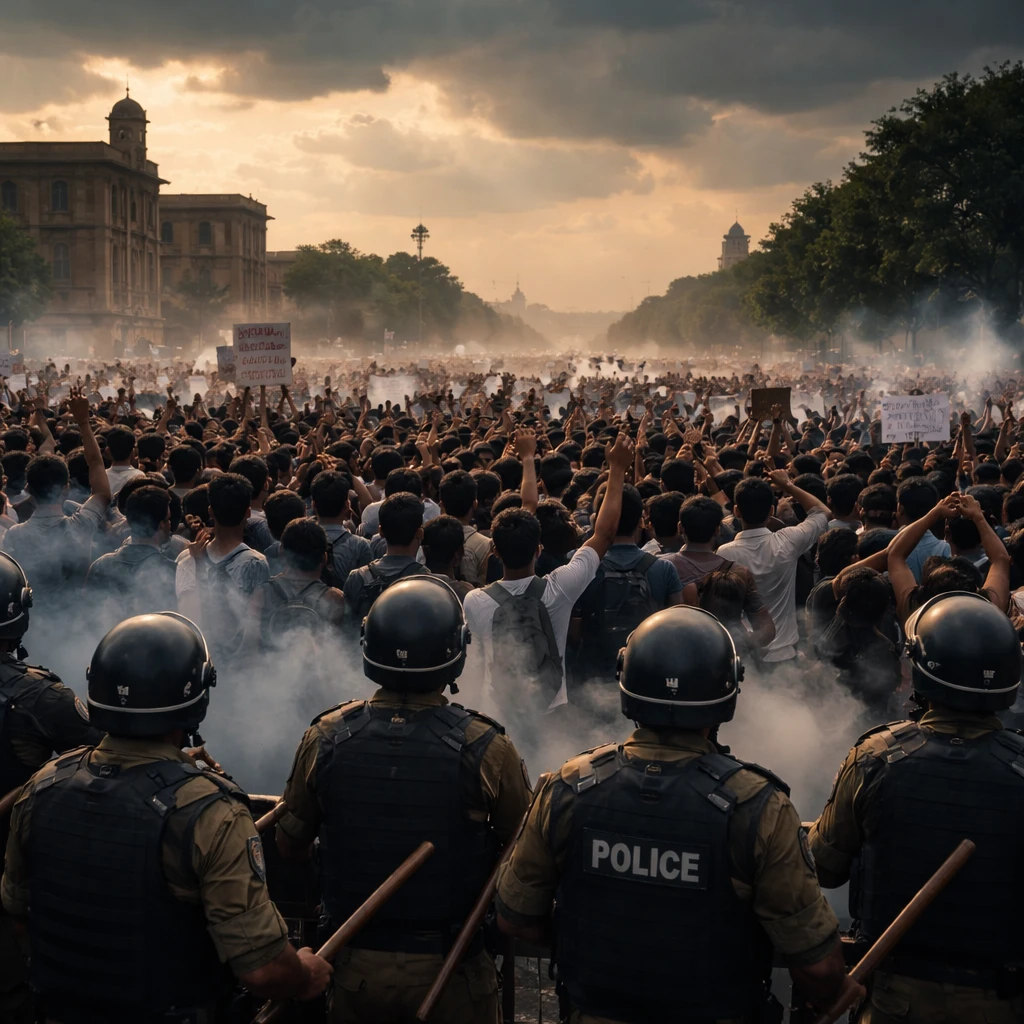
The announcement followed a night of unrest in New Delhi, when protesters briefly clashed with police. Officers used tear gas and batons to disperse crowds late on Wednesday as the demonstrations, which began as a small online movement, swelled into a large-scale youth challenge to the government.
Scale and context of the protests
The protests have become the most significant youth-led challenge to Modi since he first became prime minister in 2014 and represent the largest political crisis of his third term, which began in 2024. Opposition parties have echoed the demonstrators' demands and have disrupted the current monsoon session of parliament as a result.
The self-styled Cockroach Janta Party, or CJP, initiated the protests last month in response to exam paper leaks that affected roughly 2 million students and have been linked to several suicides. What began as an online satire group has transformed into sustained street demonstrations that have drawn tens of thousands of participants.
Local media reported that more than 10,000 people gathered at the Jantar Mantar protest site in central New Delhi late on Wednesday. CJP leaders said they would maintain their presence until Education Minister Dharmendra Pradhan steps down. At the same gathering, some protesters threw stones and plastic bottles at police, injuring a small number of officers who were taken to hospital, according to Delhi Police as reported by news agency ANI.
Political responses and calls for resignations
The CJP reacted to Modi's fast-track courts announcement by quoting his post on X and reiterating its demand: "Dharmendra Pradhan Must Resign." The party's founder, Abhijeet Dipke, addressed the crowd late on Wednesday night, saying the protest would continue. "It has been 25 days so far. Even if it takes 25 months, that is acceptable, but we will not move from here," Dipke told supporters.
Rahul Gandhi, leader of the main opposition Congress party, also quoted Modi's post and criticized the prime minister, saying he had done the most to harm the future of young people. Gandhi said Modi had allowed and encouraged the capture and destruction of the education system and that those responsible had been protected. He repeated calls for Pradhan to be dismissed, demanded an apology from Modi to students, and urged punishment for those who assaulted them.
Government engagement and public order measures
In response to continued pressure from demonstrators, the government held a round of talks with CJP leaders and assured them that their demands would be considered. Officials also proposed debating the issues in parliament and starting reforms of the exam system.
Security concerns have led to disruptions in central New Delhi. Delhi Metro Rail Corp. announced the temporary closure of 16 stations in and around central parts of the city until further notice, marking the second large-scale shutdown this week related to security measures.
The protests have spilled over into the precincts around parliament. On Monday, tens of thousands of demonstrators marched toward the legislative complex and confronted police, with clashes in some locations that saw the deployment of tear gas and baton charges to push back crowds.
Broader resonance and drivers of support
The CJP's rapid rise in popularity reflects broader frustrations among young Indians over recurrent exam leaks and economic pressures such as job shortages, factors that have contributed to the protesters' ability to attract mass support. Opposition parties have seized the opening created by the demonstrations to increase political pressure on Modi and his ruling Bharatiya Janata Party, which counts young voters as a key constituency and has recently won a string of state elections following a 2024 national result in which Modi did not secure an outright parliamentary majority.
Modi's decision to create fast-track courts aims to respond to public outrage and to deliver rapid legal consequences for those implicated in the leaks. Fast-track courts are special courts set up to handle specific categories of cases more quickly than the regular judicial system, which is widely regarded as overburdened and slow to conclude cases. Similar specialized courts have previously been used to address sex crimes against women and children, terrorism, money laundering, and offenses by lawmakers.
As protests continue, the government faces demands for tangible accountability, calls for ministerial resignations, and pressure to overhaul examination procedures, while authorities balance those demands against public order and security measures in the capital.