
President Donald Trump has told senior advisers in recent days that he may refrain from launching further strikes on Iran so long as Tehran or Iran-backed Houthi forces in Yemen do not carry out new provocations, according to three people familiar with the matter. Those people, and others interviewed for this account, spoke on condition of anonymity.
Within the White House, Mr. Trump has oscillated between threatening to expand the conflict and signaling a desire to wind it down. Current and former officials say he has not yet reached a firm decision on how to end a conflict that began in February with an Israeli operation. In meetings with national security advisers and following several intelligence briefings, the president has indicated he is considering a pause in offensive actions if no fresh provocations occur.
Those advising restraint have included regional partners. Officials said Mr. Trump has shown sympathy for allied governments that have asked him to avoid returning to a full-scale war. “I could end it immediately, but at the request of the nations that I am looking to protect, we are doing it a little bit longer way, a bit more civilly,” he told sports broadcaster Stephen A. Smith on Thursday.
Public opinion and recent U.S. political developments are part of the backdrop. The conflict has pushed up global fuel prices and proved unpopular with many voters, who in last week’s midterm elections handed control of Congress to the Democrats. A Reuters/Ipsos poll taken shortly before the November 3 elections found that 55% of Americans said the war was not worth the cost. Vice President JD Vance has cited the campaign as a reason for Republican losses in Congress.
The White House has stressed that ultimate authority over military action rests with the president. “As Commander-in-Chief, President Trump is the architect and sole decision-maker who holds all the cards and will always ensure that America’s interests are protected,” a White House official said in a statement. The same statement asserted that the United States holds a strong position with control of the Strait of Hormuz and with Iran’s economy under strain. It added that only the president knows what steps he will take and when.
Intelligence agencies including the CIA and the Office of the Director of National Intelligence were asked for comment and did not respond to requests, according to people involved with the reporting.
Over the past two weeks Mr. Trump sought counsel from regional leaders. In recent phone calls he asked Saudi Crown Prince Mohammed bin Salman and Turkish President Tayyip Erdogan for their views; both urged him not to resume attacks on Iran, according to a senior U.S. official and another person familiar with the discussions. The president made no definitive commitments in those conversations.
Mr. Trump told the crown prince on October 31 that he was planning military action after the elections, but the crown prince asked him to hold off, arguing that economic sanctions were effective, four people familiar with the discussion said. Saudi Arabia’s Foreign Ministry did not respond to a request for comment on those conversations. Turkey’s presidency has said Mr. Trump has spoken with President Erdogan three times since October 28, and a readout from the November 7 call emphasized that tensions between Iran and the United States need to end.
U.S. intelligence assessments presented to the president indicate that a naval blockade and economic sanctions have been weighing on Iran’s economy and will continue to put pressure on Tehran, two U.S. officials briefed on the intelligence said. Building on months of restrictions on Iranian sea traffic, the U.S. military is also trying to prevent weapons and other sanctioned material from entering Iran by land or through the Caspian Sea, according to U.S. officials familiar with the efforts.
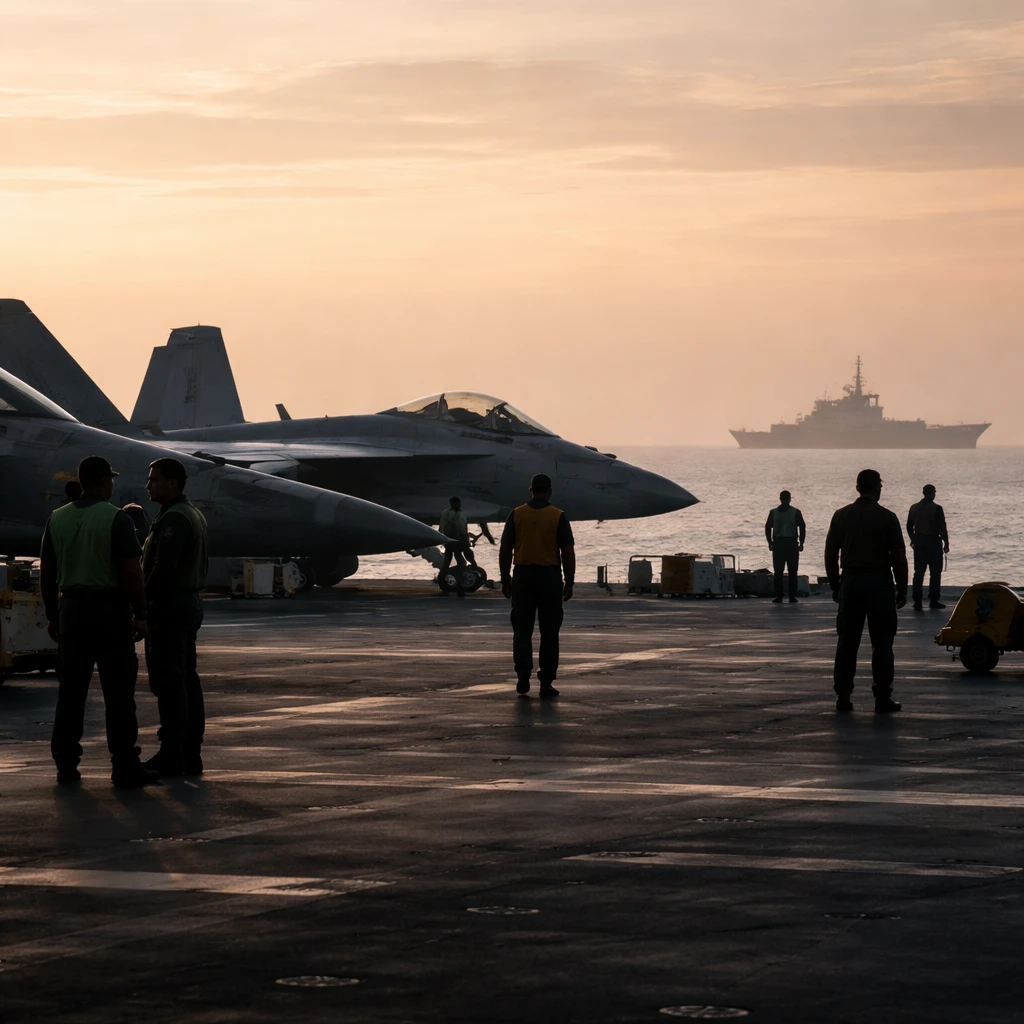
At the same time, U.S. forces remain prepared to ramp up military pressure if directed. Three people familiar with U.S. planning said the military is ready to escalate operations if necessary. A third aircraft carrier is scheduled to move into the Middle East in the coming days to replace one of the two currently operating there, and planners could keep all three carriers in the region if needed, the sources said.
Among the military options under consideration is striking Iran’s underground nuclear facilities, a possibility raised in discussions Mr. Trump had with regional leaders. One person familiar with those calls noted that the United States has previously struck such facilities, and it is uncertain whether additional attacks would be successful. Two U.S. officials said intelligence assessments indicate renewed strikes would not substantially alter Iran’s negotiating positions.
Mr. Trump was briefed on the status of U.S. weapon stockpiles during his intelligence sessions. Those briefings included warnings that some inventories have been reduced to levels that concern military planners, two people briefed said. Officials previously said the United States had used “virtually all” of its long-range precision munitions, and another person briefed on the matter said those stocks have not been replenished.
In response to concerns about inventories, a White House official said: “The United States Military has enough munitions and ammo to serve all of the Commander-in-Chief’s strategic goals and beyond.”
Israeli officials have continued to press the administration for a renewed military campaign, a U.S. official said. Mr. Trump indicated this week that Washington has achieved what it could through negotiations, but he did not commit to resuming strikes. “We don’t need a deal with Iran,” he said in a social media post on Thursday. “We’ve got their money, Hundreds of Billions of Dollars, and we’ve got their Strait!”
Other government agencies were contacted for comment. The CIA and the Office of the Director of National Intelligence did not respond to requests for comment, while the Saudi Foreign Ministry did not reply to a request for comment on discussions with the U.S. president.
Within the administration, the debate remains unresolved. Some advisers and foreign leaders counsel restraint to avoid a full-scale war that could further raise fuel prices and deepen domestic political costs. Military officials, meanwhile, continue to posture for escalation if ordered, with carrier movements and interdiction efforts under active consideration.
As the president weighs options, the decision will hinge on whether new provocations materialize and on continued consultations with allies and military leaders. The outcome will have implications for energy markets, regional stability, and U.S. defense readiness, but the president retains sole authority to determine the next steps.