
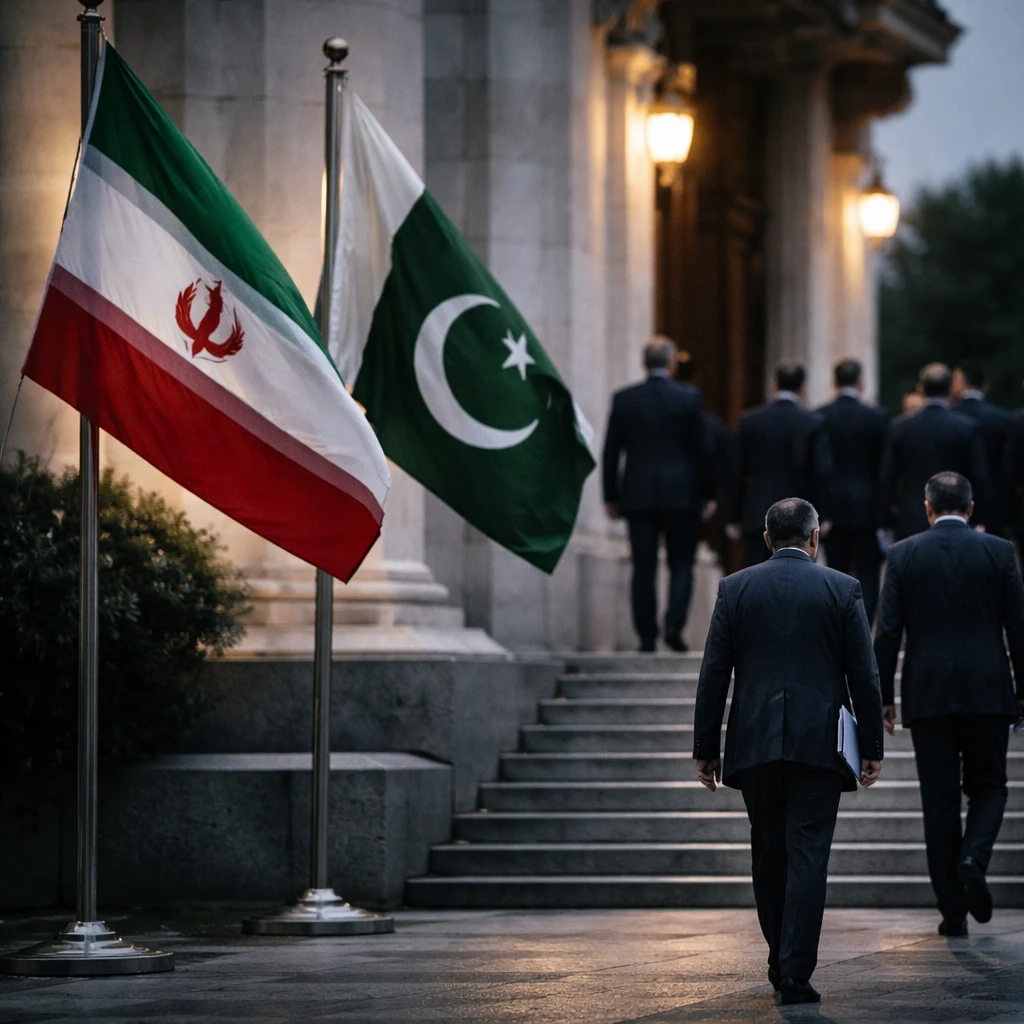
Iran's foreign ministry announced that messages continue to be exchanged between Iranian and U.S. officials on the basis of Tehran's 14-point proposal. The ministry said the communication is ongoing and framed around the detailed list put forward by Iran.
Iranian state media reported that Pakistan's interior minister is presently in Iran to assist in facilitating the flow of messages between the two parties. The involvement of Pakistan's interior minister was described as part of efforts to maintain lines of communication.
Speaking on state television, a foreign ministry spokesperson reiterated a set of Iranian demands tied to the dialogue. The spokesperson insisted the U.S. must demonstrate goodwill and put an end to what Iran calls acts of piracy against Iranian ships. In addition, Iran is pressing for a cessation of fighting in multiple arenas, explicitly including Lebanon, and is calling for the release of Iranian assets.
The spokesperson emphasized that Iran is pursuing the path of negotiation seriously and in good faith. At the same time, officials say they retain "severe and reasonable suspicion" regarding the United States. The statement added that Iranian authorities are currently studying the points of view presented by the U.S.
The public comments do not provide additional operational details about the exchanges themselves, nor do they specify timetables or the content of any particular message. The account focuses on the framework of Iran's 14-point proposal and the conditions Iran has set for further progress in talks.
Context summary
The information released by Iranian officials highlights three core demands in the talks: an end to maritime actions Iran labels as piracy, a halt to fighting including in Lebanon, and the release of Iranian assets. Pakistan's interior minister is reported to be in Iran to help facilitate the exchanges. Iran states it is engaging in negotiations in good faith while expressing pronounced suspicion about U.S. intentions and is evaluating U.S. positions.
- Key points:
- Diplomatic messaging between Tehran and Washington continues, grounded in Iran's 14-point proposal. Sectors impacted: international diplomacy, shipping, and finance.
- Pakistan's interior minister is in Iran to help bridge communications, according to Iranian media. Sector impacted: regional diplomacy and security cooperation.
- Iran's stated conditions include ending what it calls piracy against its ships, stopping fighting including in Lebanon, and freeing Iranian assets. Sectors impacted: maritime trade, regional security, and banking.
- Risks and uncertainties:
- Iran's pronounced suspicion of U.S. intentions could slow or complicate negotiations. Sectors affected: diplomacy and markets sensitive to geopolitical risk.
- Disagreement over the characterization of maritime incidents and the demand to halt fighting including in Lebanon creates uncertainty in regional security dynamics. Sectors affected: shipping and energy transport routes.
- Calls for the release of Iranian assets introduce financial uncertainty tied to access to funds and banking relations. Sectors affected: finance and international payments.
The statements from Tehran outline positions and conditions but do not disclose specific procedural developments or outcomes from the exchanges. Iran says it is studying U.S. viewpoints while maintaining reservations about U.S. motives, and the Pakistani minister's presence is described as a facilitation step rather than a negotiator-led breakthrough.