
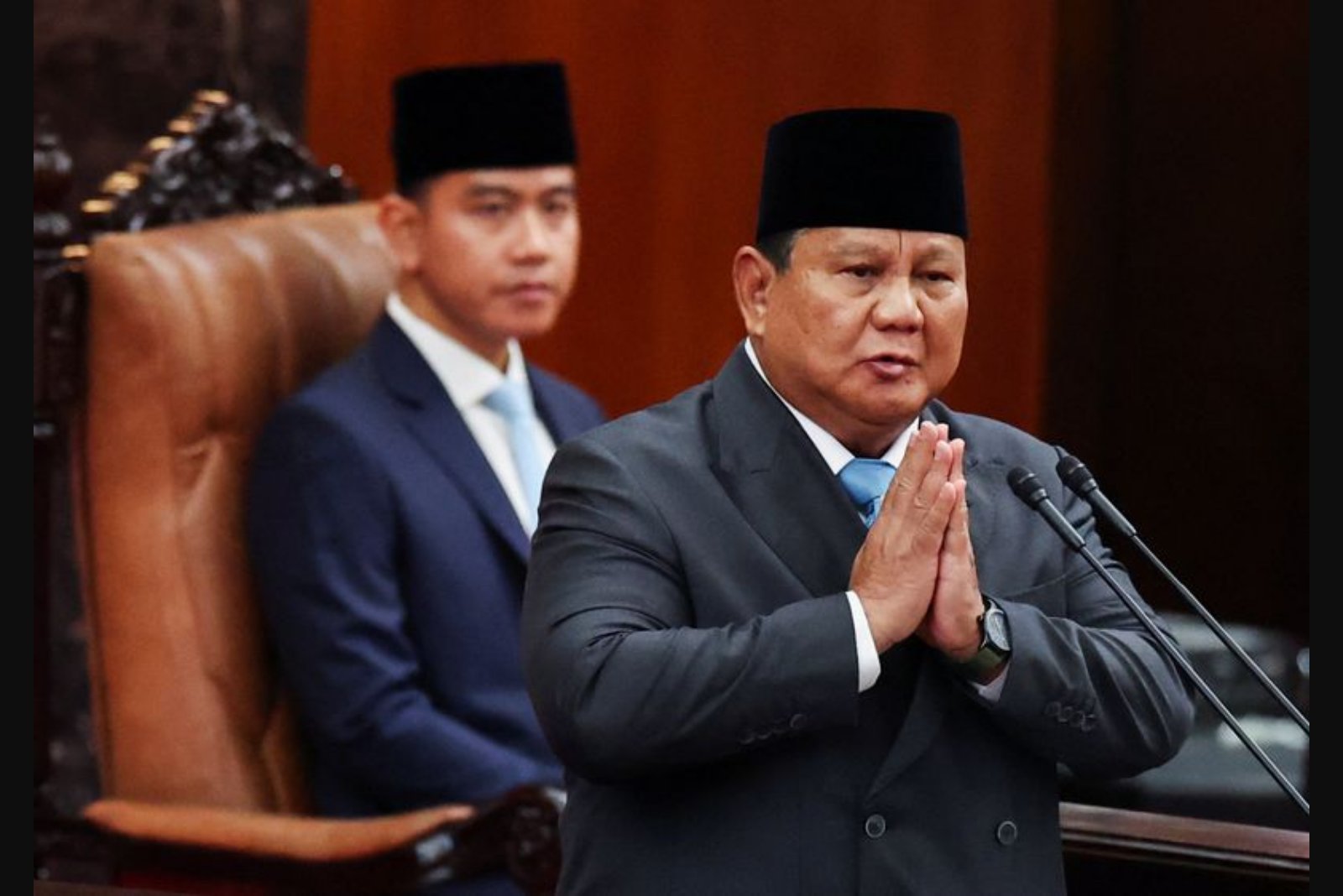
JAKARTA, May 20 - Indonesian President Prabowo Subianto told lawmakers on Wednesday that his administration will centralise exports of several major commodities in a bid to bolster state revenues and assert stronger control over the country's natural endowments.
Delivering a forceful address to parliament, Prabowo said Indonesia may have foregone as much as $908 billion in income over the past 34 years because raw materials were sold at what he characterised as undervalued prices. He said the government will issue a regulation governing commodity export management so that sales of strategic resources are channelled through a government-selected, state-run enterprise.
Prabowo said: "Today the Indonesian government that I lead will issue a regulation on management of commodity exports." He added: "The issuance of this regulation is a strategic step to strengthen management of commodity exports." On the mechanics, he said: "All sales of our resources, from palm oil, coal must be through a (state-operated enterprise) selected by the government ... as sole exporters."
Planned scope and timeline
Senior Economic Minister Airlangga Hartarto outlined the first-stage scope of the policy, saying the commodities covered initially will be thermal coal, palm oil and ferroalloy. He said the government will review the list regularly, evaluating every three months which additional commodities could be added to the arrangement.
Airlangga described a transition period in which exporters and buyers could continue their operations ‘‘as usual’’ while the government-appointed entity monitors export transactions. He and other officials said that monitoring will be in place during the initial phase and that the timeline could be extended. Rosan Roeslani, head of the sovereign wealth fund Danantara Indonesia, said alongside Airlangga that the transition could be prolonged to the end of the year.
At the close of the transition - whenever that is determined - the government-appointed firm will become the channel through which all exports of the affected commodities must be carried out. Danantara will have oversight responsibility for that state-appointed exporter, officials said.
Currency and banking rule
As part of another regulatory measure, Airlangga announced that effective June 1 exporters of natural resources must deposit 100% of their export earnings in Indonesian state-owned banks. Officials stated that this requirement aims to help stabilise the rupiah, which has dropped sharply in recent days.
Market reaction to rumours of these policies was swift. Jakarta's main stock index fell 3.5% on Tuesday and was down 2% on Wednesday before trimming losses, reflecting investor concern that the changes could alter pricing dynamics and compress trading margins for commodity intermediaries.
Rationale and government framing
Prabowo framed the measures as a step to ensure that Indonesia's natural resources serve the public interest. He said the country's endowments - if managed according to the constitution - could deliver broad welfare benefits. "In the opinion of the government - and I am sure every patriot will support this - the earth, water and all the resources within it must be enjoyed by all Indonesians," he said.
Airlangga said the move was designed to tackle issues the government perceives in current export practice, specifically under-invoicing and how exporters account for transfer pricing. He presented the policy as part of an effort to optimise revenues from the country's natural resources.
Criticism and uncertainty
Not all observers are persuaded the measure will achieve its aims. Rizki Siregar, an international trade economist at the University of Indonesia, warned that creating an export control agency could introduce further distortions rather than remedy existing ones. He said: "The (export control) agency may create more distortions instead of being the solutions to the distortions, on top of already severe distortions that exporters face."
The government acknowledged the need to manage the transition carefully, including the monitoring phase where private-sector transactions continue while being overseen by the appointed entity. Officials also signalled flexibility on the length of the transition, noting it may be extended to ensure operational readiness.
Implications
The policy is aimed at securing a larger share of revenue from Indonesia's commodity exports by centralising sales through a state-selected firm and by keeping export proceeds within state banking channels. The administration signals it will review and possibly expand the list of commodities covered on a quarterly basis while using the sovereign wealth fund to supervise the new export vehicle.
Officials and critics alike pointed to potential market and operational effects - from currency stabilisation aims to concerns about trade distortions and impacts on trader margins - but precise outcomes remain to be seen as the transition unfolds and additional implementing details are released.