
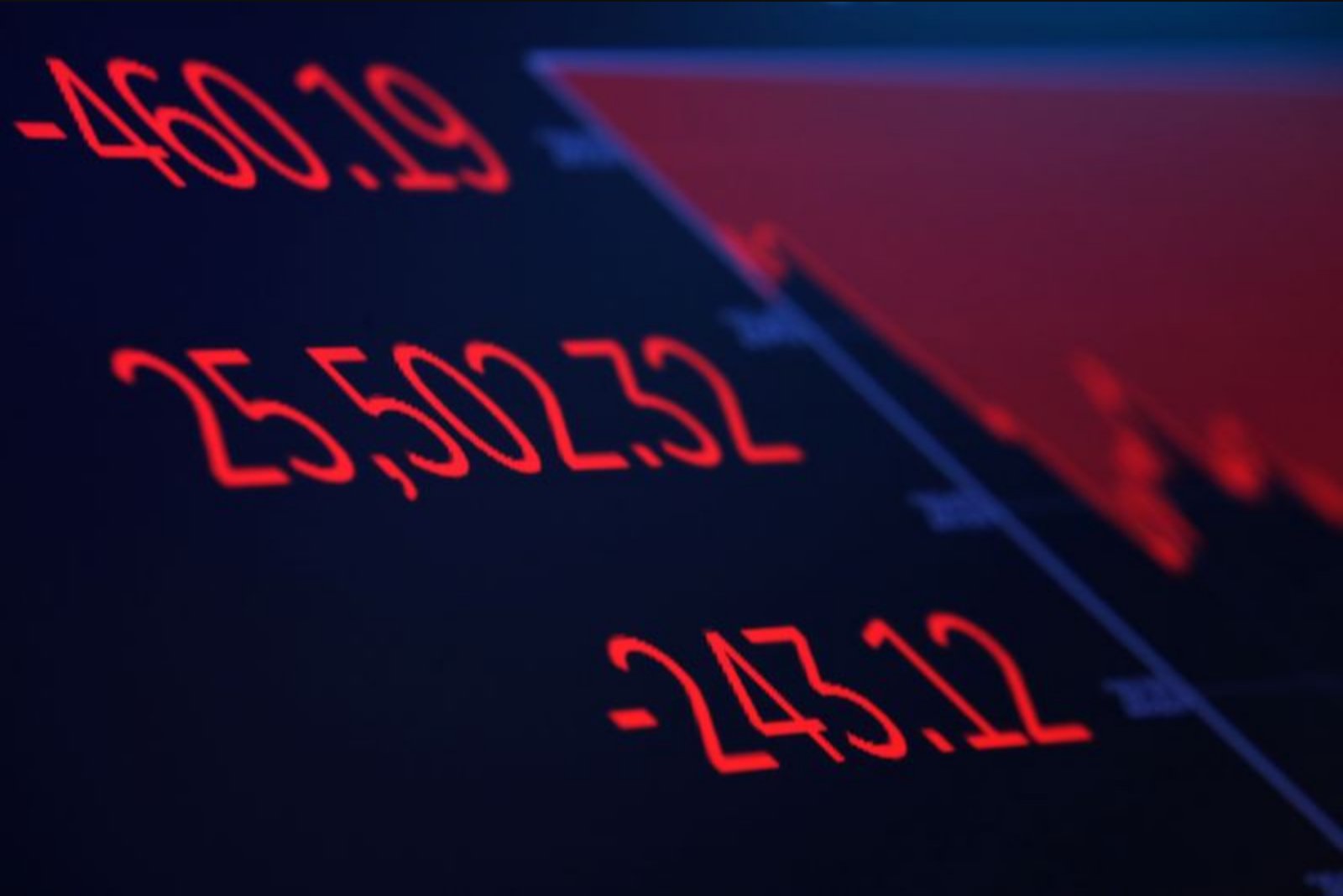
Retail investors have turned episodic political shocks into a battery of repeatable trading strategies, reshaping how markets move in response to U.S. policy decisions and geopolitical conflict. Market participants now use shorthand acronyms - including TACO, FAFO and FOMO - to describe playbooks that have become common across trading desks amid persistent headlines tied to President Donald Trump’s second term and the war in Iran.
At the core of these new patterns is a faster, news-driven reaction cycle. Where traditional market framing emphasized simple bullish or bearish views, traders increasingly describe behaviour in terms of reflexive reactions to the political brinkmanship that has marked recent months. "Bull and bear are still the foundation, but ’TACO’ and ’FAFO’ are becoming part of the everyday language on trading desks," said Lale Akoner, global market strategist at eToro.
How the TACO trade works
The so-called TACO trade - shorthand for "Trump always chickens out" - captures a play where investors buy the dip after a sudden policy escalation. A clear example surfaced in April 2025, when an unexpected announcement of broad import tariffs by the president rattled global equity and debt markets, sending prices lower across multiple asset classes. As tensions calmed and the administration paused the tariffs to begin negotiations with Beijing and other capitals, some investors read the move as confirmation that tariff threats might be reversed to avoid deeper economic damage. That sequence - a sharp sell-off followed by a bounce as policymakers step back - is the essence of the TACO approach.
Similar dynamics have been observed in recent military episodes. Rapid pullbacks from aggressive postures in Venezuela and Iran, including quick reversals after the threat of maximum force, reinforced the notion that traders can test how much market stress the administration will allow before policy is altered. Those episodic retreats have encouraged short-term buying on the assumption that extreme policy steps may be moderated if markets react too strongly.
FAFO - shock first, reposition later
A distinct but related pattern is the FAFO trade - an approach that accepts near-term pain in anticipation of a subsequent policy U-turn. Under this motif, traders sell risk assets and drive yields higher immediately after geopolitical shocks or policy escalations, only to reposition when they judge market stress has reached a level that compels moderation.
During volatility tied to U.S. actions in Iran, for example, the 30-year Treasury yield rose sharply in the early stages of market reaction, reflecting heavy selling of long-duration bonds amid heightened inflation and fiscal concerns. As tensions eased, yields retraced parts of those moves before rising again in recent days to fresh highs amid a broader global sell-off in long-dated bonds. That renewed advance was driven by anxiety over the inflationary consequences of prolonged disruption.
Investors increasingly view the long bond as a kind of "pain threshold": when yields spike sharply, the pressure on policymakers to temper their approach increases. But the FAFO strategy can be constrained if shocks are sufficiently persistent or feed into the economic fundamentals - namely inflation and growth - in ways that cause more permanent repricing rather than fleeting reversals.
FOMO, gold and the pivot to oil
Fear of missing out has also played a central role in recent retail behaviour. Throughout 2025, many retail investors crowded into gold as a perceived safe haven. The metal experienced a dramatic rally last year, rising 66% - its steepest annual increase since 1979 - supported by a mix of falling rates, repeat geopolitical flashpoints, strong central bank buying and flows into bullion-backed products.
Gold peaked at nearly $5,600 an ounce in January before pulling back to roughly $4,500 as the market’s attention shifted. The pivot followed major geopolitical moves, including the capture of then Venezuelan President Nicolas Maduro and the onset of the Iran conflict, which redirected investor interest toward energy markets.
Brent crude illustrates that redirection. The oil price nearly doubled since January and, as the Iran war effectively curtailed transit through the Strait of Hormuz, Brent futures traded as high as $126 a barrel on May 1. The divergence between oil and gold underlines how retail positioning can migrate from traditional defensive assets to commodities seen as directly affected by geopolitical supply risks.
That migration also prompted creative variations on trading shorthand. Piotr Matys, senior FX analyst at In Touch Capital Markets, noted the emergence of another acronym in retail circles: "Another one that could be gaining popularity is ’NACHO' (\"Not A Chance Hormuz Opens\")."
Cross-asset whiplash and broader market implications
Traders and analysts describe a pronounced cross-asset whiplash: sharp, and sometimes contradictory, moves across markets as investors oscillate between headline responses and repositioning. Commodities, such as oil, have often been driven by direct supply and demand considerations, while correlations among equities, bonds and safe-haven assets have grown less reliable.
That whiplash shows up when safe-haven demand surges on tariff threats or Middle East risks, then fades as equities stabilise. Yet elevated oil prices can feed into inflation, which in turn may push yields higher and create broader strain across asset classes. "That’s when you start to see broader cross-asset stress," Akoner said.
Regulators have taken notice. A string of large directional bets on oil made just before major announcements on the Iran war, collectively worth hundreds of millions of dollars, prompted supervisory scrutiny. Meanwhile, retail investors continue to try to anticipate which way the pendulum will swing next, often leaning into short-term swings driven by an incessant news flow.
Outlook and caveats
Despite concerns that hostilities in Iran could be prolonged, analysts cited in market commentary still view the baseline as one of gradual de-escalation. Nevertheless, the patterns of retail trading described here - buying dips on the assumption of policy retreat, accepting near-term pain for anticipated reversals, and piling into assets for fear of missing out - are altering how markets respond to political shocks.
These behaviours do not eliminate the possibility of deeper repricing if geopolitical shocks persist or begin to influence inflation and growth in a sustained way. For now, TACO, FAFO and FOMO have become useful shorthand for a new era of rapid, headline-driven positioning that is remaking cross-asset dynamics.
Key points
- TACO, FAFO and FOMO have become common trading motifs among retail investors reacting to political and geopolitical shocks tied to the U.S. presidency and the Iran conflict.
- Gold surged 66% last year, hitting an apparent peak near $5,600 an ounce in January before retreating to about $4,500 as attention shifted to oil.
- Brent crude reached $126 a barrel on May 1 amid disruptions linked to the Strait of Hormuz; long-duration Treasury yields have shown sharp moves that traders view as a "pain threshold" for policymakers.
Risks and uncertainties
- Persistent geopolitical shocks could prompt deeper, longer-lasting repricing across assets, reducing the effectiveness of short-term reversal strategies - affecting equities, bonds and commodities.
- Higher oil prices may feed into inflation and push yields up, creating broader cross-asset stress that could impact growth-sensitive sectors.
- Concentrated directional bets on commodities, particularly oil, have drawn regulatory attention and could alter market liquidity or trading behaviour.