
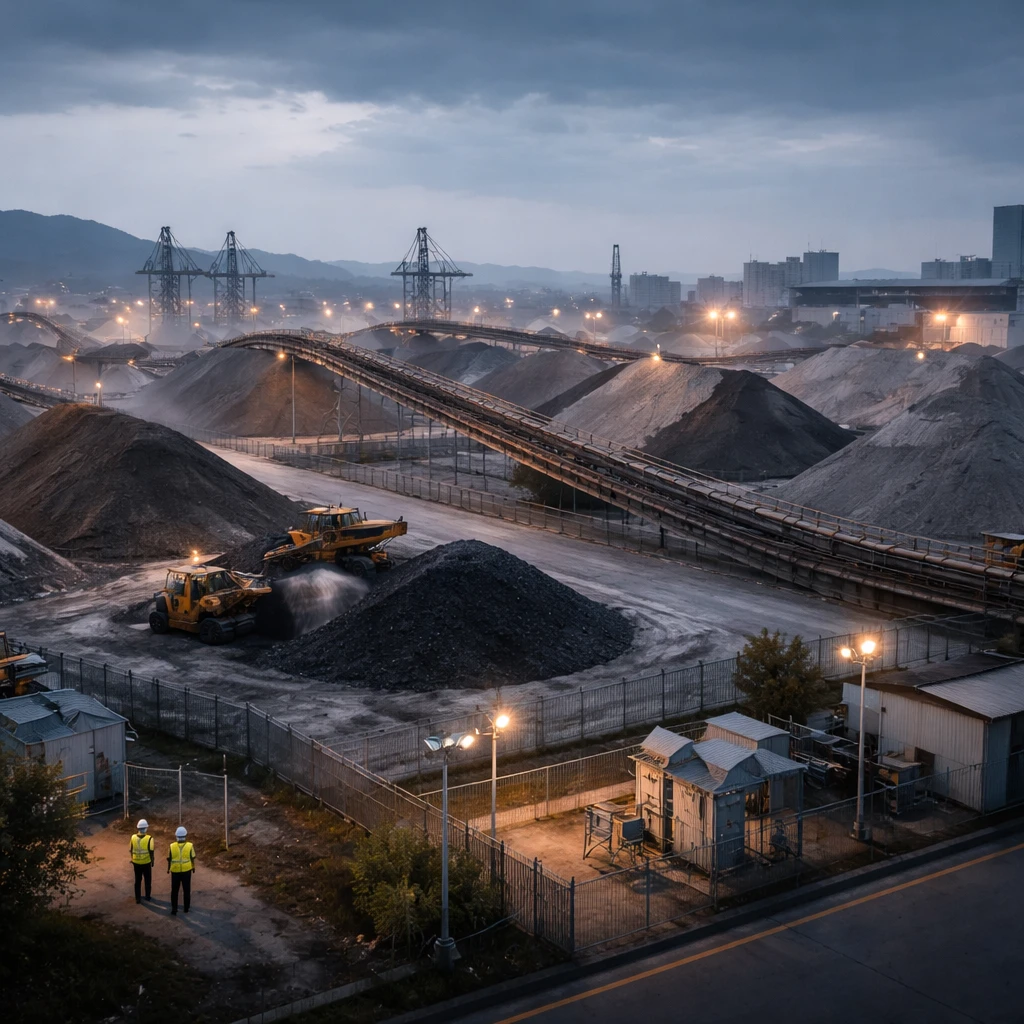
China will move to accelerate the building of strategic mineral reserve facilities under new implementation rules announced on Wednesday, the state news agency Xinhua reported. The regulations provide operational detail for a law enacted in 2024 and outline how strategic mineral resource reserves are to be managed at their source.
The rules require that strategic mineral reserves kept at the point of origin remain in place for at least five years. After that initial term, State Council agencies will carry out post-term reviews to decide whether to extend the holding period or to make adjustments to the reserve arrangements.
In addition to setting the minimum storage term, the regulations make clear that strategic mineral resources designated as state reserves may not be mined or encroached upon without authorization from the State Council’s natural resources authority. The guidance therefore formalizes a control mechanism that places extraction or use of those materials under central approval.
The announcement comes against the backdrop of China’s outsized role in global commodity consumption. The country is described in the rules as the world’s largest consumer of most commodities and maintains a degree of secrecy around how its stockpiling system operates.
The new rules echo recent public signals on reserve expansion. In February, the head of China’s nonferrous association indicated that the country would expand its strategic copper reserves, a move that aligns with the formal direction set out in the latest implementation measures.
The regulations therefore combine three concrete elements: a directive to speed construction of reserve facilities, a statutory minimum five-year on-source holding period subject to post-term review, and a prohibition on mining state-designated strategic resources without State Council approval. Together, these measures define the operational framework for how the 2024 law will be applied in practice.
Given the central role assigned to the State Council’s natural resources authority in authorizing any mining or encroachment of state-held strategic minerals, the rules place decision-making authority over these resources at a national level and set procedures for ongoing review after the initial holding period elapses.
Clear summary: China issued rules on Wednesday to implement a 2024 law, ordering faster construction of strategic mineral reserve facilities, mandating a minimum five-year on-source reserve term with post-term reviews, and requiring State Council natural resources approval before any mining or encroachment of state-held strategic minerals.
Key points:
- Regulations call for accelerated construction of strategic mineral resource reserve facilities and define implementation steps.
- A minimum five-year term is set for reserves held at their source; State Council agencies will review terms after that period.
- State-held strategic mineral resources cannot be mined or encroached upon without approval from the State Council’s natural resources authority.
Risks and uncertainties:
- Post-term reviews may result in extensions or adjustments, creating uncertainty for parties reliant on access to those minerals - affecting mining and commodity sectors.
- The lack of transparency around the stockpiling system could complicate market assessments for metals and commodities traders.
- Centralized approval requirements introduce potential delays or restrictions on extraction, with implications for supply chains in metals and downstream manufacturing sectors.