
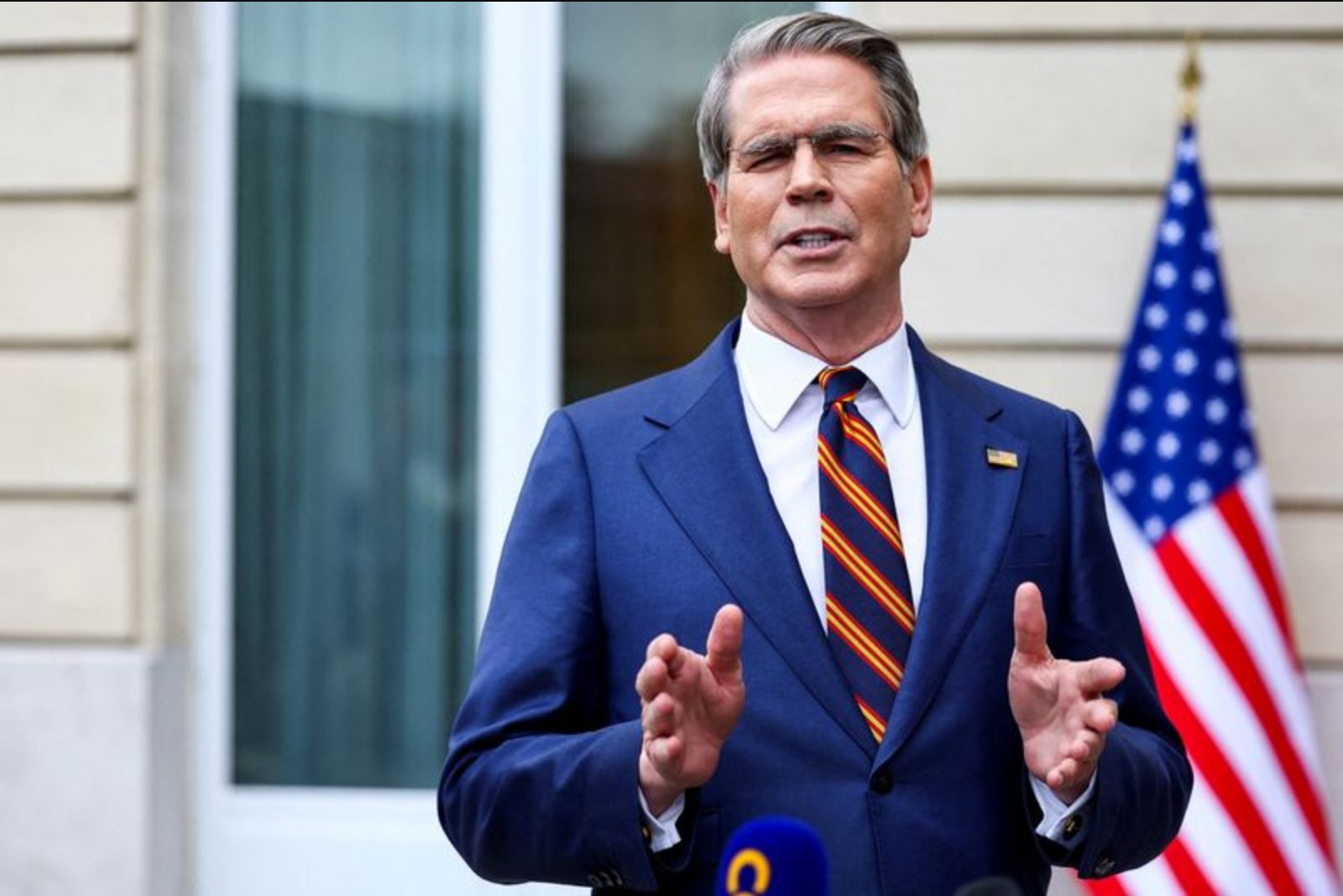
In an interview on Tuesday, U.S. Treasury Secretary Scott Bessent addressed the growing anxiety among central bankers and bond investors regarding inflation and rising yields. While the current economic landscape is marked by an energy shock stemming from the Iran war, fading expectations for interest rate cuts, and rising inflation concerns, Bessent maintains a different perspective than some of his international counterparts.
During the G7 finance leaders meeting held in Paris, Bessent noted that central bankers expressed higher levels of concern regarding a sell-off in the bond market and inflationary trends than he personally holds. He addressed this discrepancy by suggesting that the role of a central banker involves communicating concern to manage expectations. According to Bessent, "The tougher you talk, the less you have to do about it."
Key Economic Perspectives
Bessent's analysis centers on the idea that current market stressors are non-permanent. The following points summarize his stance:
- Transitory Inflation: Bessent views headline inflation as a byproduct of the ongoing conflict. He expects this to subside once the war ends, noting that he does not anticipate these pressures will bleed into core inflation three or four months down the line, suggesting core inflation may already be on a downward trajectory.
- Energy Normalization: The Secretary believes that the resolution of the conflict will lead to the reopening of critical maritime routes, which in turn will normalize energy prices.
- Market Sentiment vs. Reality: While benchmark yields have reached significant levels, Bessent suggests markets are already looking past the immediate conflict, as evidenced by the pricing gap between different oil delivery months.
These views impact several key sectors, including energy markets, where price volatility is currently high, and the fixed-income sector, which is grappling with rising Treasury yields.
Market Data and Yield Movements
The current market environment reflects significant movement in government debt. As of Wednesday, the benchmark 10-year Treasury yield was trading at 4.671%, a level representing its highest point since January 2025. Additionally, the 30-year Treasury bond yield has been hovering near 5.178%, marking a level close to the highs seen in June 2007.
In the energy sector, the distinction between immediate and future pricing is evident. While Brent crude futures for July delivery were priced at $105 a barrel, December delivery futures were notably lower at $88 a barrel, indicating that markets are factoring in an eventual easing of supply constraints.
Risks and Uncertainties
Despite Bessent's optimistic outlook on the "transient" nature of these trends, several uncertainties remain that could impact global markets:
- Central Bank Policy Shifts: There is a risk regarding interest rate trajectories. Bank of Canada Governor Tiff Macklem described a difficult scenario where central bankers might be forced to implement rate hikes, only to potentially pivot toward rate cuts if economic demand begins to soften.
- Duration of Geopolitical Conflict: The timeline for the normalization of energy prices and inflation is entirely dependent on the conclusion of the conflict in Iran. As long as the conflict persists, headline inflation is expected to remain elevated.
These uncertainties pose risks to banking and financial services due to shifting interest rate expectations, as well as consumer sectors that may be impacted by sustained high energy costs.