
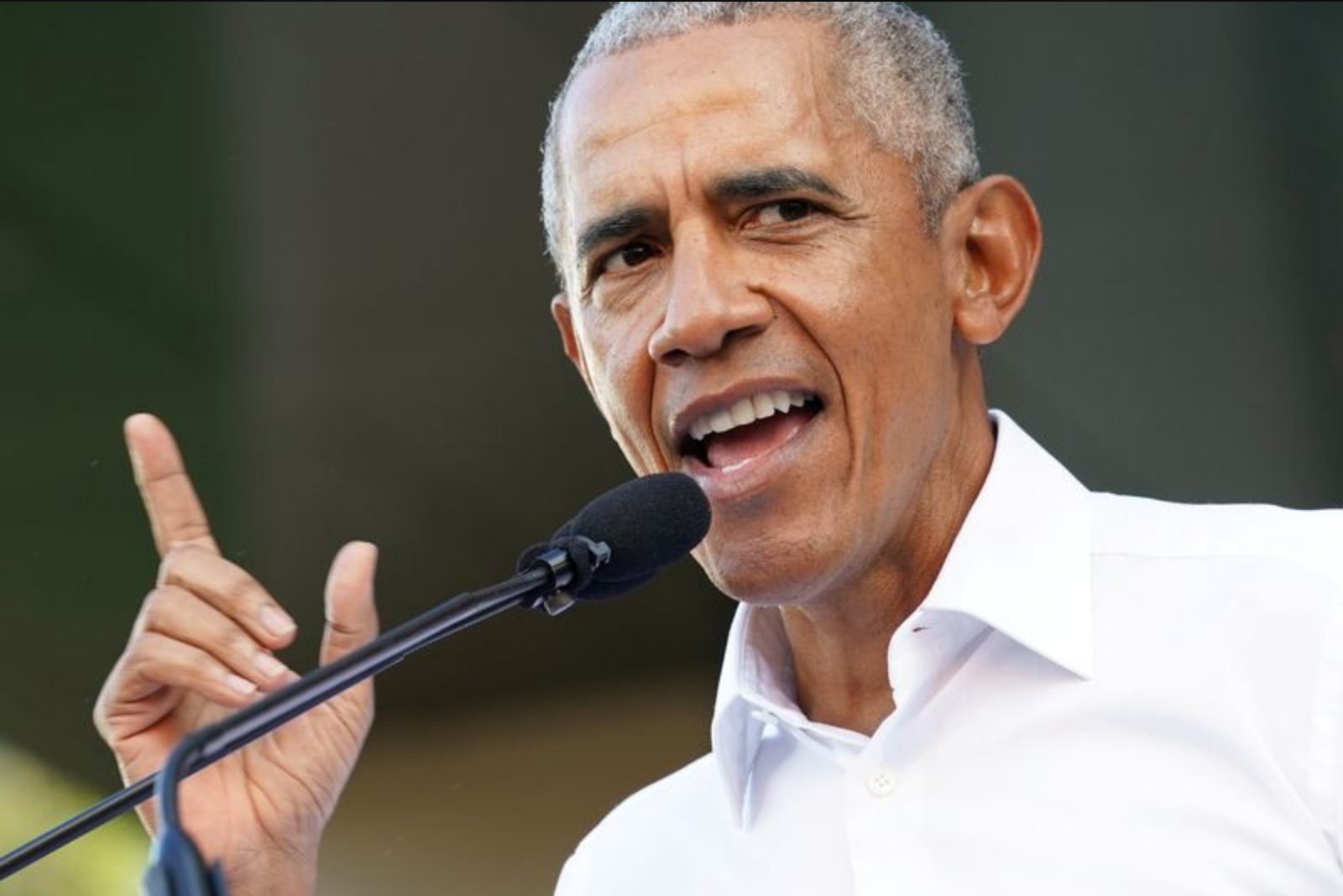
Republicans and Democrats are locked in an intense dispute over whether Virginia should adopt a new congressional map for the November midterms, and both camps are prominently featuring former President Barack Obama in their campaigns. As Virginians prepare to vote in a statewide special election this week, Obama has become a central figure in a costly, high-stakes contest that supporters on both sides view as potentially pivotal to which party controls the U.S. House of Representatives after November.
Obama has publicly backed efforts by Virginia Democrats to permit the state legislature to draw new congressional districts that could net Democrats four additional seats in Congress. The former president, once publicly critical of partisan map-drawing, appears in Democratic advertisements urging a yes vote that he says could prevent Republicans from "steal[ing] enough seats in Congress to rig the next election and wield unchecked power for two more years."
How Obama Became Central to the Campaign
Obama’s endorsement, delivered in part through a television spot, positions him at the center of divergent messaging. Democratic ads quote him directly, portraying the referendum as a defense against what they describe as Republican efforts to shore up control at the federal level. At the same time, Republican-aligned groups have dusted off footage of Obama from April 2017 in which he faulted gerrymandering for contributing to political polarization by making it "harder and harder to find common ground." Those opposing the referendum are running that material to argue voters should reject the change.
The two camps have saturated media with ads, mailers and radio spots that repeatedly feature Obama’s voice or image, producing overlapping and sometimes contradictory messages for voters. That overlap has created a battlefield of competing narratives built around a single national figure.
Money, Messaging and the Stakes
Financially powerful committees on both sides have driven the ad campaigns. Virginians for Fair Maps, a Republican-led committee, has raised nearly $20 million and has been a major voice against the referendum. Justice for Democracy PAC, which has received nearly $9 million from the conservative nonprofit Per Aspera Policy Incorporated, has also funded opposition ads that reuse Obama’s 2017 remarks. Democratic campaigns and allied groups have countered with ads that feature Obama’s current plea for a yes vote.
Recent surveys of likely voters show the campaign supporting the referendum narrowly ahead. More than 1 million Virginians have cast early ballots, according to the Virginia Department of Elections. If approved, the new congressional districts would remain in place through the aftermath of the 2030 census.
Voices From Both Sides
Virginia Senator Tim Kaine, a Democrat, dismissed the Republican tactic of using Obama’s earlier statements as evidence of Republican worry. "They wouldn’t be lying about Obama’s position if they weren’t desperate and worried," Kaine said, characterizing the Obama-centric messaging from Republicans as a sign of their alarm about the referendum.
Republican Representative Jen Kiggans of Virginia defended the use of Obama’s past comments as fair game. "When you put those words in the public sphere, as a politician, they still exist," she said. "They don’t go away just because you’ve changed your viewpoint." A Justice for Democracy radio spot features a woman saying, "Our president, Barack Obama, knows that partisan gerrymandering is wrong for our democracy. Listen to his words," as part of the effort to persuade voters to reject the amendment.
What the Map Would Do
Presently, Virginia’s congressional delegation consists of six Democrats and five Republicans. The proposed redrawing would produce a delegation with a 10-1 Democratic advantage in a state that leans Democratic at the federal level, according to the contours of the proposal being debated. Those additional four Democratic seats would be enough, advocates say, to give Democrats control of the House for the final two years of President Donald Trump’s administration if similar shifts occur in other states.
Supporters point to a wave of redistricting moves around the country. The article’s reporting cites Republican-led mid-decade redistricting in Texas, undertaken at President Trump’s direction, that was designed to produce as many as five additional congressional seats for Republicans. By the same token, California has moved to a referendum that could deliver Democrats a comparable boost in that state. Ohio, Missouri and North Carolina also enacted maps that favor Republicans, and Florida was described as poised to take up a new map soon.
Democratic Representative Suhas Subramanyam of Virginia argued that a failure of the referendum would allow Republican-controlled states to gerrymander and "hang on to the majority and continue to rubber-stamp President Trump."
Counterarguments and Warnings
Virginia Republicans contend the proposed map amounts to an unfair redraw that would leave half the state without what they characterize as fair representation, and they have warned it would impede constituents’ access to federal services by making it harder for residents to reach their members of Congress to resolve issues with agencies. Those arguments mirror points Democrats have made in other states that adopted maps favorable to Republicans.
Republican Representative Ben Cline criticized the nationalization of the vote, suggesting that bringing in national Democratic figures could backfire. "Enlisting national Democrats to try and push this egregious political hackery through next Tuesday is going to backfire," he said. "Republicans and independents and moderate Democrats are voting no, and we’re going to defeat it on Tuesday."
Closing
An Obama spokesperson did not respond to a request for comment, but the former president’s position has been amplified in Democratic advertising. In a Virginians for Fair Elections radio ad, Obama warns: "We can’t afford two more years of unchecked power and zero accountability in Washington. Help us chart a better path forward, Virginia."
The contest in Virginia presents an uncommon convergence: a single national political figure deployed by both sides of a state-level referendum with direct implications for national power. Voters will determine whether that convergence translates into a map that reshapes the state’s congressional delegation for the rest of the decade.