
Overview
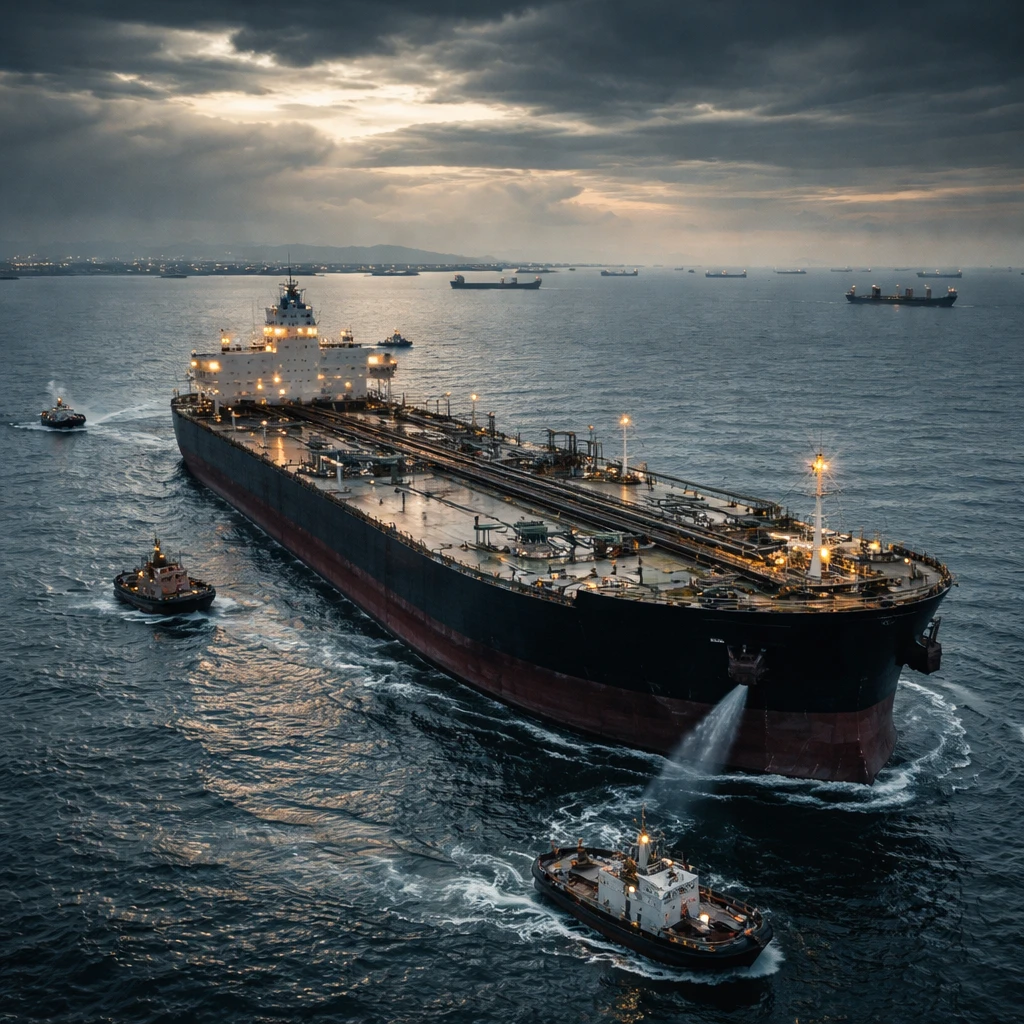
The U.S. Treasury issued a new 30-day license on Friday authorizing the purchase of Russian oil and petroleum shipments that were loaded onto ships as of Friday, April 17. The authorization is effective immediately and runs through May 16. The administration framed the measure as a short-term step to relieve pressure on global energy markets as disruptions linked to conflict in the Middle East continue to rattle supplies.
Policy reversal and timing
The decision represents a reversal from comments made just two days earlier by Treasury Secretary Scott Bessent, who told reporters that Washington would not renew prior waivers for Russian or Iranian oil and said supplies that had been "on the water" were already exhausted. The new license replaces an earlier 30-day exemption that expired on April 11 and explicitly continues to exclude transactions involving Iran, Cuba, and North Korea.
Why the waiver was extended
U.S. officials signaled the move was intended to help blunt the sharp run-up in energy prices tied to the fallout from the U.S.-Israeli war against Iran and associated market disruptions. The partial closure of the Strait of Hormuz by Tehran had left traders and consumers on edge for weeks. While Iran indicated late Friday that the Strait would remain open for the remainder of a recently agreed ceasefire, officials cautioned that full normalization of shipping operations would take time.
Pressure from large importers in Asia factored into the decision. Delegations from key buyers, including India, pushed Washington during recent meetings hosted with G20, World Bank, and IMF representatives to extend waivers so that cargoes already at sea could be delivered.
Political and geopolitical trade-offs
The administration’s move underscores an acute policy trade-off: alleviating immediate fuel cost pressures ahead of the November midterm elections versus maintaining a strict posture aimed at economically isolating Moscow for its military campaign in Ukraine. Lawmakers across the political spectrum criticized the extension, warning that it would provide Moscow with additional revenue while war continues in Europe. European partners have also pushed back, arguing the present geopolitical context is not suitable for loosening sanctions on the Kremlin.
Brett Erickson, a sanctions specialist at Obsidian Risk Advisors, noted that Friday’s renewal may not be the last time authorities resort to such measures. He suggested that as conventional policy tools to steady energy markets are exhausted, waivers could be used intermittently as a temporary fix.
Implications for markets and supply chains
For energy-importing economies and the global oil market, the waiver provides a limited and time-bound avenue for cargoes already en route to reach buyers, potentially easing immediate spot price stress. That said, the measure does not open new channels for sanctioned supply beyond the specified vessels and timeframe. The decision thus represents a narrowly tailored response intended to address short-term dislocations rather than a long-term policy shift.
Outlook and constraints
Officials and market participants will be watching how shipping normalizes in and around the Strait of Hormuz and whether additional waivers or other interventions will be required as the ceasefire and its implementation evolve. The immediate extension runs through May 16, and its limited scope means additional actions would be necessary if disruptions persist beyond that window.
Summary
The Treasury Department issued a one-month license effective immediately, permitting countries to buy Russian oil and petroleum products loaded on vessels as of April 17, with the authorization lasting through May 16. The move reverses earlier comments that waivers would not be renewed, replaces a waiver that lapsed on April 11, excludes Iran, Cuba, and North Korea, and was motivated by disruptions tied to the U.S.-Israeli war against Iran and related closures or restrictions around the Strait of Hormuz.