
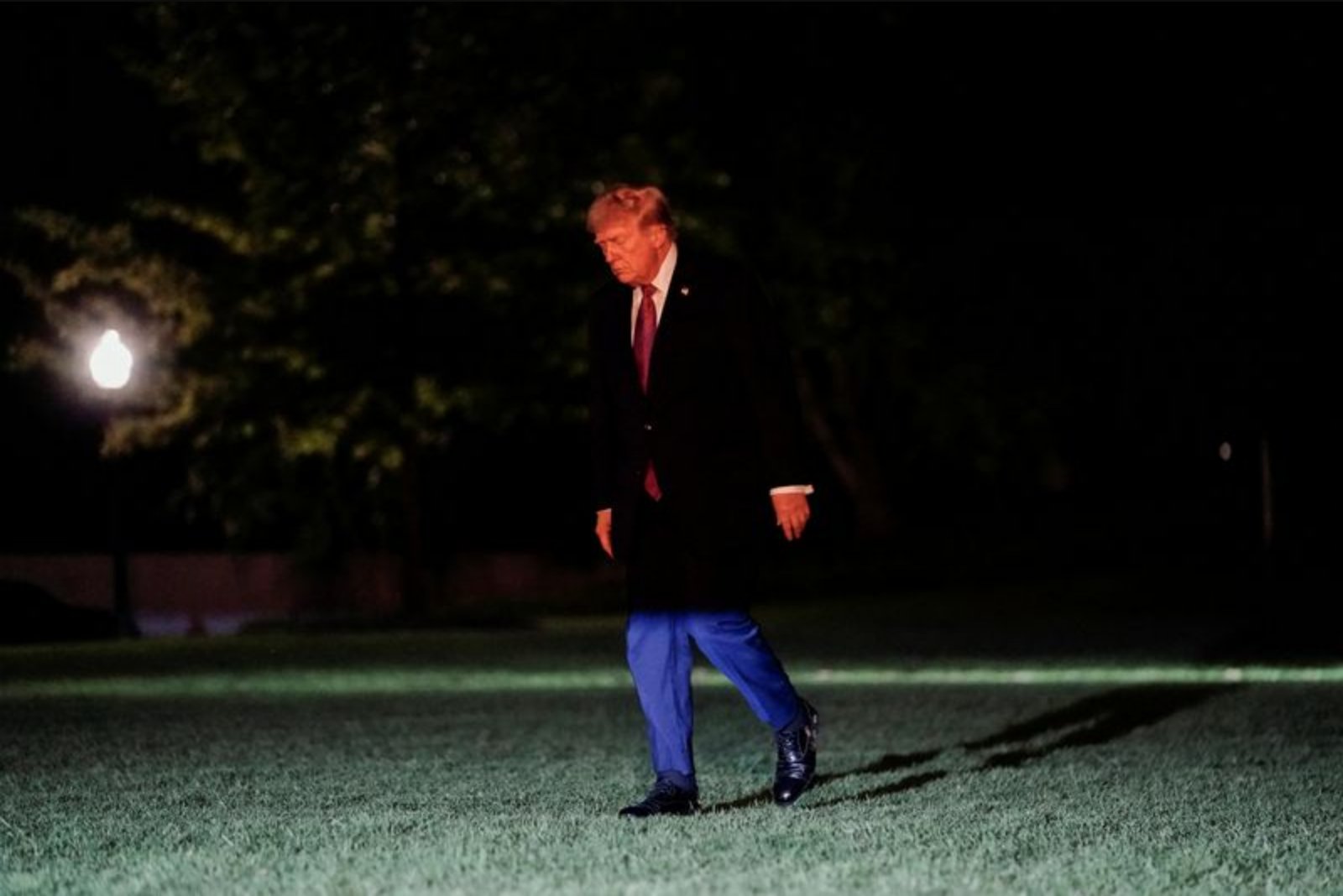
U.S. President Donald Trump told reporters late on Friday aboard Air Force One that there had been "some pretty good news about Iran," but he offered no details as he returned to Washington from Phoenix, Arizona. He said negotiations would continue over the weekend and expressed hope that talks "will go well," while also warning that a ceasefire might not be prolonged unless a comprehensive agreement to end the war with Iran is struck by the midweek deadline.
Hours earlier, Iranian authorities temporarily reopened the Strait of Hormuz after a separate ceasefire between Israel and Lebanon - a 10-day truce agreed by the two countries - eased one layer of regional tension. The reopening was framed by Iran's Foreign Ministry as a permission for commercial vessels to transit for the duration of that truce, but follow-up statements from multiple parties left the timeline and the safety of resumed shipping ambiguous.
Speaking to reporters on the aircraft, Trump declined to elaborate on the "good news," saying only that "It seems to be going very well in the Middle East with Iran" and that "We’re negotiating over the weekend. I expect things to go well. Many of these things have been negotiated and agreed to." In the same remarks, however, he said the U.S. might end the ceasefire with Iran unless a long-term resolution was agreed before the current truce expires on Wednesday, and that a U.S. blockade of Iranian ports would remain in place.
The conflict with Iran began on February 28 with a U.S.-Israeli attack and has killed thousands while disrupting traffic through the Strait of Hormuz - a key global oil choke point that until the recent fighting handled about a fifth of the world's oil trade. The strait's de facto closure earlier in the conflict pushed oil prices sharply higher.
Trump told reporters he expected further direct talks between the United States and Iran could occur over the weekend. Some diplomats, however, cautioned that the logistics of assembling negotiators in Islamabad, where talks were expected, would make rapid movement unlikely. Early on Saturday there were no visible signs of preparations in the Pakistani capital for fresh talks. Pakistan's army chief and principal mediator, Field Marshal Asim Munir, has been in Tehran since Wednesday.
A Pakistani source familiar with the mediation described a possible sequence in which a meeting between Iran and the United States could yield an initial memorandum of understanding, with a fuller peace accord to follow within 60 days. The source's comments indicated a staged approach to formalizing any agreement.
Complicating the discussions, Iran's speaker of parliament and senior negotiator, Mohammad Baqer Qalibaf, posted on social media that the Strait of Hormuz "will not remain open" if the U.S. blockade persists. Meanwhile, Foreign Ministry spokesperson Abbas Araqchi announced on social media that the strait was open for all commercial vessels for the remainder of the 10-day truce agreed between Israel and Lebanon. Iran's Defense Ministry added in a statement broadcast on state television that military vessels and ships linked to what it called "hostile forces" - specifically naming the United States and Israel - were still not permitted to pass.
Vessel movement data showed a group of around 20 ships, including container ships, bulk carriers and oil tankers, moving through the Gulf toward the Strait of Hormuz on Friday evening. Many of those ships later turned back, though the precise reasons were unclear. Among the group were three container vessels operated by French shipping group CMA CGM, which declined to comment on the movements. Separately, the cruise ship Celestyal Discovery, previously stranded in Dubai, transited the strait and headed toward Oman on Saturday morning, according to vessel-tracking data.
Iran has said all ships crossing the strait must coordinate with the Islamic Revolutionary Guard Corps - a requirement that did not exist before the outbreak of hostilities. Shipping companies have said they need clarifications on the new rules and expressed concern about mine risks, while the U.S. Navy cautioned that the mine threat in parts of the waterway remains not fully understood and advised mariners to consider avoiding the area.
On the nuclear file, there was no immediate clarity about how Iran and the United States would reconcile Tehran's nuclear activities with U.S. demands. Iran has defended what it describes as a civilian nuclear energy program. Trump told reporters he intended the U.S. to remove Iran's stockpiles of enriched uranium, a position that Iranian Foreign Ministry spokesperson Esmaeil Baghaei contradicted on state television by saying the material "would not be transferred anywhere." Separately, a senior Iranian official expressed hope that a preliminary agreement could be reached in the coming days.
Oil markets reacted swiftly to the prospect of resumed marine traffic through the strait. Oil prices fell around 10% and global stock markets rose on Friday as investors priced in the possibility of easing supply constraints. Following a video conference, more than a dozen countries indicated a willingness to join an international mission to protect shipping in the strait when conditions permit, according to Britain.
A senior Iranian official told negotiators there had been an agreement in principle to unfreeze billions of dollars in Iranian assets as part of any accord, though no timeline was provided. Later on Friday, at a rally in Arizona, Trump reiterated his broader stance on funds by saying "no money will exchange hands in any way, shape or form."
At talks held the previous weekend, U.S. negotiators reportedly proposed a 20-year suspension of Iranian nuclear activity, while Iran countered with a proposed halt of three to five years. Two Iranian sources said there were signs of a potential compromise that could involve removing part of Iran's enriched uranium stockpile, though the exact parameters were unclear. In a separate interview, Trump used the metaphor of excavation, saying "We’re going to go in with Iran, at a nice leisurely pace, and go down and start excavating with big machinery" and that material "We’ll bring it back to the United States."
Despite U.S. optimism, Iranian officials cautioned that significant gaps remained. One Iranian source characterized outstanding issues as "gaps remained to be resolved" before any preliminary agreement could be reached. Senior clerics maintained a defiant tone during Friday prayers; cleric Ahmad Khatami said: "Our people do not negotiate while being humiliated."
Summary
President Trump announced unspecified "good news" regarding talks with Iran and said negotiations would continue over the weekend, but warned the temporary ceasefire with Iran could end if a long-term settlement is not agreed by Wednesday. Iran briefly allowed commercial traffic through the Strait of Hormuz under the terms of a 10-day truce tied to a separate Israel-Lebanon agreement, yet subsequent comments from Iranian officials and continued U.S. naval warnings left shipping movements and safety concerns unresolved. Key outstanding questions include the treatment of Iran's enriched uranium stockpiles, the U.S. blockade of Iranian ports, and the mechanics and timeline for unfreezing Iranian assets.
Key points
- President Trump said there was "some pretty good news about Iran" and expected negotiations to continue over the weekend, but set a Wednesday deadline for a long-term deal to extend the ceasefire - sectors affected: diplomacy, defense, maritime.
- The Strait of Hormuz was temporarily reopened for commercial vessels during a 10-day truce linked to an Israel-Lebanon agreement, yet ship movements remained tentative and subject to new Iranian coordination rules and security concerns - sectors affected: shipping, energy, insurance.
- Oil prices dropped about 10% and global stock markets rose on the prospect of resumed transit through the strait; an apparent agreement to unfreeze billions in Iranian assets was reported without a timeline - sectors affected: oil, global equities, banking.
Risks and uncertainties
- Ceasefire continuity: The temporary truce with Iran may not be extended unless a long-term agreement is reached by Wednesday, creating short-term uncertainty for maritime traffic and regional stability - impacts shipping and energy supply chains.
- Security hazards in the strait: Unresolved mine threats and restrictions on military and certain foreign vessels mean commercial operators require clarifications before resuming transit, maintaining elevated insurance and operational risk - impacts shipping insurers and operators.
- Nuclear and assets negotiations: Conflicting statements over Iran's enriched uranium and the status of frozen assets leave critical elements of any deal undefined, complicating confidence in a durable settlement - impacts energy markets and international finance.
Note: This reporting reflects statements, vessel movement data, and public comments by officials referenced above. Where timelines or outcomes were not specified by officials, they are presented as stated without inference.