
World April 18, 2026 12:43 AM

Australia and Japan Finalize A$10 Billion Warship Contract to Boost Naval Capabilities

Agreement begins delivery of upgraded Mogami-class frigates with initial builds in Japan and subsequent Australian construction

By Leila Farooq
Australia and Japan Finalize A$10 Billion Warship Contract to Boost Naval Capabilities

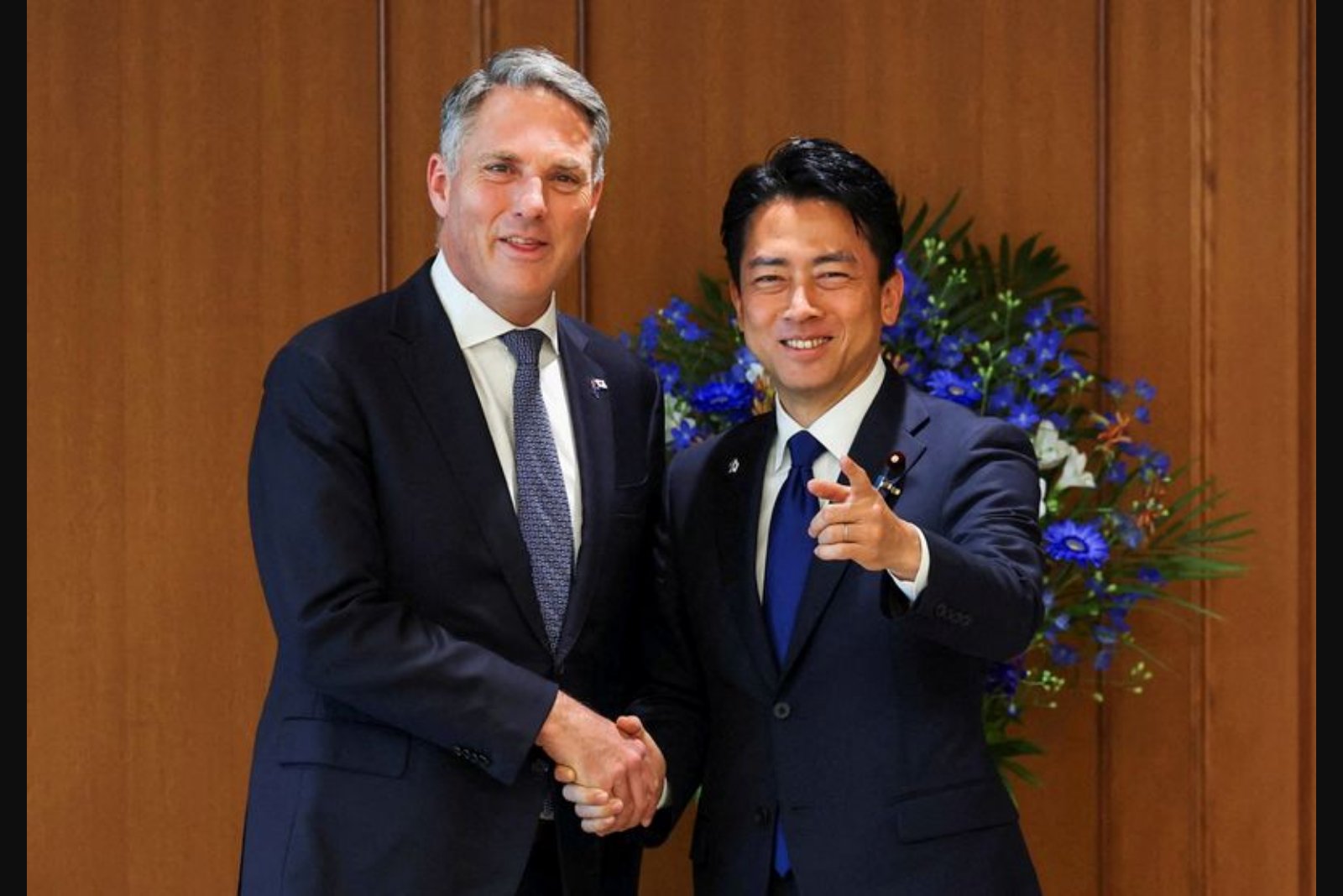
Australia and Japan have formalized contracts worth A$10 billion ($7 billion) to provide the Royal Australian Navy with upgraded Mogami-class multi-role frigates. The memorandum, signed by defence ministers Richard Marles and Shinjiro Koizumi, confirms initial construction of three ships in Japan from 2029 and a planned transition to onshore builds at the Henderson shipyard near Perth for eight additional vessels. The deal signals deepening bilateral defence ties as Australia aims to protect key maritime routes amid an expanding regional military presence.

Key Points

  • A$10 billion ($7 billion) contracts were signed to deliver upgraded Mogami-class multi-role frigates to the Royal Australian Navy.
  • Mitsubishi Heavy Industries will build three frigates in Japan from 2029, with eight additional ships planned for construction in Australia following a transition to onshore production at the Henderson shipyard near Perth.
  • The vessels are intended to protect critical maritime trade routes and Australia’s northern approaches in the Indian and Pacific Oceans, reflecting deeper bilateral defence cooperation between Australia and Japan.

SYDNEY, April 18 - Australia and Japan on Saturday signed contracts launching a A$10 billion ($7 billion) program to supply the Royal Australian Navy with new warships, marking Tokyo’s most significant military export since it lifted its postwar ban on arms sales in 2014.

Defence Ministers Richard Marles and Shinjiro Koizumi formalized the arrangement by signing a memorandum that, according to a statement from Marles, "reaffirm[ed] the Australian and Japanese governments’ shared commitment to the successful delivery" of the warships. Japan’s Defence Ministry also posted on X that Koizumi and Marles welcomed the "conclusion of contracts for General Purpose Frigates, and confirmed to further strengthen bilateral defense ties" during a signing in Melbourne.

Under the contract, Mitsubishi Heavy Industries will supply three upgraded Mogami-class multi-role frigates built in Japan beginning in 2029. The agreement includes plans for eight additional frigates to be constructed in Australia, with contracts signed for the initial three Japanese-built ships before a "transition to an onshore build" at the Henderson shipyard near Perth in Western Australia, Marles said.

The frigates are designed to perform anti-submarine operations, strike surface vessels and provide air defence. Australian authorities intend to deploy these ships to protect critical maritime trade routes and to secure the country’s northern approaches in the Indian and Pacific Oceans in response to an expanding regional military presence.

The financial terms of the arrangement equate to approximately $1 = 1.3955 Australian dollars. The contract represents a major procurement for Australia and a significant defence export for Japan as both countries seek closer security cooperation.


Context and implementation notes

  • The initial tranche of three frigates will be built in Japan from 2029 by Mitsubishi Heavy Industries.
  • Australia will undertake construction of eight further frigates at an onshore facility after an agreed transition to local production at Henderson shipyard near Perth.
  • The ships are intended to operate across the Indian and Pacific Oceans to defend maritime trade routes and northern approaches.

This agreement marks a substantive step in bilateral defence cooperation between Australia and Japan, formalizing timelines and responsibilities for delivery and domestic construction while specifying the operational roles the vessels will fill.

Risks

  • The contracts cover initial construction of three ships in Japan before a transition to local Australian builds, creating potential uncertainty around the timing and execution of the onshore construction program - this affects the shipbuilding and defence manufacturing sectors.
  • Deployment aims to address an expanding regional military presence; this evolving security environment introduces operational and strategic uncertainty for defence planners and regional maritime trade protection.

More from World

Iranians Brace for Harder Conditions as Ceasefire Eases External Threats but Raises Domestic Fears Apr 18, 2026 New Zealand Upholds Patrol Flight Near China, Citing UN Mandate Apr 18, 2026 Economic Strain Emerges as Central Pressure Point in U.S.-Iran Conflict Apr 18, 2026 Trump Signals Progress on Iran Talks as Strait of Hormuz Reopens Temporarily Apr 18, 2026 Beijing to Complete Core Area of Satellite Town in 2026 as Commercial Space Industry Expands Apr 17, 2026