
Pope Leo set out on Saturday for Angola, the third leg of a four-country Africa itinerary during which the pontiff has grown noticeably more forceful in his public remarks. He arrived in Luanda, the Angolan capital, after departing Cameroon, where his comments on global conflicts and leadership drew attention and criticism.
The pope was due to reach Luanda around 3 p.m. (1400 GMT). His program in Angola includes a meeting with President João Lourenço followed by an address to the country’s political leaders. Officials say he is expected to raise issues related to the exploitation of Angola’s natural resources.
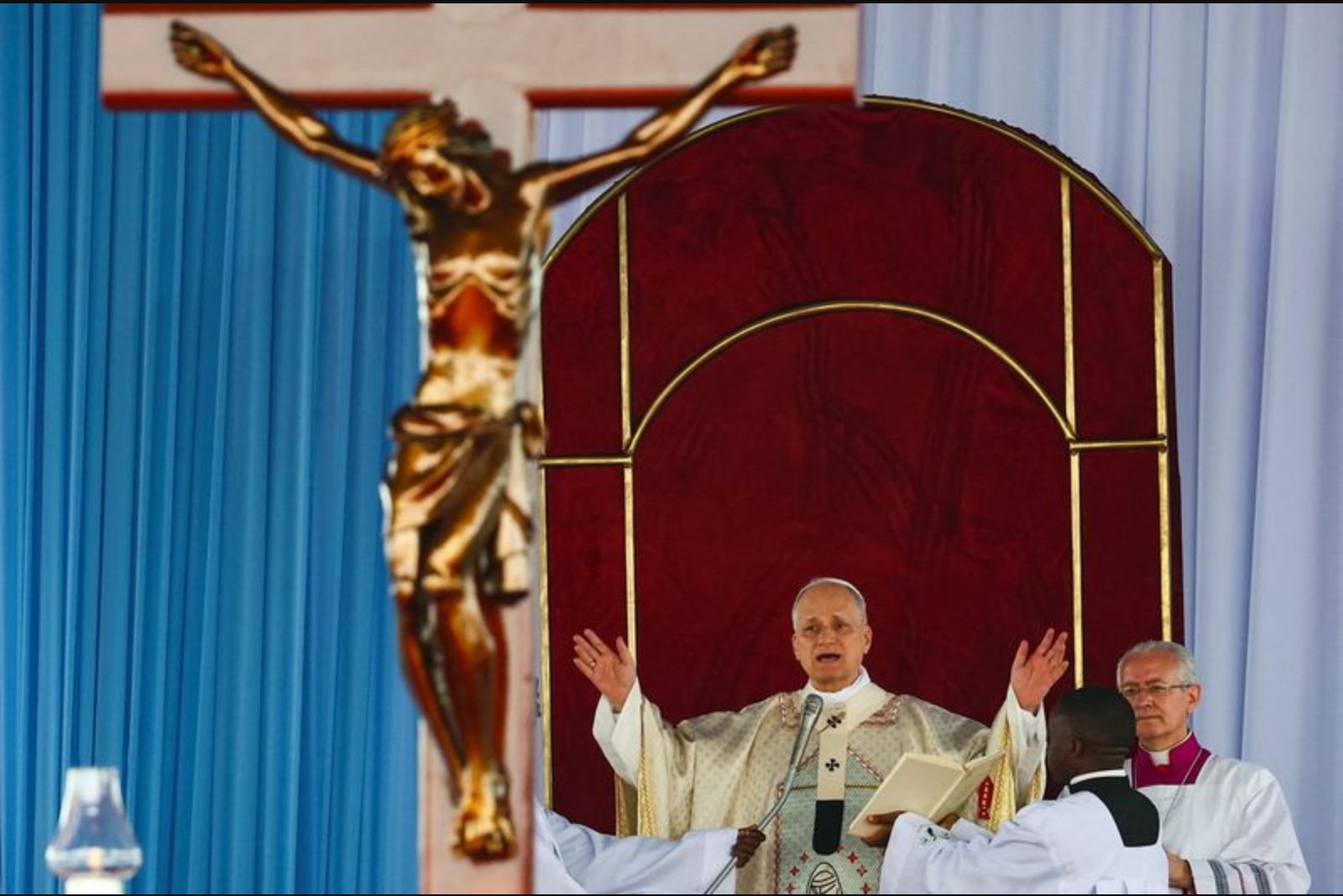
Before departing Cameroon, the pope celebrated a farewell Mass in Yaounde, encouraging attendees not to lose hope despite the significant difficulties confronting the Central African country. He referenced a simmering conflict in Cameroon’s two anglophone regions, noting that the violence there has killed thousands.
"In moments when we seem to be sinking, overcome by adverse forces, when everything appears bleak ... Jesus is with us always, stronger than any power of evil," the pontiff said. "In every storm, he comes to us and repeats: 'I am here with you: do not be afraid'."
The visit to Angola comes amid sharp contrasts. After decades of bloody conflict during the 20th century, Angola emerged as one of sub-Saharan Africa’s leading oil producers. The oil sector accounts for some 95% of the country’s exports. Yet these revenues coexist with widespread poverty: Angola’s population of 36.6 million faces persistent hardship, with more than 30% living on less than $2.15 per day, according to the World Bank. More than half of Angolans identify as Catholic.
Pope Leo, who is originally from Chicago and is the first U.S. pope, maintained a relatively low public profile during the first ten months of his papacy. In recent weeks, however, he has taken a more outspoken approach on a range of global issues, including denunciations of war and social inequality. That shift in tone has been a defining feature of the ambitious ten-day Africa tour.
The pope’s comments have provoked reactions beyond the countries he is visiting. This week he faced repeated attacks from President Donald Trump after criticizing the Iran war. In Cameroon, he described the world as "being ravaged by a handful of tyrants," a phrase that underscored his growing willingness to employ sharper language on international affairs.
Public response on the trip has been robust. Crowds in Cameroon greeted the pontiff enthusiastically, with an estimated 120,000 people attending a Mass in Douala on Friday. Along his routes, supporters lined the streets and many wore colorful fabrics depicting the pope’s likeness.
The Angola stop will test how the pope balances appeals on resource governance and social justice with diplomatic engagement at a state level. His meeting with President Lourenço and subsequent remarks to political leaders will be watched closely for any explicit calls on the stewardship of Angola’s oil wealth and its distributional consequences.