
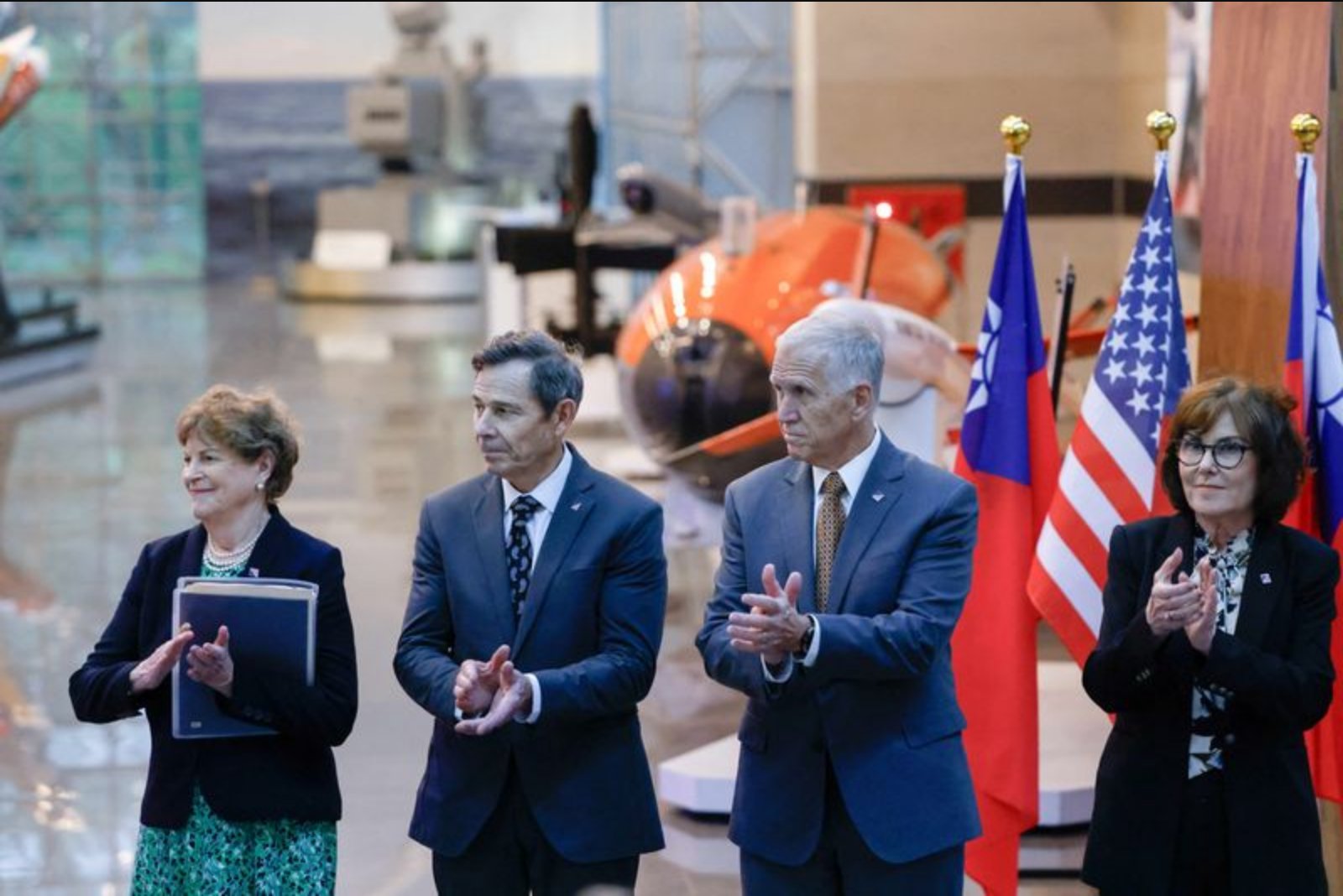
WASHINGTON, April 16 - A bipartisan group of U.S. senators has assured Taiwan's lawmakers that the United States is likely to approve outstanding weapons sales in the near term and urged Taipei to accelerate delayed defense spending, citing growing pressure from China.
In a letter dated April 14 addressed to Taiwan parliament speaker Han Kuo-yu of the Kuomintang (KMT) and senior lawmakers from other parties, the senators said they expect pending sales to be announced in the coming weeks and stressed Congress's commitment to delivering critical capabilities to the island.
"The United States Congress is fully committed to the timely delivery of critical capabilities to Taiwan and we expect that pending sales will be announced in the coming weeks," wrote Senator Jeanne Shaheen of New Hampshire, the ranking Democrat on the Senate Foreign Relations Committee. The letter was also signed by Democratic Senator Jacky Rosen of Nevada and Republican senators Thom Tillis of North Carolina and John Curtis of Utah.
The senators identified several components of the packages under consideration, citing "counter-drone assets, an integrated battle command system, and medium-range munitions to enhance Taiwan’s air defenses." The communication emphasized both the procurement of U.S. equipment and the need for faster domestic production of asymmetric capabilities.
The timing of the letter coincides with a planned presidential trip to China on May 14-15. The visit has generated concern in both Washington and Taipei that efforts by President Donald Trump to secure a favorable trade outcome with Chinese leader Xi Jinping could lead to limits on U.S. military support for Taiwan.
President Lai Ching-te proposed $40 billion in additional defense spending last year to strengthen Taiwan's ability to counter pressure from China. That proposal, however, has been stalled by opposition within Taiwan's legislature, where the KMT has pushed its own, less expensive alternative and successfully tied up the larger package.
Last week, KMT Chair Cheng Li-wun traveled to China on what she described as a peace mission aimed at easing cross-strait tensions, at a moment when Beijing has increased military pressure on the island it claims as part of its territory.
U.S. lawmakers have repeatedly urged Taiwan’s parliament to advance the proposed defense expenditures. In their April 14 message, the senators reiterated the importance of enabling not only the acquisition of American systems but also the acceleration of Taiwan’s domestic production of asymmetric defenses.
China has long insisted that the United States halt arms sales to Taiwan, and the issue has been a point of discussion between Chinese and U.S. leaders. In February, Xi told President Trump that arms sales to Taiwan should be handled with "prudence," and the topic is expected to be raised during the upcoming presidential visit.
Despite Beijing's objections, the U.S. administration in December approved a record $11 billion in weapons sales to Taiwan. Media reporting has indicated that the administration may announce additional packages valued at up to $14 billion following the presidential trip, which had been delayed from early April.
China has not renounced the use of force to bring Taiwan under its control. Taiwan’s president has repeatedly offered talks with Beijing but has been rebuffed; the president maintains that only the people of Taiwan can decide the island’s future.
Key points
- U.S. senators said they expect pending weapons sales to Taiwan will be announced within weeks, signaling congressional support for timely delivery of capabilities - sectors impacted: defense contractors, aerospace and defense supply chains.
- The letter identifies counter-drone systems, an integrated battle command system, and medium-range munitions as likely components of the packages - sectors impacted: defense manufacturing, electronics, and munitions suppliers.
- The communication coincides with a planned May 14-15 presidential trip to China and highlights concerns that broader diplomatic negotiations could affect military assistance - sectors impacted: geopolitical risk-sensitive markets and defense equities.
Risks and uncertainties
- Diplomatic negotiations during the upcoming presidential visit to China could influence the timing or scope of U.S. weapons announcements, creating policy uncertainty for defense procurement and market participants.
- Domestic political deadlock in Taiwan, where the KMT has stalled a $40 billion defense proposal in favor of a smaller plan, could delay Taiwan's ability to finance and field new capabilities, affecting defense contractors and local production timelines.
- Continued pressure from China, including its longstanding demand for a halt to U.S. arms sales to Taiwan and its refusal to renounce the use of force, maintains an elevated security risk that could affect regional stability and related markets.
Note: This article presents the content of the April 14 letter and related developments as described in communications from U.S. senators and statements from Taiwanese and Chinese officials. Details about future announcements and diplomatic outcomes remain subject to official actions and timing.