
Overview
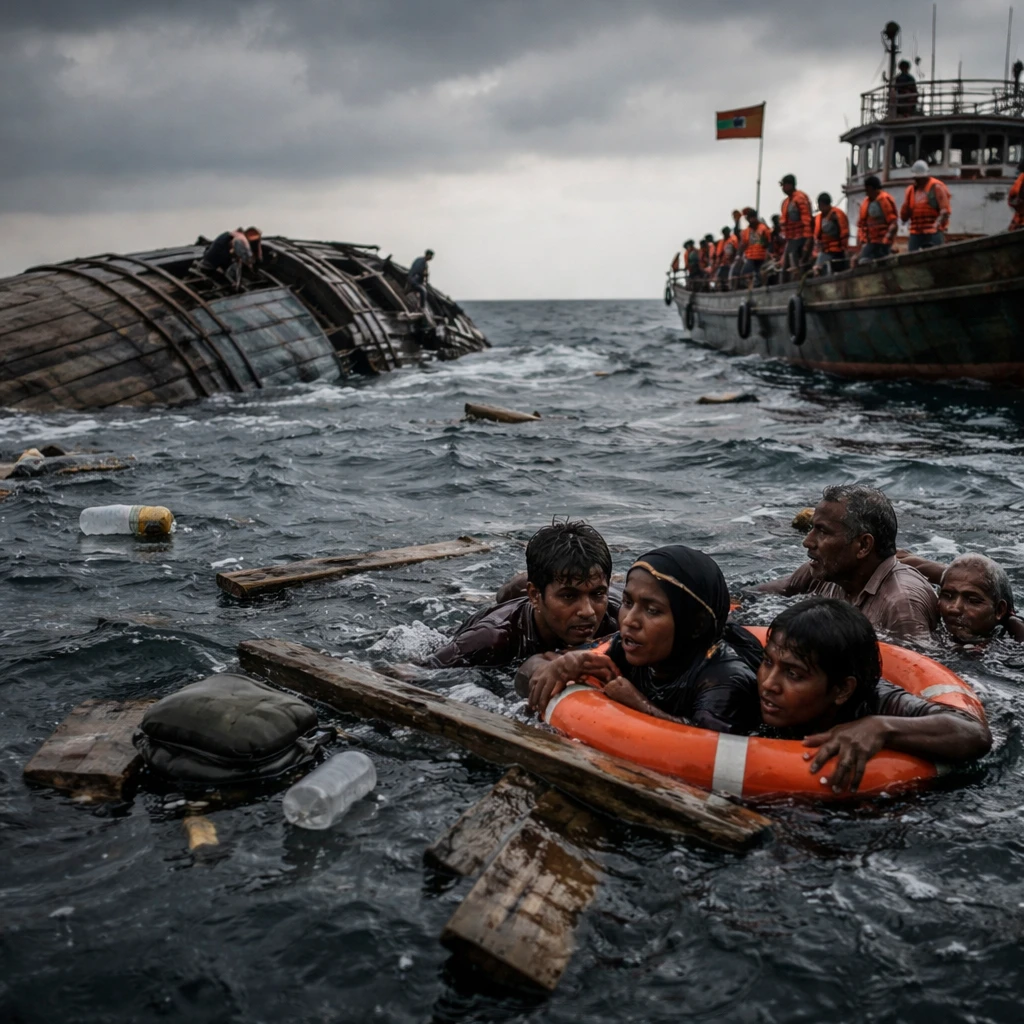
A survivor of an overturned boat in the Andaman Sea has recounted a prolonged, life-threatening voyage that ended when an overcrowded trawler capsized, leaving about 250 people unaccounted for. The vessel had left from Teknaf in southern Bangladesh heading to Malaysia and sank in the second week of April amid rough seas, strong winds and extreme overcrowding, according to accounts provided to humanitarian agencies.
Survivor testimony
Rafiqul Islam, one of those who survived, said passengers endured four days and nights as conditions aboard the boat rapidly worsened. He described how traffickers, seeking to avoid detection by patrols, forced many passengers into tight storage spaces originally intended for fish and nets. "There was hardly any oxygen," he said, adding that at least 30 people suffocated before the boat rolled over.
When the vessel flipped, hundreds were thrown into the sea. Islam estimated that roughly 240 people remained onboard at that point, including about 20 women and several children, and said only a small number survived the capsize. He was part of an initial group pulled from the water by a passing Bangladeshi oil vessel, which rescued four people and then later located five more survivors in the sea.
Voyage details
The journey began with a departure on April 4 on a small fishing boat, according to Islam. Passengers were later transferred to a larger trawler near Myanmar waters. At one stage of the trip, those aboard were compelled to hide in bushes to elude patrols before continuing out to sea. Survivors reported that nearly 300 people had been crammed onto the vessel, a mix of women, children, crew members and suspected traffickers.
Humanitarian context
Bangladesh is home to around 1.2 million Rohingya refugees living in camps in the south, most of whom fled violence in Myanmar in 2017. Many of these refugees continue to undertake perilous journeys by sea in search of safety and economic opportunity abroad, heading to countries such as Malaysia, Indonesia and Thailand. Aid agencies have warned that declining humanitarian assistance is worsening conditions in the camps.
A report by the International Rescue Committee, based on a survey of 500 households in Cox's Bazar, found stark differences in outlook: only 2% of Rohingya parents reported feeling hopeful about their children’s future, compared with 84% among host community parents. The report also cited sharply reduced food rations, stated as low as $7 per person per month, forcing many families into desperate coping strategies. Nearly 69% of refugee households reported children dropping out of school, and about half said their children had been compelled into labour.
The IRC called on donors and authorities to move beyond short-term relief and to pursue longer-term responses, warning that without sustained support both refugees and nearby host communities face deepening poverty and vulnerability.
What happened next
Rescue efforts by a passing Bangladeshi oil vessel resulted in a small number of survivors being pulled from the water and brought to safety. Beyond those rescued, large numbers remain missing and unaccounted for following the capsizing and the chaos of the overturned vessel.
The survivor accounts and the IRC survey together paint a picture of acute humanitarian strain and of persistent willingness among refugees to risk dangerous sea crossings in search of better prospects.