
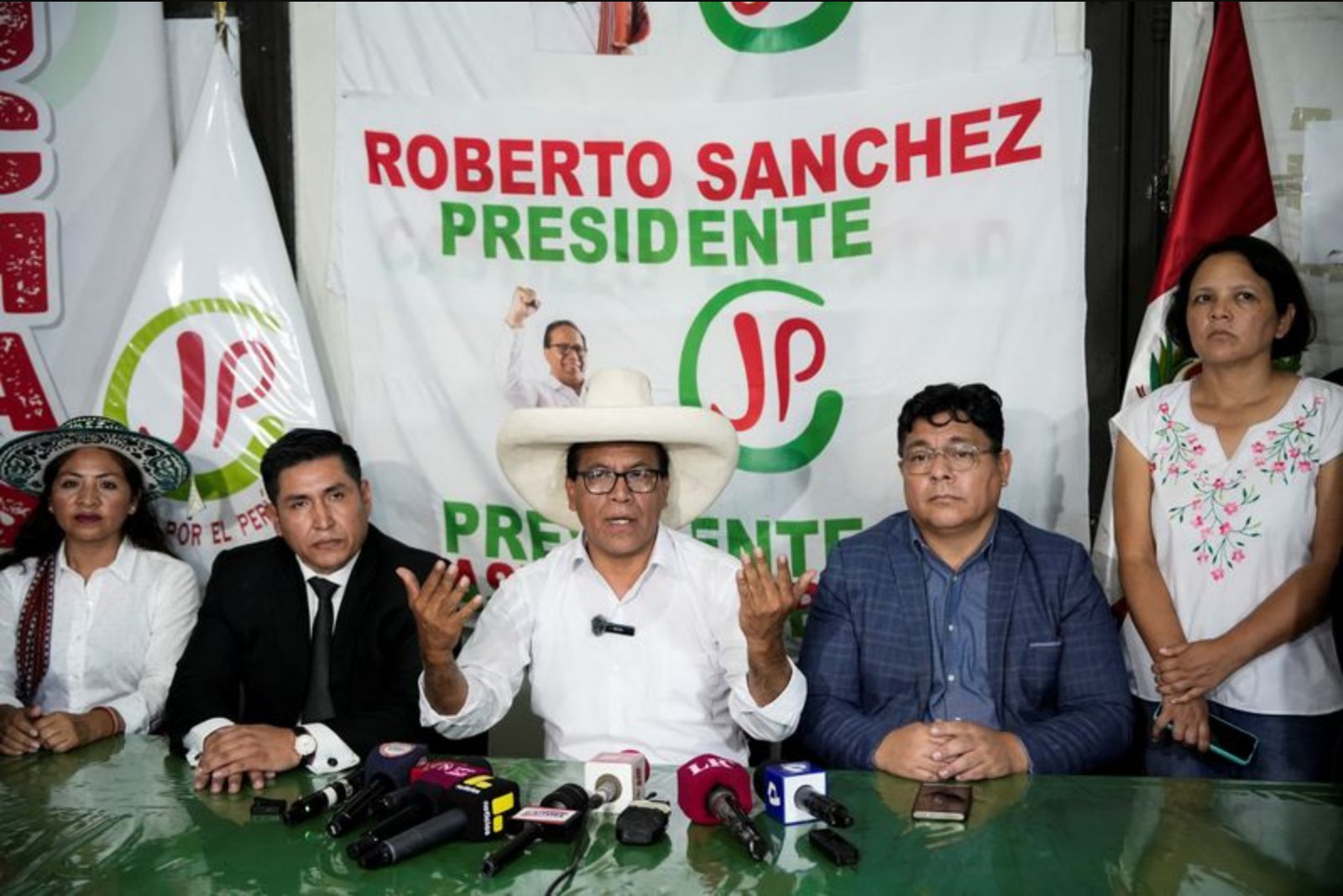
LIMA, April 16 - The race to advance to Peru's June runoff remained unsettled on Thursday as the nation's electoral office continued to tabulate ballots from the weekend vote. With 93% of ballots reported, leftist congressman Roberto Sanchez held a narrow advantage over far-right former Lima Mayor Rafael Lopez Aliaga, with Sanchez at 11.98% of the vote and Lopez Aliaga at 11.92%.
Conservative Keiko Fujimori, running for the presidency for a fourth time, maintained a clearer lead on the count at 17.07%. A second-round runoff has been scheduled for June 7, but which challenger will face Fujimori remained in doubt as results continued to trickle in through the National Office of Electoral Processes (ONPE).
The vote tabulation was extended into Monday to allow several thousand people who had been unable to vote on Sunday to cast ballots. That delay, and the ongoing processing of outstanding ballots five days later, has been accompanied by allegations from Lopez Aliaga that irregularities have occurred. He has called for the count to be suspended, and his party has offered 20,000 soles - roughly $5,830 - to electoral workers in return for information about "possible irregularities, fraud, or sabotage." Lopez Aliaga has not presented evidence to substantiate his claims.
European Union observers monitoring the process reported they found no concrete evidence of fraud. At a Wednesday press conference, Fujimori urged calm and declined to speak extensively until there was "significant progress in the count." She said the outcome would be very close and that "every vote will count, and the result is not yet decided."
Election-monitoring NGO Transparencia warned that full results could take additional time to arrive. Alvaro Henzler, head of Transparencia, told local radio RPP that it may take a couple of weeks to complete the count, noting that most of the uncounted ballots were coming from broadly left-leaning rural areas and from overseas locations where emigrant voters tend to favor right-wing parties. Henzler said Transparencia is calling for calm and urging the public to wait for the final totals.
Pre-election surveys had shown a substantial share of the electorate was undecided or unwilling to support any candidate in what was a crowded contest featuring a record 34 entrants. Markets responded nervously as Sanchez gained ground on Lopez Aliaga. Sanchez has campaigned on promises of drafting a new constitution and increasing state control over natural resources. He is also identified as an ally of former president Pedro Castillo, who was removed from office and jailed in 2022 after a short-lived presidency.
Peru is a major exporter of copper and agricultural products, and its political volatility has been notable: the country has had eight presidents in the last decade and several former leaders are incarcerated. Despite the churn in leadership, Peru has long been regarded as one of Latin America's more stable economies. Still, the narrow margins and prolonged count have injected uncertainty into markets sensitive to political change.
Context and next steps
The ONPE will continue to process outstanding ballots, including those from rural precincts and overseas polling stations. Officials, observer groups, and party representatives are watching as the remaining votes are incorporated into the official totals. With fewer than one percentage point separating Sanchez and Lopez Aliaga and fewer than 10,000 votes separating them, the completion of the count will determine who faces Fujimori in the runoff on June 7.