
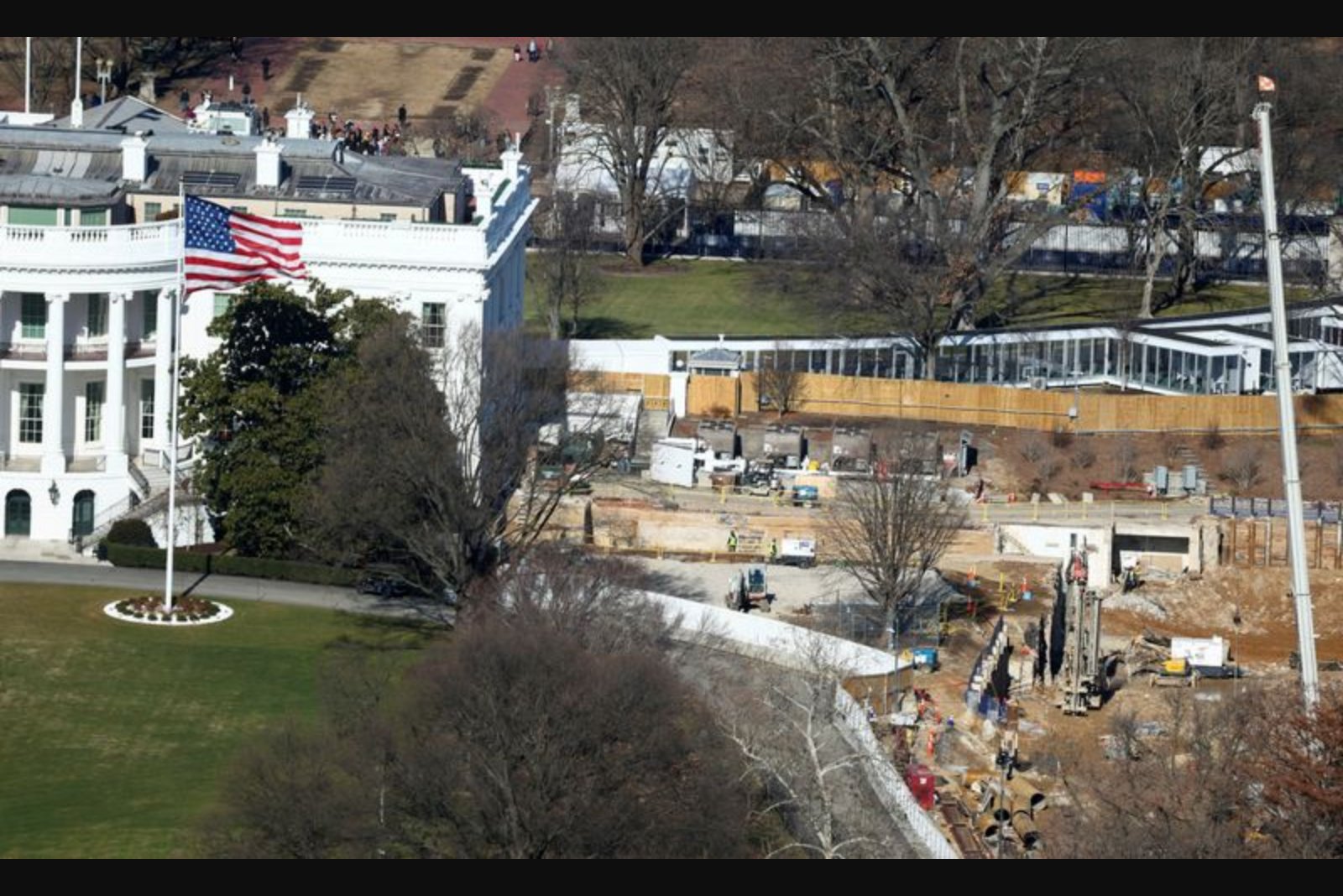
April 16 - A federal judge on Thursday reaffirmed that the White House ballroom project cannot proceed in full without congressional authorization, amending his prior injunction to limit what parts of the construction may continue. U.S. District Judge Richard Leon said the administration had taken a "brazen" and "disingenuous" approach in interpreting his March 31 order, and he modified the language to make clear the ruling stops "above-ground construction of the planned ballroom" while not barring "below-ground construction of national security facilities."
Leon’s revision came after a lawsuit brought by the National Trust for Historic Preservation, a nonprofit established by Congress to help safeguard historic structures. The group alleged that the administration exceeded its authority when it razed the White House East Wing last October and began building the proposed 90,000-square-foot ballroom. The project is reported to cost more than $400 million and is being funded by corporate donors.
The judge’s original March 31 injunction had ordered most work to stop but included an exception allowing crews to continue any "construction necessary to ensure the safety and security of the White House." In response, the administration and federal agencies told the court that this national security carve-out applied to essentially the whole ballroom project, citing design elements such as missile-resistant columns and drone-proof roofing. They also argued the ballroom and a planned military bunker beneath it constitute a "single, coherent whole."
In Thursday’s order Leon rejected that expansive reading. He wrote that the administration and agencies "now seek to turn this exception on its head and unreasonably insist that the entire ballroom project may proceed." The judge added plainly, "I cannot possibly agree."
The National Trust had asked Leon to clarify the prior injunction. After the administration filed an appeal, an intermediate appeals court last week directed Leon to revisit the scope of his March 31 order, pointing to the administration’s national security arguments.
With Thursday’s clarification, the legal contest over the ballroom’s future centers on what constitutes permissible below-ground national security work and how that distinction interacts with the broader construction of the above-ground facility. The case remains subject to further appellate review following the administration’s appeal.
Contextual note: The judge’s revision narrows the immediate prohibition to above-ground construction while preserving an exception for below-ground security-related work, without resolving broader questions that may be addressed on appeal.