
Economy April 16, 2026 02:14 PM

Villeroy: Central Bank Independence Essential for Effective Monetary Policy

Bank of France governor warns that preserving institutional autonomy helps lower inflation and interest rates amid U.S. political tensions over the Fed

By Sofia Navarro
Villeroy: Central Bank Independence Essential for Effective Monetary Policy

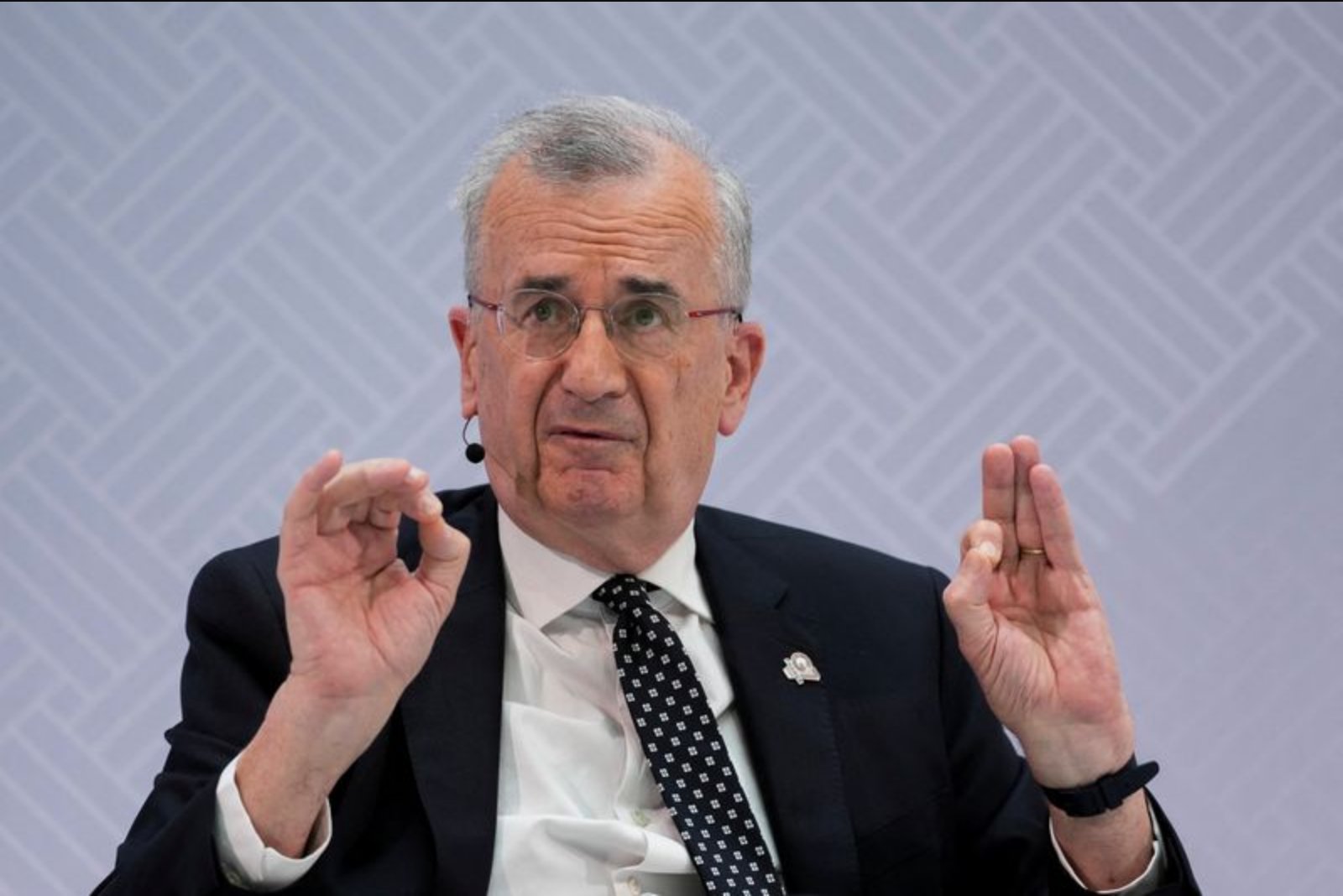
Bank of France Governor Francois Villeroy de Galhau told an IMF-World Bank spring meeting in Washington that independent central banks are a cornerstone of democratic governance and are necessary to deliver lower inflation and lower interest rates. His remarks come as U.S. allies express concern over political pressure and investigations surrounding Federal Reserve leadership, including threats by former President Trump to remove Fed Chair Jerome Powell from a separate Board seat and uncertainty over the transition to Trump’s nominee Kevin Warsh.

Key Points

  • Bank of France Governor Francois Villeroy de Galhau said central bank independence is a prerequisite for successful monetary policy, emphasizing it lowers inflation and interest rates.
  • Villeroy made the remarks at the IMF and World Bank spring meetings in Washington and described independence as part of democratic structures, not a creation of bankers.
  • His comments come amid concern over criticism and pressure on Federal Reserve Chair Jerome Powell, a criminal probe into the Fed headquarters renovation, and uncertainty around the transition to nominee Kevin Warsh - developments that affect financial markets and government institutions.

Bank of France Governor Francois Villeroy de Galhau told an audience at the International Monetary Fund and World Bank spring meetings in Washington that central bank independence is a prerequisite for successful monetary policy.

"I know it’s criticized. It’s under attack, including sometimes in this country," Villeroy said during the event, stressing that independence was established as part of democratic institutions rather than by central bankers themselves. He argued that the arrangement serves both economies and societies because "the practical experience is that independence brings lower inflation and lower interest rates."

Villeroy added: "So I hope we can stick with that everywhere. It will help through this crisis." His remarks came amid heightened concerns among U.S. allies about recent challenges to the Federal Reserve and its leadership.

The comments reflect growing unease over repeated attacks on current Fed Chair Jerome Powell, including criticism from former President Donald Trump that Powell was slow to cut U.S. interest rates. Separate from his role as chair, Powell also holds a seat on the Federal Reserve’s Board of Governors; Trump on Wednesday threatened to remove him from that Board seat if Powell does not vacate it when his term as chair ends on May 15.

There is also a criminal investigation into the renovation of the Fed’s headquarters in Washington, a matter that has added to the scrutiny surrounding the central bank. Against this backdrop, the prospect of a smooth and timely handover to Trump’s preferred candidate for Fed chair, Kevin Warsh, is increasingly uncertain. That situation raises the possibility of a clash over who directs central bank operations in the interval if a clear transition does not occur.

Villeroy framed central bank autonomy as a democratic safeguard that benefits macroeconomic outcomes. His statements link institutional design to measurable policy aims by noting the association between independence and "lower inflation and lower interest rates." He urged defenders of that model to maintain it globally, citing its utility "through this crisis."

Observers in allied countries have taken note of the sequence of political and legal pressures surrounding the U.S. central bank, viewing them as relevant to the broader principle Villeroy defended at the Washington meeting.

Risks

  • Political pressure on central bank leadership - exemplified by attacks on Fed Chair Jerome Powell - could undermine perceived institutional independence, posing reputational and policy risks for central banks. Impacted sectors: financial markets, banking.
  • Ongoing criminal investigation into the Fed headquarters renovation increases scrutiny on the central bank and could add to institutional uncertainty. Impacted sectors: financial institutions, government oversight.
  • Unclear or contested transition to the next Fed chair, with former President Trump threatening to remove Powell from his Board seat and the prospect of a rocky handover to Kevin Warsh, introduces policy continuity risks. Impacted sectors: bond and equity markets, central banking operations.

More from Economy

House Overrides Administration Move, Votes to Prolong Haitians' Temporary Protections Apr 16, 2026 White House Prepares Protections to Let Federal Agencies Use Anthropic’s Mythos AI Apr 16, 2026 Judge Clarifies Injunction, Rejects Broad National Security Defense for White House Ballroom Work Apr 16, 2026 Paulson Urges Preparedness as Risk of Disrupted Treasury Demand Looms Apr 16, 2026 Kenya Seeks Quick World Bank Funding to Offset Shock from Iran War, Central Bank Says Apr 16, 2026