
Commodities April 16, 2026 01:13 PM

U.S. Energy Department Expected to Finance First New Nuclear Reactors, Energy Chief Says

Department lending office likely to back initial 5-10 projects as Washington pursues a 2030 construction target

By Derek Hwang
U.S. Energy Department Expected to Finance First New Nuclear Reactors, Energy Chief Says

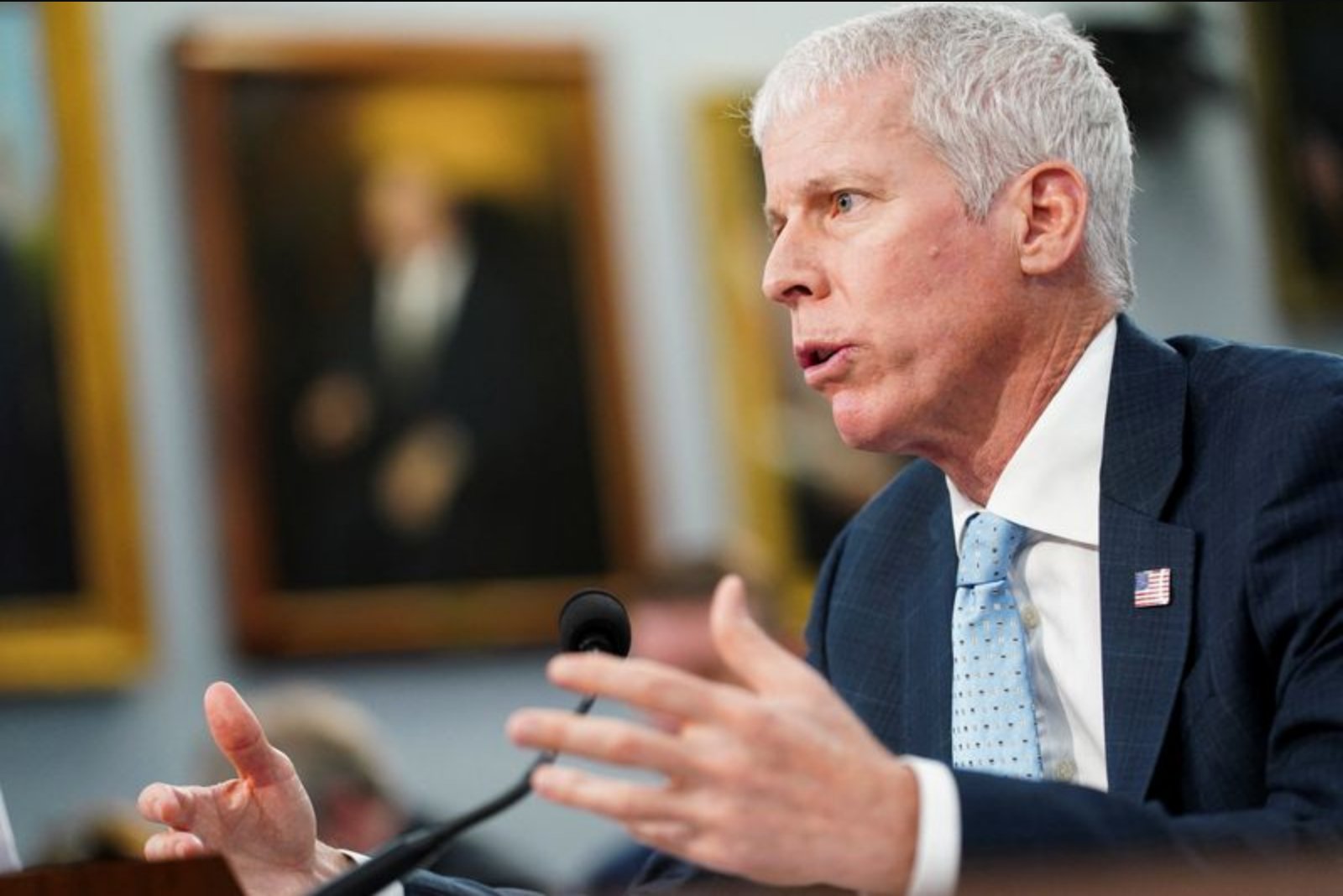
U.S. Energy Secretary Chris Wright told lawmakers that the Energy Department’s lending arm will almost certainly provide loans for the first five to ten planned new large nuclear reactors. The announcement comes as the administration seeks to advance construction of 10 new reactors by 2030 and follows a government-backed industry partnership and prior costly delays at the Vogtle site in Georgia.

Key Points

  • Energy Secretary Chris Wright said the department’s lending office will "almost certainly" loan to the first five to ten planned new large U.S. nuclear reactors, indicating federal financing will be central to early projects.
  • President Trump signed an executive order targeting 10 new large reactors under construction by 2030 and requested accelerated approvals from the Nuclear Regulatory Commission, but no new large reactor plans are currently approved.
  • The U.S. government forged a partnership in October with Canadian owners of Westinghouse Electric - Cameco and Brookfield Asset Management - to build at least $80 billion in reactors; this followed a presidential announcement that Japan would provide up to $332 billion for U.S. infrastructure including AP1000 and small modular reactors.

U.S. Energy Secretary Chris Wright told a congressional hearing that the first five or 10 planned large nuclear reactors in the United States will "almost certainly" receive financing from the Energy Department’s lending office. The comment came during testimony on Thursday and reinforces the department’s intent to use its lending capacity to support early projects in a renewed push to expand domestic nuclear capacity.

Last year, President Donald Trump signed an executive order directing that 10 new large nuclear reactors be under construction by 2030, and asked the Nuclear Regulatory Commission to accelerate approvals for reactor projects. As of now, there are no approved plans in the United States to build new large reactors.

In October, the U.S. government announced a partnership with the Canadian owners of Westinghouse Electric - Cameco and Brookfield Asset Management - aiming to build at least $80 billion in reactors. That plan followed remarks by the President during a trip to Asia that Japan would provide up to $332 billion to support U.S. infrastructure, including construction of Westinghouse AP1000 reactors and small modular reactors.

Past experience highlights the risks and costs of nuclear projects. The most recent U.S. reactors to enter service, built at the Vogtle site in Georgia, reached completion in 2023 and 2024 after roughly seven years of delay and with costs about $17 billion higher than initially budgeted. Those reactors secured billions in loans from the Energy Department’s loan office during the previous Trump administration.

The Energy Department’s Office of Energy Dominance Financing currently has nearly $290 billion available to lend. Wright said last year that "by far the biggest use of those dollars will be for nuclear power plants." His testimony to lawmakers this week reiterated that loans from the department’s lending office are expected to play a central role in financing the earliest wave of planned projects.


Contextual note - While the administration has set targets and mobilized financial and international partnerships, no new large reactor project in the United States currently holds an approved construction plan. The comments from the Energy Secretary signal a direction for federal financing, but the pace and realization of projects remain tied to approvals and execution.

Risks

  • Project execution and cost overruns - The Vogtle reactors, which entered service in 2023 and 2024, were delayed by about seven years and exceeded budget by roughly $17 billion, highlighting construction and cost risk for large nuclear projects; this impacts construction, utilities, and financing sectors.
  • Regulatory and approval uncertainty - Despite the administration’s target for reactors by 2030 and calls for faster NRC approvals, there are currently no approved plans for new large reactors, creating uncertainty for developers, equipment suppliers, and investors.
  • Dependence on federal lending - Early projects are expected to rely heavily on loans from the Energy Department’s lending office, concentrating financing risk with the federal program and affecting market participants in project finance and the broader energy sector.

More from Commodities

U.S. Authorities Execute Search Warrant at Houston Offices of Fuel Trader Ikon Midstream Apr 16, 2026 U.S. Energy Chiefs to Confer with Major Oil CEOs as Iran War Sends Prices Higher Apr 16, 2026 U.S. Sanctions Target Individuals and Firms in Nicaragua's Gold Sector Apr 16, 2026 EIA Sees U.S. LNG Shipments Rising Through 2027 as New Trains Come Online Apr 16, 2026 European Gas Rebounds as Hopes for U.S.-Iran Talks Temper Earlier Losses Apr 16, 2026