
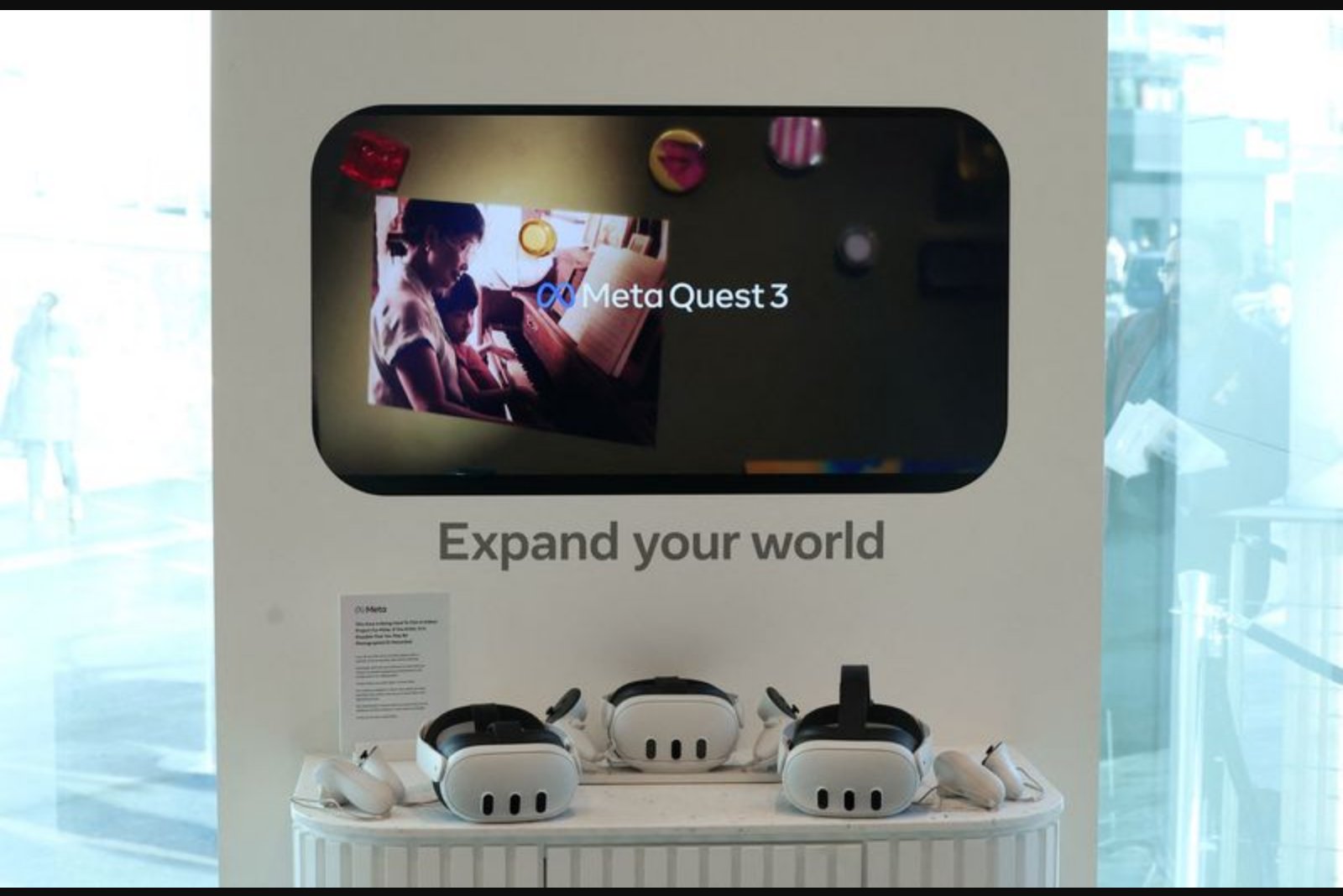
Meta Platforms announced that it will raise the retail prices of its Quest virtual reality headsets in the United States effective April 19, citing rising costs for memory chips as the driver of the adjustment.
Under the new pricing, the Quest 3S with 128 gigabytes of storage will be sold for $349.99, up from $299.99. The higher-capacity models in the Quest 3 family will also be more expensive: the 256-gigabyte version will retail at $449.99, an increase of $50, and the top-tier 512-gigabyte model will see a $100 rise to $599.99.
Meta said the updated prices will apply to refurbished Quest units as well. Accessories for the headsets will remain at their current price points.
In its statement, Meta linked the cost pressure to a surge in demand for memory chips driven by rapid expansion of artificial intelligence infrastructure. The company said manufacturers are prioritizing components for higher-margin data-center projects for firms such as OpenAI, Alphabet’s Google and Microsoft, reducing availability for consumer devices.
The constrained supply of memory chips has led other hardware makers to raise prices as well, Meta noted. Companies including Dell, HP and Microsoft have increased device prices to cope with tighter component supplies. Sony has also recently implemented another global price increase for its PlayStation 5 consoles, including a $100 rise in the United States, reflecting similar component-cost pressures.
The move comes as Meta appears to shift strategic emphasis. The company has reduced the size of its Reality Labs organization by roughly 10 percent and scaled back portions of its VR platform, Horizon Worlds. Reality Labs - the group responsible for Quest headsets and related mixed-reality devices - has recorded more than $70 billion in operating losses since the division’s inception.
The pricing update signals an immediate consumer-facing response to supply-chain dynamics even as the firm rebalances investment priorities between virtual-reality hardware and AI-focused infrastructure.
Summary
Meta will implement higher U.S. retail prices for its Quest VR headsets on April 19 because of increased memory chip costs. The increases affect Quest 3S and Quest 3 storage tiers, apply to refurbished units, and leave accessory pricing unchanged. The company has also reduced Reality Labs headcount and scaled back parts of its VR platform; Reality Labs has sustained major operating losses.