
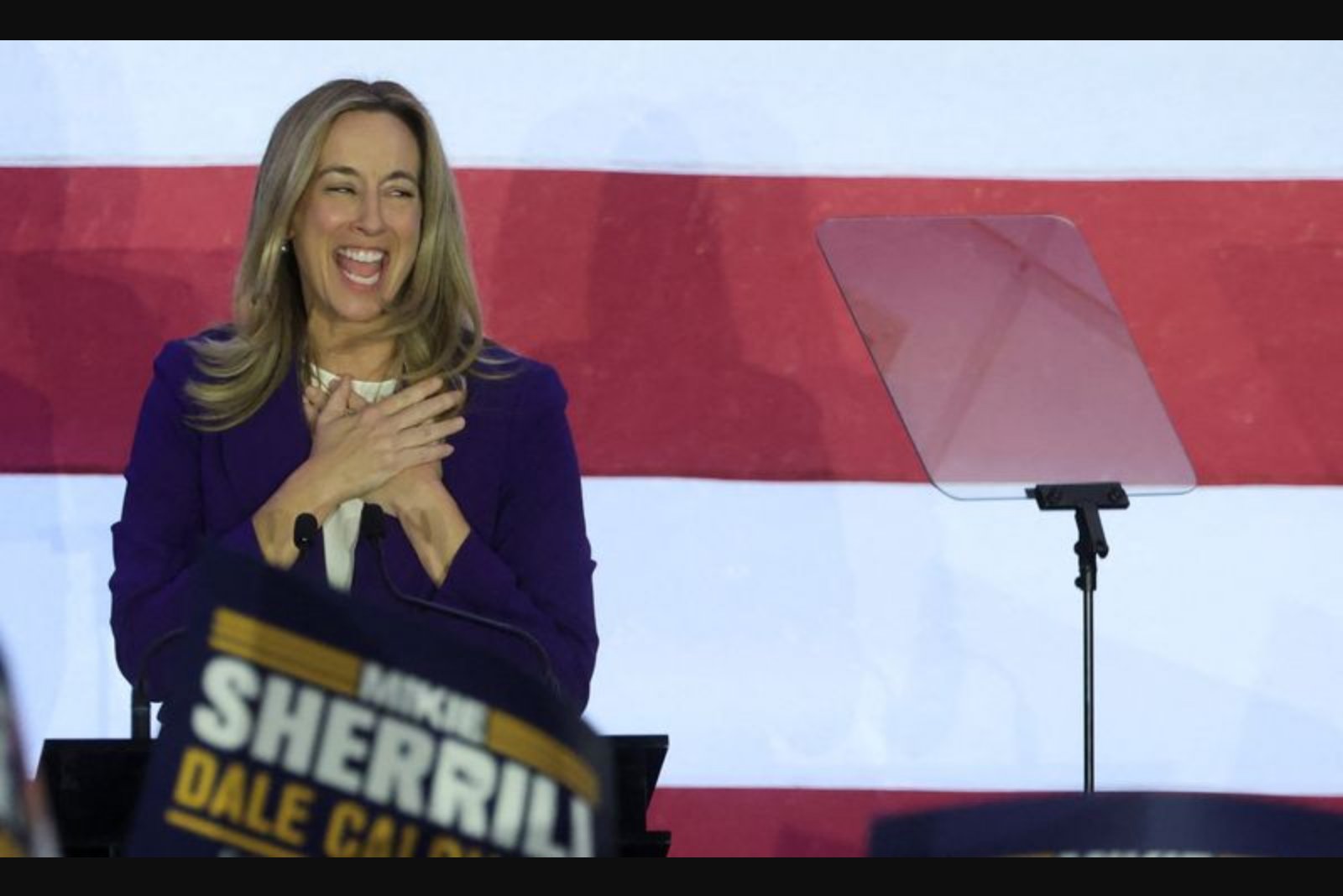
April 16 - Voters in a northern New Jersey congressional district will cast ballots in a special election on Thursday to select the successor to Mikie Sherrill, who left the House after winning the governor's race in November. The Democratic nominee, Analilia Mejia, a former national political director for Senator Bernie Sanders' 2020 presidential campaign, enters the contest as the frontrunner against Republican Randolph Township Councilman Joe Hathaway.
The outcome carries outsized significance for the balance of power in the U.S. House of Representatives as the country heads toward the November midterm elections. A win for Mejia would reduce the Republican margin in the chamber and alter the arithmetic leaders in Washington are watching closely.
Fundraising and campaign dynamics
Campaign finance figures show a notable edge for Mejia. According to campaign filings through March 27, Mejia raised $1.1 million, more than double Hathaway's $525,000. The same filings indicate Mejia entered the final phase of the special election campaign with roughly three times the cash on hand compared with Hathaway.
Mejia emerged from a crowded Democratic primary that attracted substantial outside spending, including millions of dollars from a pro-Israel super PAC aligned with the American Israel Public Affairs Committee. Hathaway faced no Republican opposition in the primary and advanced as his party's nominee without a contested primary race.
Recent electoral history of the district
The district has leaned Democratic in recent federal and statewide contests. Former Vice President Kamala Harris won the district by nearly 9 percentage points in 2024, and Sherrill secured reelection in that cycle by nearly 15 percentage points. In the 2025 gubernatorial contest, Sherrill carried the district by a similar margin while winning the state by 14 points.
What is at stake for House control
If Mejia prevails, House Republicans would hold a 217-214 majority, under the current count that includes one independent caucusing with Republicans and three vacancies yet to be filled. Those vacancies follow two announced resignations this week and the death of a former Republican representative. The two recent resignations are from Democratic Representative Eric Swalwell of California and Republican Representative Tony Gonzales of Texas; separately, Republican Clay Fuller of Georgia was sworn in earlier this week.
Beyond the immediate special election, the state faces a June 2 Democratic primary where another pro-Israel super PAC, United Democracy Project, has indicated it will spend to back an alternative Democratic candidate against Mejia. The winner of that primary would be considered the favorite to win a full two-year term in November. Of the top three contenders who opposed Mejia in the February 5 primary, none have indicated they will challenge her in the June primary; the three candidates who have filed to run in June are Chatham Borough Councilman Justin Strickland, former Morristown Mayor Donald Cresitello and tech engineer Joseph Lewis. Strickland received 2% of the vote in the February primary.
Broader trends in special elections
Recent special congressional elections this cycle have seen Democratic candidates outpace their party's 2024 presidential performance in several districts. Across six special elections in Florida, Virginia, Arizona, Tennessee and Georgia, Democrats overperformed their 2024 presidential margins by an average of 18 points. A seventh special contest in Texas resulted in a runoff between two Democrats. While Democratic candidates have not yet flipped a federal seat in this Congress, the pattern of overperformance has been interpreted as evidence of heightened Democratic turnout and enthusiasm.
Democrats have coalesced around an affordability message, arguing that President Donald Trump and House Republicans are contributing to rising costs for Americans. Specific policy and political developments cited by Democrats include a record-long government shutdown last year over expiring healthcare subsidies; Congress' failure to extend those subsidies has been tied to surging healthcare premiums for millions. Separately, coordinated strikes with Israel against Iran have been cited as contributing to higher energy costs, with rising gas prices affecting household budgets.
Public sentiment on the economy has been presented as challenging for President Trump; a Reuters/Ipsos poll conducted March 20-23 put his approval on the economy at 29%.
Redistricting and the path to control
Looking to November, Democrats would need to flip a relatively small number of seats to reclaim the House for the final two years of the current presidential term. The political landscape is further complicated by recent state-level redistricting efforts: Republican-controlled state legislatures have redrawn congressional maps in ways their party hopes will blunt traditional midterm losses, while Democratic state legislators have responded by redrawing maps in their states to produce districts more favorable to Democrats.
The special election in northern New Jersey represents a closely watched test of both local dynamics and broader voter sentiment on pocketbook issues as the nation moves toward the fall midterms.
Summary
- Analilia Mejia leads Joe Hathaway in fundraising and is favored in Thursday's special election to replace Mikie Sherrill.
- A Mejia victory would reduce the Republican majority in the U.S. House to a narrow margin amid multiple vacancies and recent resignations.
- Recent special elections show Democratic overperformance versus 2024 presidential margins, and national issues such as healthcare premiums and rising gas prices are central to the campaign narrative.