
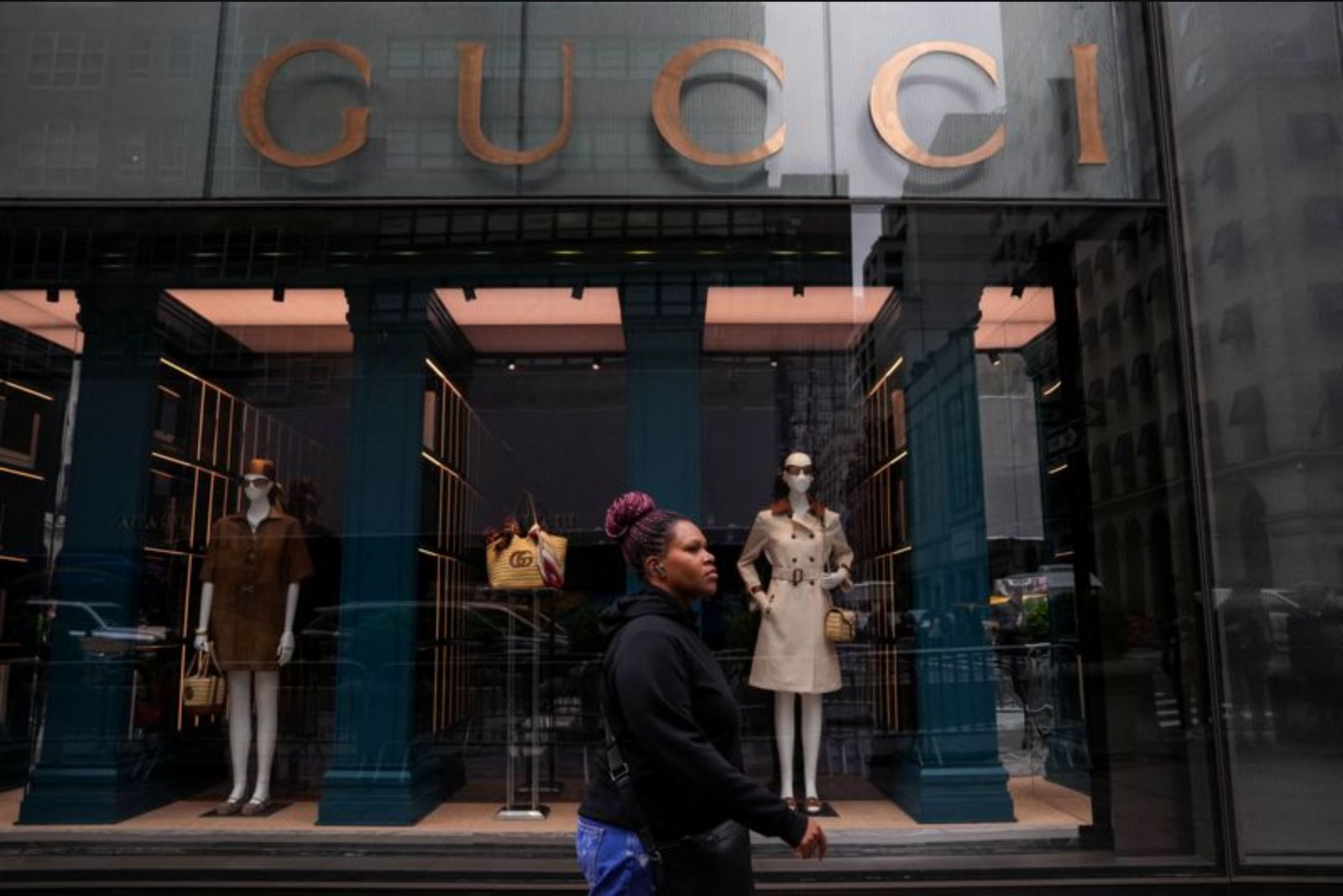
Luca de Meo, who previously headed Renault, delivered a presentation lasting over three hours in Florence where he committed to significantly raising Kering’s operating profit margin and restoring the appeal of its flagship brand, Gucci.
In language aimed at reassuring investors unsettled by economic uncertainty and a spike in geopolitical risk, de Meo said he planned to more than double the group’s profit margins, tighten and improve the company’s store network, and expand its jewellery business.
Kering shares slipped following the presentation, trading about 2.5% lower on the Paris market at 1020 GMT. The company’s flagship brand, Gucci, which generated roughly 60% of Kering’s profit in the previous year, had been a major profit engine until 2023, when a shift in consumer tastes eroded its performance and weighed on the wider group.
De Meo described the business as having become "structurally unbalanced," saying the group and Gucci in particular had been overly dependent on fashion cycles that can be volatile.
Francois-Henri Pinault, Kering’s controlling shareholder and former chair, was present in the front row. Pinault stepped down last year amid softening sales and elevated debt levels to allow de Meo to take the helm.
Performance and returns
Since the announcement of de Meo’s appointment last June, Kering shares have climbed by more than 40%. However, they remain 28% below an October peak, a decline broadly in line with movements across the luxury sector. Despite the bounce since last summer, operating returns still trail peers; de Meo’s aim to double operating returns from an 11% base last year would align Kering more closely with industry competitors.
Among the specific measures laid out in slides accompanying the strategic plan, Kering said it would reduce inventory by 1 billion euros within 12 months, an item the company identified as a drag on its profit and loss account.
Market analysts noted the presentation did not provide explicit numerical targets for revenue or margins for full year 2026 or 2027. "The release remains light on near-term quantified guidance, with no explicit revenue or margin targets for full year 2026 or 2027," JPMorgan analyst Chiara Battistini wrote after the company disclosed its revamp plan.
Revamping Gucci
De Meo positioned Gucci as an Italian icon on par with Ferrari and Nutella, and outlined how he intends to restore the brand’s distinctiveness under the creative direction of Demna. Demna assumed responsibility last year after the collection designed by predecessor Sabato de Sarno did not achieve expected traction.
De Meo said the objective is to make Gucci’s designs unmistakable once again and to convert the organisation into a "fully client-obsessed organisation". The plan calls for operating fewer stores while improving the company’s knowledge of client behaviour across regions.
Part of the strategy is to shift the revenue mix toward higher-margin leather goods, with de Meo saying he expects to more than double the share of leather in the mix - equating to 1 billion euros of additional leather goods sales by 2030.
External headwinds and customer mix
De Meo acknowledged that the geopolitical backdrop could complicate the turnaround. Kering, along with rivals, reported that the recent escalation of conflict in the Middle East - which the company described as starting with U.S.-Israeli airstrikes on Iran at the end of February - has reduced luxury sales in the Gulf region and has had indirect effects by curbing travel activity.
Observers highlighted the challenge of executing a turnaround when conditions are not broadly supportive. "A turnaround story is easier to execute when the macro environment is booming," said Soliane Varlet, equity portfolio manager at Mirova. Varlet also noted that inflation has impacted middle-class shoppers more than the ultra-rich, which could create difficulties for Kering given its focus on aspirational customers.
Jewellery, eyewear and selective deals
To build resilience, de Meo plans to scale jewellery and eyewear, categories that so far contribute only modestly to Kering’s returns. He confirmed that the company’s eyewear division will produce luxury smart glasses in collaboration with Google, a stated ambition from earlier announcements.
On acquisitions, the group signalled a "highly selective" approach, emphasising the importance of preserving product quality and securing supply chains. In a separate statement, Kering disclosed it would acquire a minority stake in the Chinese fashion label Icicle.
Currency reference: $1 = 0.8480 euros.