
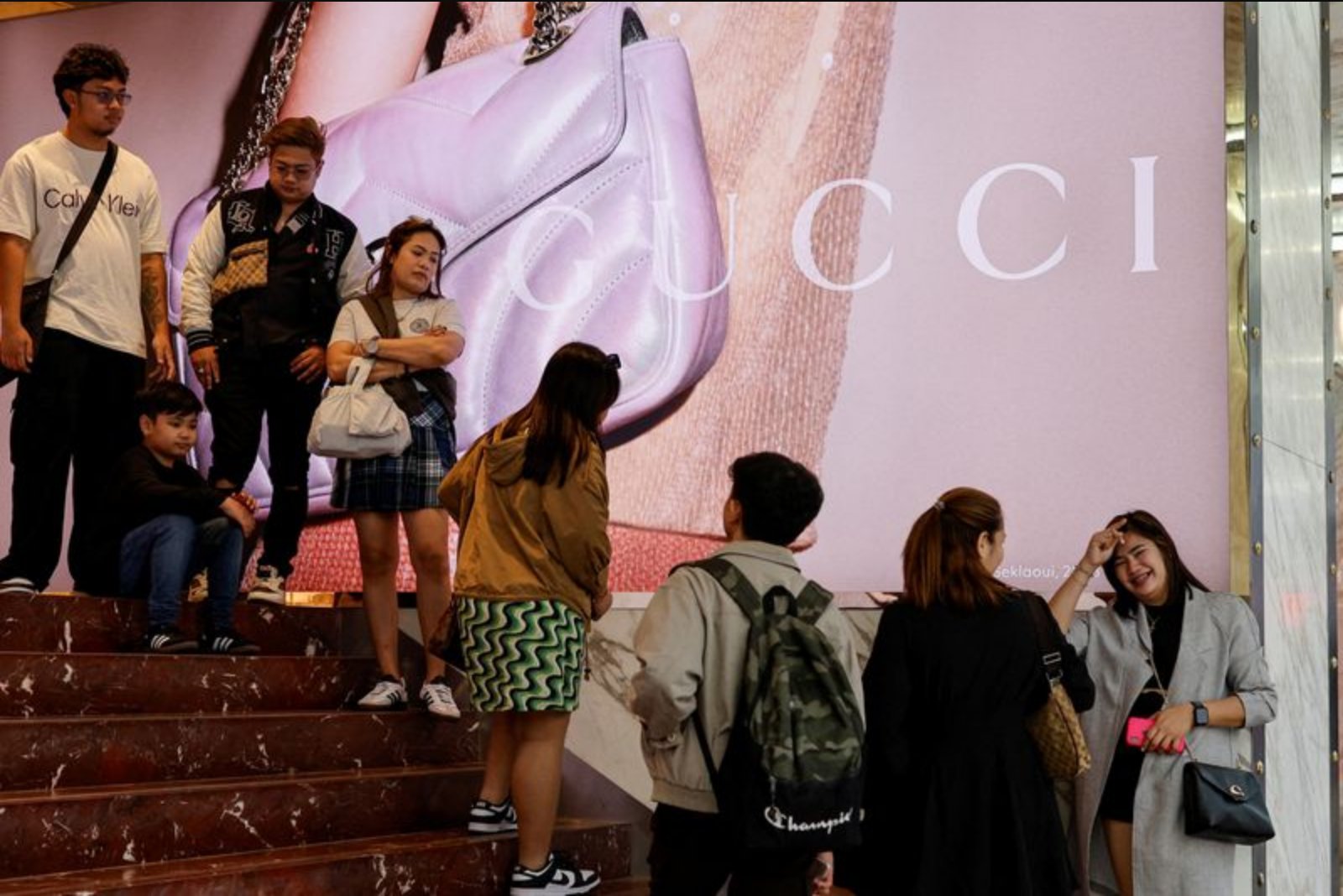
Kering's chief executive said Gucci must undertake a structured rebuild in China after a period in which the label treated the market as a source of effortless expansion. Speaking at Kering's first investor day since he became CEO, Luca de Meo said the brand had relied too heavily on poorly located stores and on off-price outlets that undercut its full-price positioning.
De Meo told reporters that for more than a decade China was the largest single engine of growth for the $400 billion global luxury sector, and that Gucci had outperformed many rivals during that time. However, he said the house failed to capitalise on a short-lived post-pandemic spending surge and has not recovered following a slowdown in Chinese consumer spending.
"Gucci has to be back," de Meo said, adding a stark characterization of past strategy: "Gucci in China has been used as a - can I use a very strong expression - a bit of a trash bin, or a place where they were looking for easy growth." He argued the brand must stop leaning on discounted sales channels and instead present a retail experience and location strategy aligned with discerning customers.
De Meo described a clear shift in Chinese consumers' preferences. Where demand was once shaped mainly by conspicuous logo-driven buying, shoppers now place greater emphasis on quality, design and the overall experience. He likened this evolution to earlier market transitions in places such as Japan, South Korea and Europe, noting that consumers have become more selective about what they consider good or poor quality.
To revive Gucci in China, Kering plans to concentrate on coherent brand messaging and improved in-store experiences. As part of its broader strategy for the market, the group announced it will take a minority stake in Shanghai-based Icicle Fashion Group.
Drawing on lessons from his previous role in the automotive sector, de Meo warned luxury houses against underestimating domestic competition and China’s capacity for rapid innovation. He said certain labels within Kering's portfolio, notably Bottega Veneta and Saint Laurent, have already gained from a more focused China approach, while stressing that Gucci's recovery will require more time.
"For Gucci, I would say the jury's out. It's not going to happen in weeks. But you can probably measure that in months, a year, something like this," he said, signalling a measured timetable for progress rather than a swift turnaround.
Summary
Kering's CEO called for a comprehensive reset of Gucci's China strategy after years of treating the market as an easy growth channel. The group will emphasise store placement, customer experience and cohesive messaging, and has agreed to buy a minority stake in Icicle Fashion Group while recognising that Gucci's restoration will take months to a year.
- Key Point 1: Gucci must refocus its China retail footprint and stop depending on off-price channels - impacts luxury retail and consumer discretionary sectors.
- Key Point 2: Chinese consumers now prioritise quality, design and experience over logos - affecting brand positioning and marketing strategies across luxury goods.
- Key Point 3: Kering will take a minority stake in Shanghai-based Icicle Fashion Group as part of its China strategy; some Kering labels have already benefited from a sharper approach.
- Risks/Uncertainties:
- Gucci's recovery timeline is uncertain and not immediate - this creates execution risk for the luxury sector's exposure to China.
- Ongoing weakness in Chinese consumer spending could impede a rebound, posing broader demand risk for luxury and retail markets.
- Intensifying competition from domestic Chinese brands and rapid local innovation may challenge foreign luxury players' market share.