
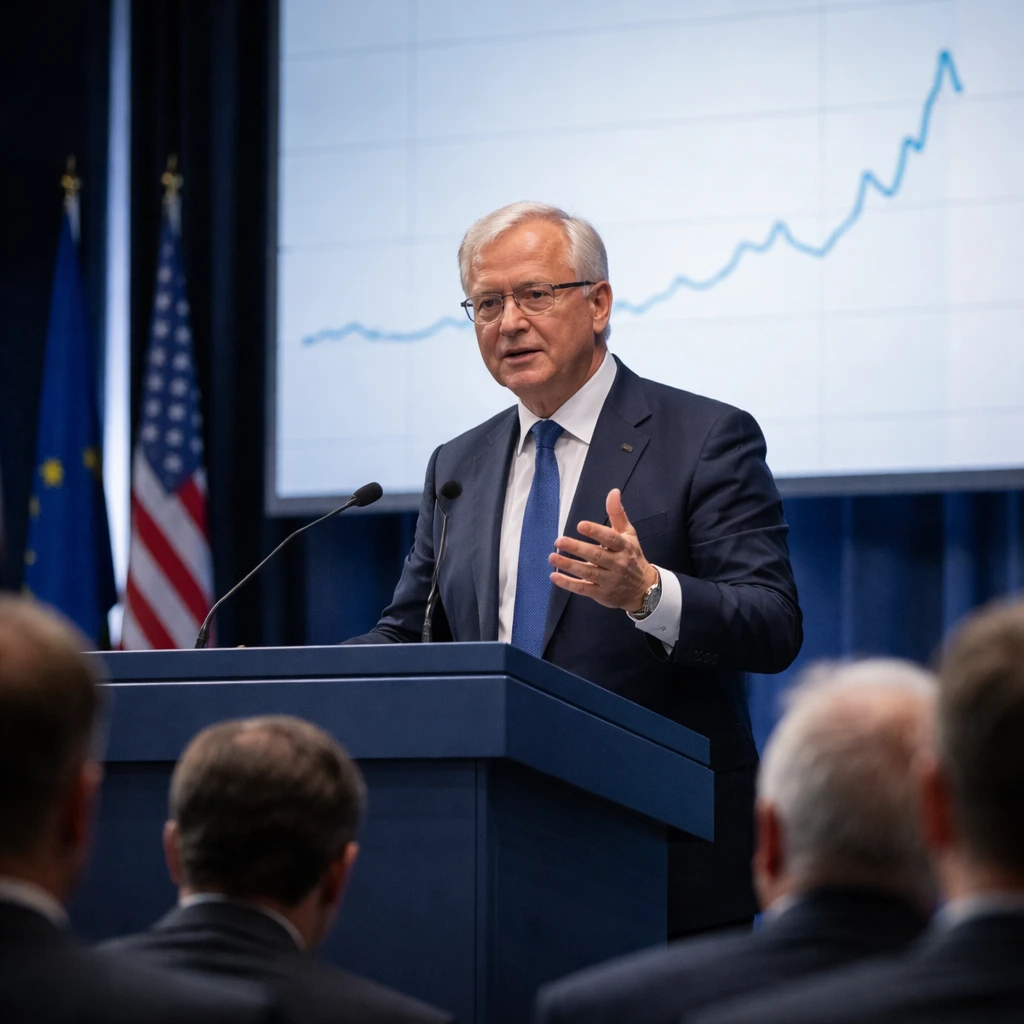
Olli Rehn, head of Finland's central bank, said on Thursday that the European Central Bank retains a window to look beyond the recent surge in inflation if that rise proves temporary. Rehn delivered his remarks at a conference in Washington, where he highlighted the distinction between a short-term price spike and a durable change in the inflation path.
Euro zone inflation rose well above the ECB's 2% target last month amid a jump in oil prices. That development has prompted debate among policymakers over whether interest rates should be raised to prevent the episode from seeding a broader inflationary spiral.
"What matters most is not the immediate increase in prices, but whether the shock has persistent effects on inflation and the general price level," Rehn said. "Right now, the outlook is foggy."
Rehn emphasized that the key consideration is the persistence and scale of the energy-market disruption. He said that if the disturbance to energy markets remains limited both in duration and scope, it could be "possible though by no means certain" for the ECB to overlook the temporary shock without changing its policy stance.
At the same time, Rehn warned that stronger measures would be warranted if the energy shock began to feed into broader price-setting and wage dynamics. If second-round effects materialize - lifting prices and wages more broadly - and if longer-term inflation expectations were to drift higher, that would call for decisive and forceful action by the ECB.
Rehn concluded by stressing a cautious approach to policy decisions. "Calm judgment will prevail over haste, and no decisions are predetermined," he said, underscoring that policymakers are weighing developments rather than committing to a fixed course.
His remarks come amid active discussion inside the ECB about the appropriate response to a recent energy-led rise in consumer prices. The balance Rehn describes hinges on whether the current price movements are transitory or whether they cascade into broader, persistent inflationary pressures that would necessitate an adjustment in interest rates.