
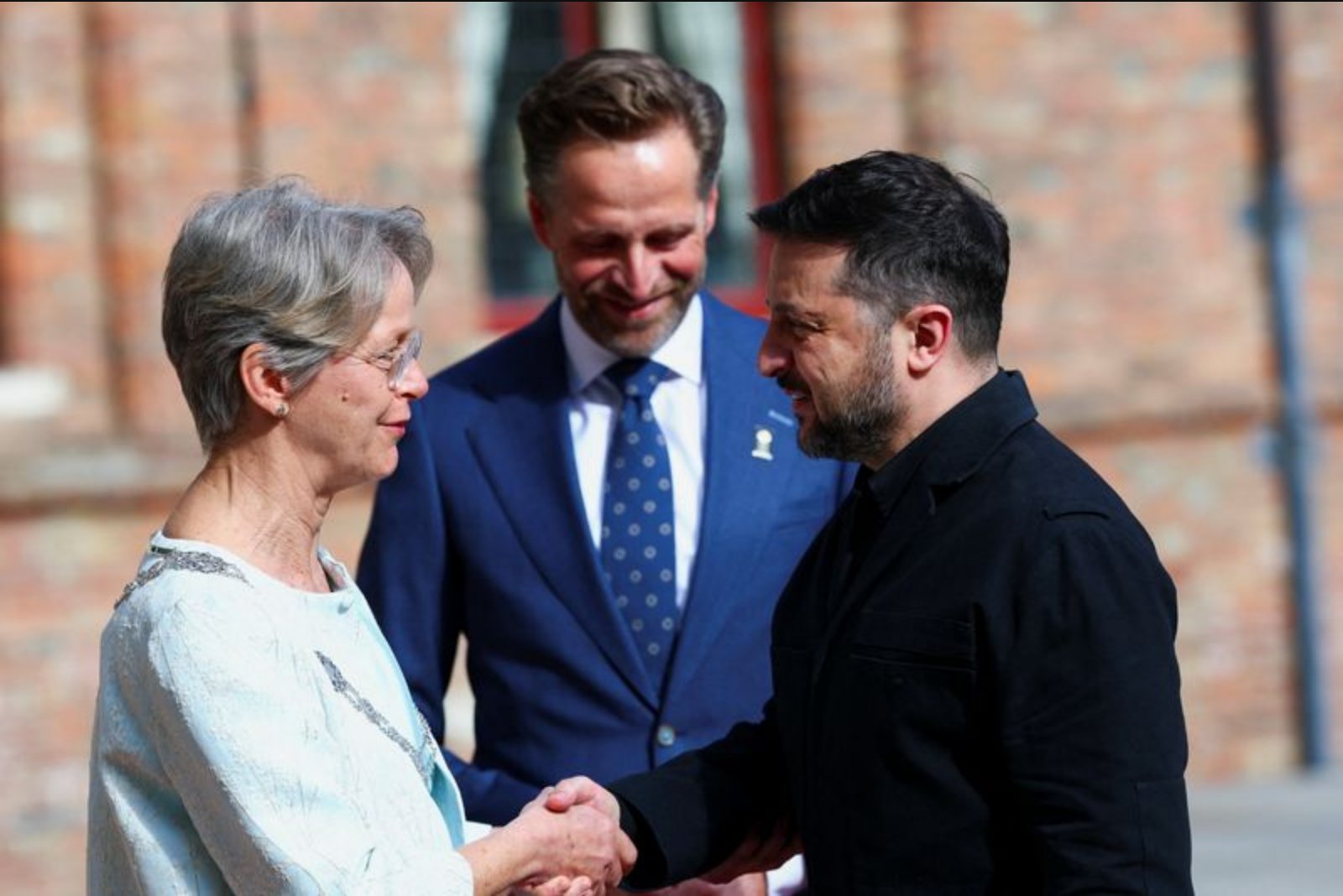
Ukrainian President Volodymyr Zelenskiy was in the Netherlands on Thursday to accept the International Four Freedoms Award, a prize this year granted to him and the Ukrainian people in recognition of their conduct during four years of conflict with Russia.
The awards draw their name from U.S. President Franklin D. Roosevelt’s 1941 speech, which articulated four fundamental human rights: freedom of speech and expression, freedom of worship, freedom from want, and freedom from fear. In January the Roosevelt Foundation said it had awarded the prize to Zelenskiy and the Ukrainian people in "recognition for their courageous struggle for our freedom and democracy under exceptionally difficult circumstances."
"They are battling for the security of all Europe and defending, with their lives," the foundation said.
The war has inflicted severe human and material costs. Since Russia launched its invasion in February 2022, the conflict has killed hundreds of thousands, displaced millions and devastated Ukrainian cities.
The awards ceremony was scheduled to take place in the historic southern town of Middelburg and was to be attended by Dutch King Willem-Alexander and Prime Minister Rob Jetten.
Alongside the recognition given to Zelenskiy and the Ukrainian people, other 2026 laureates were announced. The Committee to Protect Journalists received the prize for Freedom of Speech. The Freedom from Fear award went to activist Gisele Pelicot, described in the award announcement as a French woman whose husband was convicted of inviting dozens of men to rape her unconscious body.
The organization noted that it could not disclose the recipient of the Freedom of Worship award for security reasons. Chilean activist Isidora Uribe Silva was named the 2026 laureate for Freedom from Want.
Past recipients of the International Four Freedoms Awards have included former U.N. Secretary General Kofi Annan, former German Chancellor Angela Merkel, the Dalai Lama and the late South African President Nelson Mandela.
This event placed the ongoing conflict at the center of an internationally recognized human-rights commemoration, highlighting both symbolic recognition and the tangible consequences of years of warfare for the Ukrainian population.