
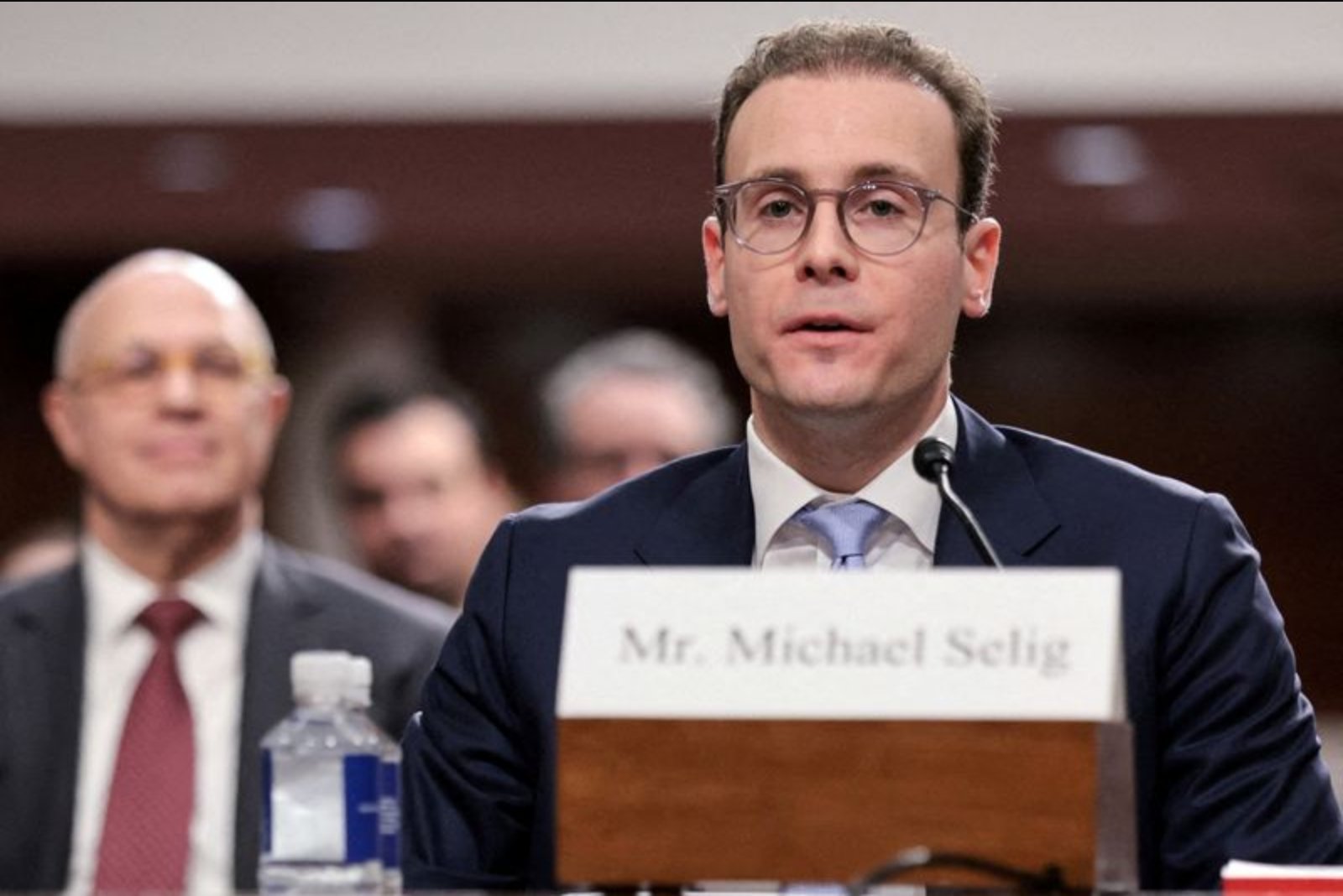
Washington’s lead derivatives regulator is set to tell Congress that the United States will punish fraud in its markets, as lawmakers press the agency over trading activity tied to sensitive policy decisions and its expanding oversight responsibilities.
Michael Selig, the current chair of the U.S. Commodity Futures Trading Commission, is scheduled to testify before the House Agriculture Committee at 10 a.m. EST (1400 GMT). In prepared remarks, he said: "I want to be crystal clear, to anyone who engages in fraud, manipulation or insider trading in any of our markets, we will find you and you will face the full force of the law."
Selig’s appearance is his first congressional testimony in the role, and it follows media reports that the agency is investigating a sequence of oil futures trades executed shortly before major policy shifts announced by President Donald Trump. Those reports have intensified concern on Capitol Hill that traders in oil, equities and prediction markets may have acted on inside information originating from the White House.
A review of trading ahead of several significant administration decisions on tariffs, Venezuela and Iran showed at least four instances that legal experts said suggested investors had foreknowledge of outcomes shortly before those outcomes occurred. Many of the trades cited in that review fall within the CFTC’s enforcement jurisdiction.
David Miller, the CFTC’s newly installed enforcement director, told colleagues last month that policing insider trading and market manipulation are priorities for the agency. Selig’s testimony is expected to address enforcement efforts as well as the agency’s approach to two other contentious issues: its assertion of sole jurisdiction over prediction markets and coordination with the Securities and Exchange Commission on the regulation of digital assets.
Prediction markets have drawn criticism from some lawmakers and observers who compare them to state-regulated gambling. The CFTC’s stance that it has exclusive oversight of certain event contracts is likely to prompt questions from members of the House Agriculture Committee, which has statutory oversight of the commission.
At present the CFTC faces structural and resourcing constraints. The agency, created in 1974, operates with a budget of less than $400 million and is responsible for policing a growing and increasingly complex array of markets for futures, swaps and event contracts. The commission normally comprises five members, including representatives from the minority party; however, Selig is currently its sole commissioner.
Those conditions leave the agency in an unusual position as it prepares to take on a central role in supervising trading in digital assets, while simultaneously responding to allegations of suspicious trading linked to high-profile policy announcements. Selig’s testimony will therefore be watched closely for details on enforcement strategy, interagency coordination and how the CFTC intends to allocate limited resources to new and existing priorities.
What to watch in testimony
- How Selig outlines enforcement actions related to the recent trading patterns under review.
- Responses to questions about the CFTC’s jurisdiction over prediction markets.
- Plans for coordinating with the Securities and Exchange Commission on digital asset oversight and managing resource constraints.