
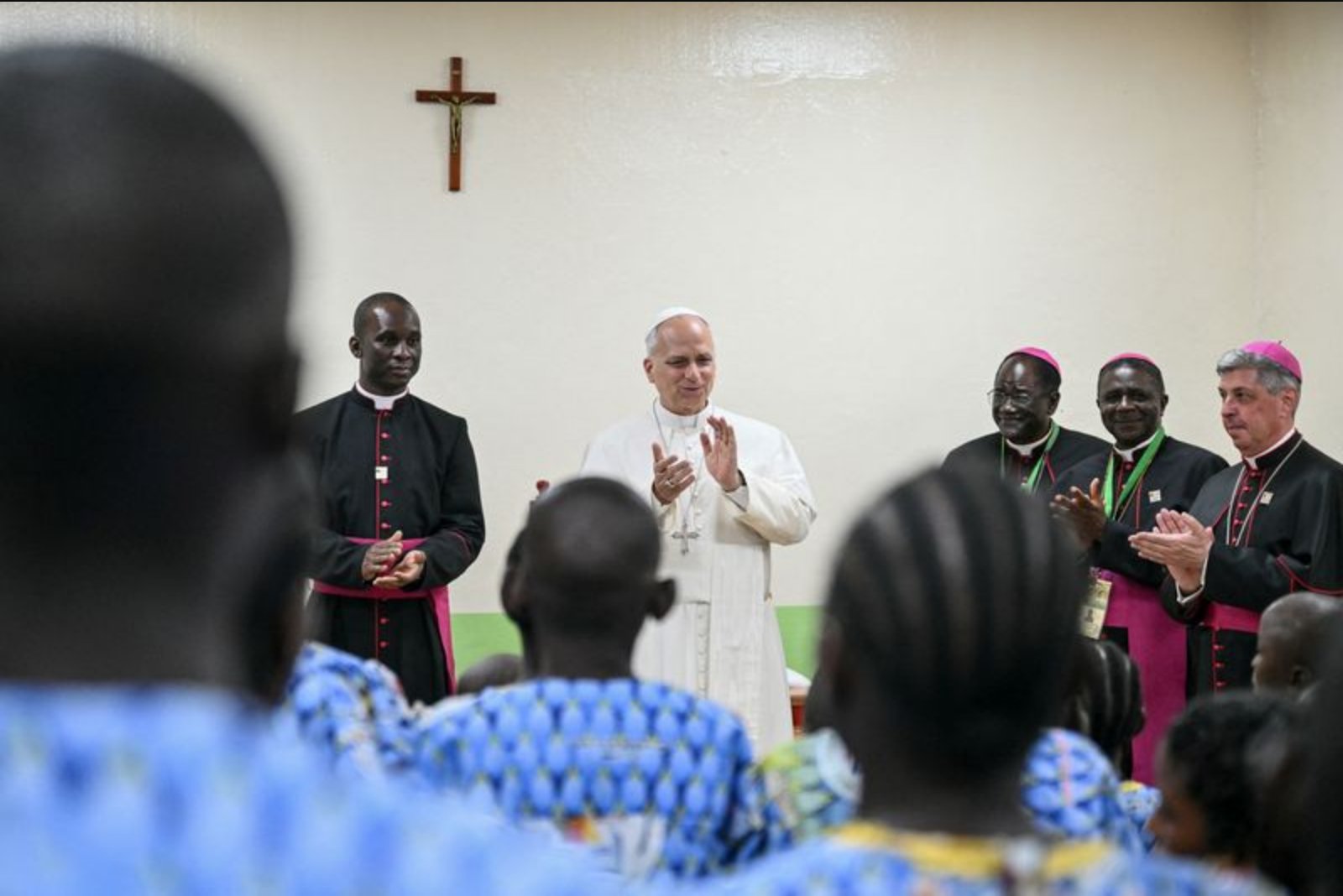
Pope Leo landed in Yaounde on Wednesday and planned to travel on Thursday to Bamenda, the largest city in Cameroon's anglophone region, where decades-old tensions have escalated into deadly conflict. The trip is part of a four-country visit to Africa and comes as the pontiff faces public attacks from U.S. President Donald Trump over his vocal criticism of the Iran war. According to reporting, the pope has said he will continue speaking out about the war and has chosen not to respond directly to the president since making that statement.
After arriving in the Central African nation's capital, the pope publicly urged the government - led by President Paul Biya, who at 93 is the world's oldest head of state - to take measures to root out corruption and to resist what he called the whims of the rich and powerful. Those remarks were delivered as the visit moved attention to fragile national institutions and governance challenges.
The pope's planned presence in Bamenda generated cautious optimism that steps toward resolving the anglophone crisis might follow. The conflict is linked to the country's colonial and post-colonial arrangements, when Cameroon was partitioned after World War One between Britain and France. The French-administered region achieved independence in 1960 and the smaller English-speaking area joined in 1961.
Human toll figures cited during coverage show the fighting between government forces and anglophone separatists has killed more than 6,500 people and displaced more than half a million. Clergy have frequently been caught up in the violence; priests have been kidnapped for ransom and some have been killed, underscoring risks to religious leaders and institutions in the region.
In a gesture tied to the pope's itinerary, a separatist alliance announced it would observe a three-day ceasefire to allow civilians and visitors to move more freely while the pontiff is in the area. President Biya has not visited the anglophone regions since the fighting began, and efforts to broker a political settlement have made little headway to date.
Reflecting on the crisis, the pope said he was encouraged that the confrontation has not turned into a religious war and expressed hope that leaders from both Christian and Muslim communities could help mediate an end to hostilities. The visit - and the temporary pause announced by separatists - may create space for humanitarian access and dialogue, though no formal breakthrough has been reported.
Separately, commentary within the reporting suggested that improved data and analysis can aid decision-making in other areas, such as investment choices. The discussion framed the value of institutional-grade information and AI-enabled insights as tools that can help identify opportunities, acknowledging that such resources do not guarantee success but can assist in finding more potential winners.