
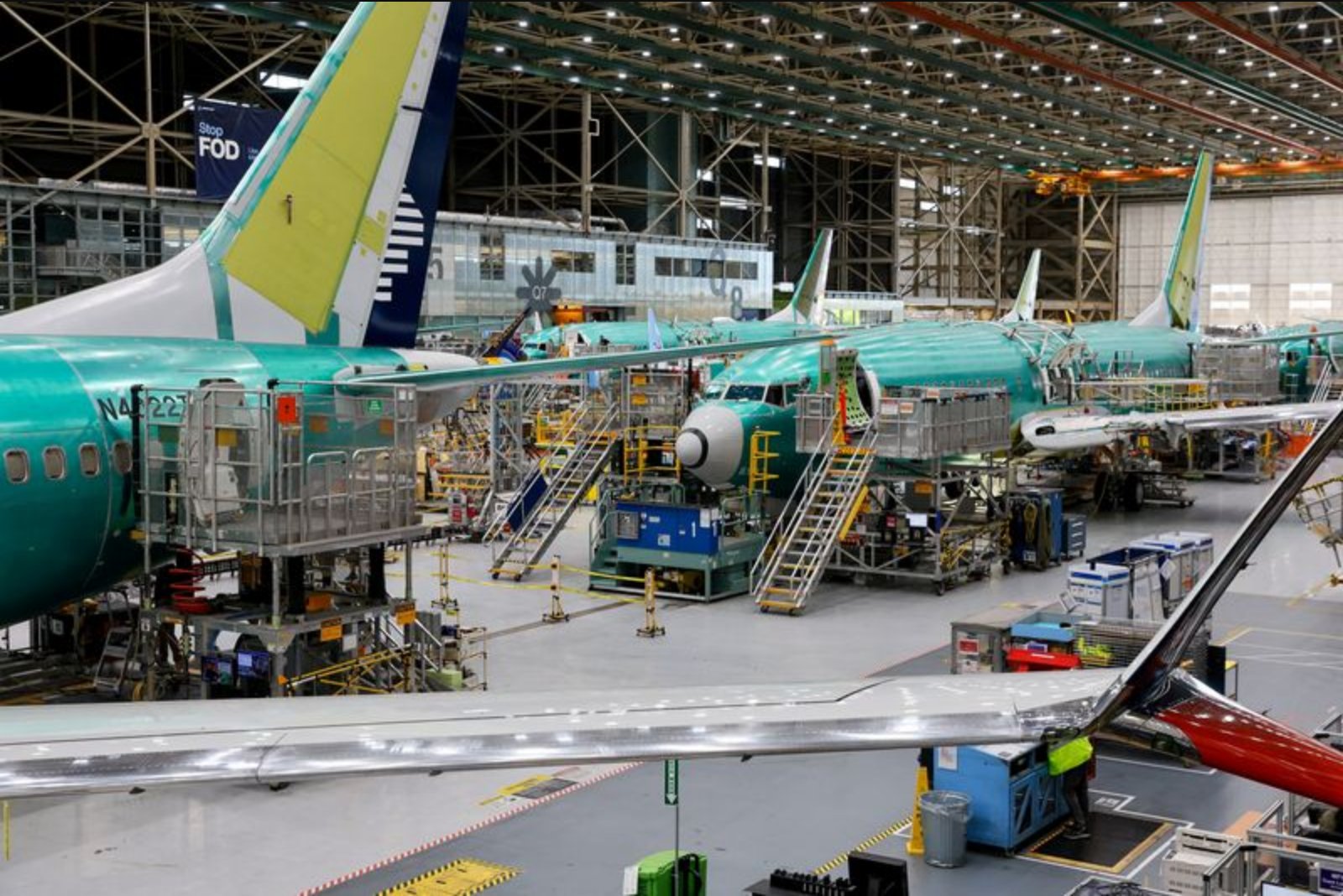
Boeing has stepped up hiring in its Pacific Northwest factories, adding about 100 to 140 production workers per week - a rate union leaders say is the strongest seen since 2024. The increase reflects the company’s need to staff higher production rates, prepare for a new Seattle-area assembly lane and replenish a wave of retirements, according to the union official who spoke about the staffing trend.
Jon Holden, now the International Association of Machinists and Aerospace Workers (IAM) vice president responsible for training and apprenticeships, told Reuters this is his first interview in the new role and that unionized Boeing factory employment in the region has climbed to more than 34,000 and is "heading higher." A Boeing spokesperson confirmed the company is seeing "strong interest as we hire in Puget Sound and across the enterprise to support our production rate increases."
The hiring push is tied to several operational needs. Boeing must crew a fourth Seattle-area production line - referred to as the North Line - to assemble its high-selling 737 MAX narrowbody jet. The company also needs labor to support 777X widebody work, which remains subject to certification, and to replace workers exiting the workforce through retirement.
Holden emphasized that the increased hiring is not limited to those directly assigned to the North Line. "So it’s not just those working on the North Line," he said, noting that roles bringing parts, managing logistics and storage, and handling tooling and transportation will also be in demand. He began his current IAM vice president role this month.
State employment data cited by the Washington Employment Security Department indicate aerospace manufacturing jobs in the state fell to about 79,000 last August but recovered to roughly 81,800 by February. Industry executives and union officials attribute the hiring to multiple sources of demand: airlines seeking more fuel-efficient aircraft, growth in commercial space activity and rising defense spending amid global geopolitical tensions and active conflicts in the Middle East and Ukraine.
Suppliers are also expanding payrolls. Karen Arlak, chief human resources officer at Honeywell Aerospace, said the U.S. supplier plans to add more than 1,200 workers this year across engineering and manufacturing to support growth in the commercial aftermarket, defense and space sectors.
At the same time, employers continue to grapple with a shortage of skilled workers that emerged after COVID-19 when industry operations accelerated. Crystal Maguire, executive director of the Aviation Technician Education Council, noted that only about 75% of Federal Aviation Administration-licensed mechanics emerge from specialized schools. That gap is increasing demand for apprenticeship pathways and for workers transitioning from other sectors into aerospace roles.
Boeing is expanding an apprenticeship program that provides training in specialized tasks such as composite repairs; that expansion goes beyond the 125 apprentices that were part of a 2024 contract, Holden said. The ramp in hiring today does not match the scale of Boeing’s aggressive recruitment in 2023 and 2024, when the company needed large numbers of new employees as operations resumed and the 737 MAX fleet returned to service following its earlier grounding.
"This is more, I think, a sustained ramp that I feel good about, as long as the economy continues to go, as long as airlines continue to keep their orders," Holden said, summarizing the union’s view that the current hiring trajectory reflects a steady build in workforce capacity rather than a one-time surge.
Sectors and market context
The ramp touches multiple sectors: aircraft OEM production, supplier manufacturing, aerospace aftermarket services, space-related production and defense-related manufacturing. Labor market dynamics for skilled technicians, apprenticeships and logistics staff will influence capacity and the pace at which higher production rates can be sustained.