
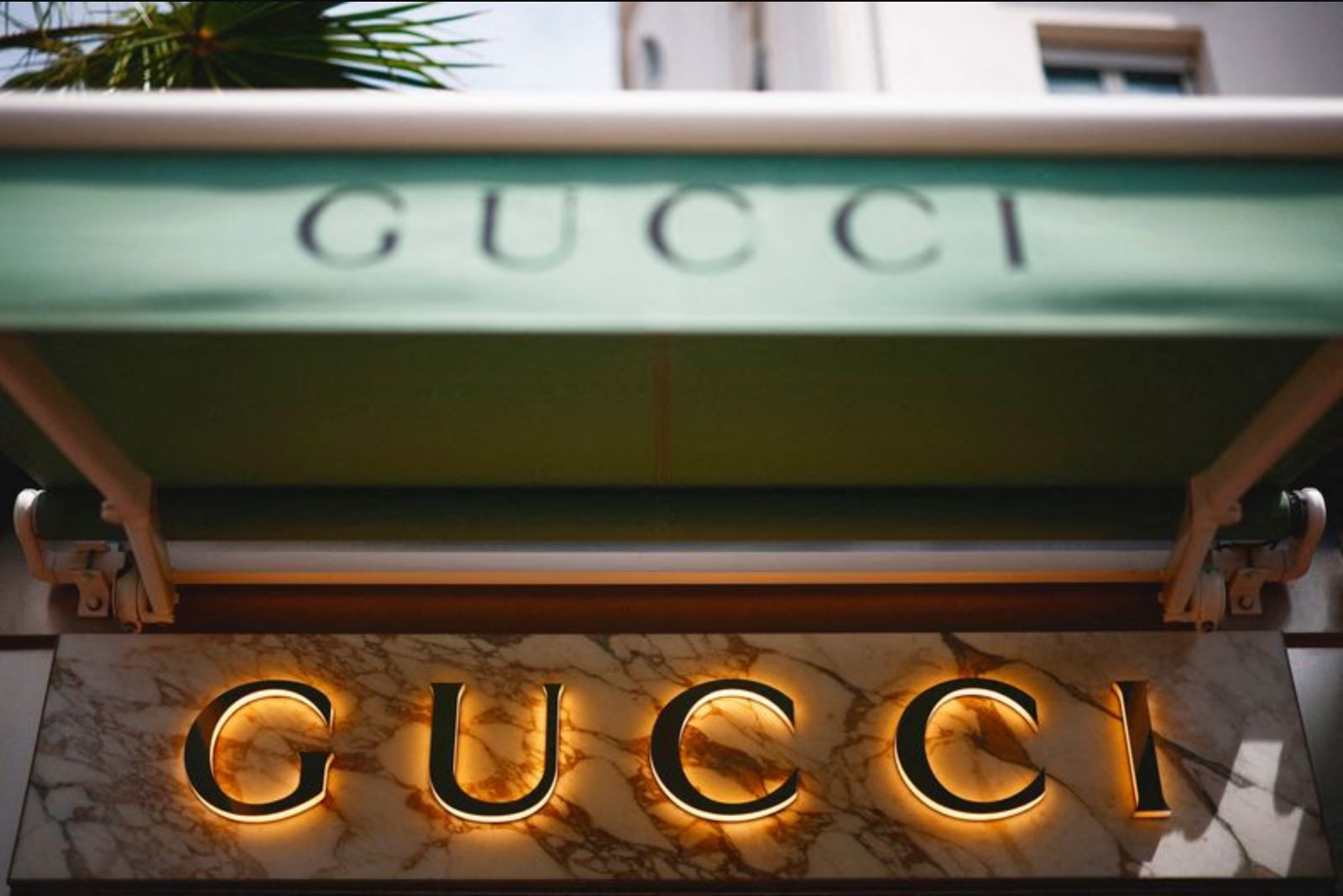
Kering, the $40 billion owner of Gucci, presented a medium-term plan on April 16 that promises a substantial improvement in group profitability but leaves key questions unanswered about the flagship brand's financial path.
At the company's capital markets day, management said it intends to more than double the group operating margin from the 11% reported for 2025. That headline figure sounds ambitious, yet the finer print tempers the punch. Analyst consensus compiled by Visible Alpha already points to a group margin of roughly 20% by 2030. The target therefore only slightly tops those expectations and remains materially lower than the approximately 30% margin the group reached at its 2019 peak. Crucially, CEO Luca de Meo did not attach a precise timetable to the margin goal, leaving the pace of recovery open to interpretation.
The absence of a specific margin target for Gucci is a central omission. Gucci accounts for about 60% of Kering's operating profit, but the plan disclosed no explicit margin objective for the brand. That lack of brand-level financial guidance creates a gap in the investment case, particularly given Gucci's recent mixed performance.
Gucci's top-line momentum has been weak. First-quarter sales at the brand fell 8%, a decline that missed analysts' expectations. Revenue in Gucci's important Asian market dropped 14%, with management pointing to execution errors such as over-distribution in China as part of the problem. Those operational missteps compounded broader macro weakness and increased scrutiny of how the brand will return to stronger growth and profitability.
Management framed the recovery under a multi-year program labelled ReconKering, described as a three-phase effort to reset, rebuild and reclaim market position through to 2030. The plan emphasizes operational fixes: closing hundreds of stores, reducing outlet numbers by roughly one third, and trimming inventory levels. De Meo has also signalled a more pronounced focus on pricing decisions.
Those moves are plainly sensible as surface-level remedies, but they stop short of deeper strategic changes that could more directly address product appeal and regional execution. Analysts have noted that for Gucci to grow revenue in 2026 it would need a marked acceleration in the coming months, a scenario many already view as ambitious.
Comparative examples in the sector illustrate the challenge. Tapestry's Coach saw China sales surge 34% in the quarter ending in December, a performance largely attributed to the combination of refreshed designs and pricing that resonates with aspirational consumers. Coach, a smaller U.S. rival, paired product renewal with price positioning that made the value proposition clear to shoppers. When buyers perceive only limited quality differences between a roughly $500 Coach bag and a roughly $2,000 European alternative, the gap in perceived value becomes pronounced and can drive market share shifts.
Gucci, however, operates in a different strategic space. As a European luxury house, it trades on exclusivity and higher price points. Moving downmarket through price reductions risks diluting the brand's identity, an outcome that could be existential for the business. That constraint narrows the set of options available to management.
De Meo, who joined Kering in September from automaker Renault, has levers he can use. The current weak luxury cycle, geopolitical disruption and his own recent arrival create a context that could allow for bolder restructuring without immediate investor backlash. Some shareholders may accept short-term pain if it is tied to a clearer and more decisive repositioning of Gucci.
For now, though, the plan reads as incomplete. The group-level margin goal, absent a Gucci-specific target and a detailed timeline, gives investors limited clarity on how the bulk of Kering's profits will be restored. The market responded: Paris-listed Kering shares were down 1.5% by 0815 GMT on April 16.
Kering issued a statement on April 16 saying Gucci would improve product quality and sharpen regional sales strategy, but the statement did not provide financial targets for the brand. That continued reticence on brand-level metrics reinforces the view that the recovery plan is still half dressed, offering visible alterations without fully revealing the stitches holding the strategy together.
Summary
Kering's medium-term plan aims to more than double group operating margin from 11% in 2025, but lacks an explicit Gucci margin target and a specific timeline for the group goal. Operational fixes such as store closures and inventory reductions are central to the ReconKering plan to 2030, yet recent weak Gucci sales and execution missteps in Asia raise doubts about the speed and completeness of the turnaround.
Key points
- Kering targets more than a doubling of group operating margin from 11% in 2025, with no firm schedule attached.
- Gucci, which supplies about 60% of group operating profit, has no explicit margin target under the new plan; first-quarter sales fell 8% and revenue in a major Asian market was down 14%.
- Operational measures include closing hundreds of stores, cutting outlets by roughly one third and reducing inventory as part of a ReconKering program extending to 2030.
Risks and uncertainties
- Execution risk at Gucci - recent over-distribution in China and weaker sales could hamper recovery efforts; this primarily affects luxury retail and consumer discretionary sectors.
- Timing and ambition gap - the group margin goal is not tied to a clear timeline and only marginally exceeds analyst forecasts, creating uncertainty for equity investors and market expectations.
- Brand dilution risk - potential moves to lower price points to regain volume could undermine Gucci's exclusivity and long-term value, impacting luxury goods and high-end retail markets.