
Economy April 16, 2026 10:26 AM

China Urges U.S. and Iran to Resume Talks, Citing Threats to Energy and Shipping Security

Wang Yi raises concerns over impact of protracted conflict on Strait of Hormuz during talks with Italy's foreign minister in Beijing

By Leila Farooq
China Urges U.S. and Iran to Resume Talks, Citing Threats to Energy and Shipping Security

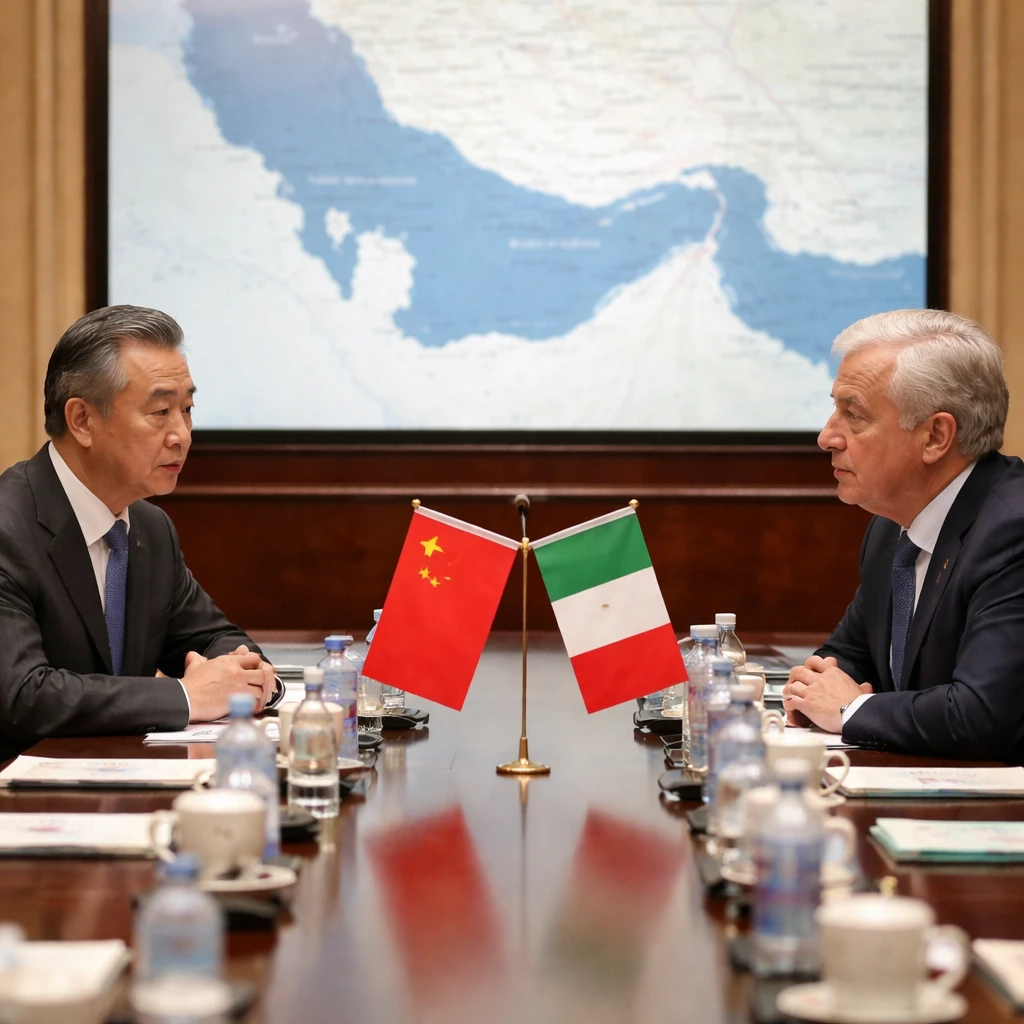
China’s foreign minister said on Thursday that prompting the United States and Iran to return to negotiations is a priority, arguing the prolonged conflict is seriously affecting international energy security and shipping routes through the Strait of Hormuz. Wang Yi made the remarks in Beijing while meeting Italian Foreign Minister Antonio Tajani and said China is prepared to step up cooperation with Italy on international and regional issues.

Key Points

  • China’s foreign minister said on Thursday that prioritizing a return to negotiations between the U.S. and Iran is important due to the conflict’s effects on energy security and shipping routes.
  • Wang Yi made the remarks during a meeting with Italian Foreign Minister Antonio Tajani in Beijing and said the ongoing U.S.-Israel war against Iran threatens energy and shipping security through the Strait of Hormuz.
  • China signaled a readiness to strengthen cooperation and coordination with Italy and to enhance mutual trust and bilateral cooperation, calling both nations 'ancient civilizations that cherish peace.'

Beijing - China’s Foreign Minister Wang Yi said on Thursday that getting the United States and Iran back to negotiations is a priority, citing the significant effects of the prolonged conflict on international energy security and on shipping lanes in the Strait of Hormuz.

Wang delivered the comments during a meeting in Beijing with Italy’s Foreign Minister Antonio Tajani. He warned that the ongoing U.S.-Israel war against Iran threatens both energy and shipping security via the Strait of Hormuz, which the minister described as a critical waterway for global oil transport.

According to a summary released by China’s foreign ministry, Wang said China is prepared to increase cooperation and coordination with Italy on international and regional matters. In that summary he characterized both countries as "ancient civilizations that cherish peace."

The discussions between the two ministers also addressed the broader bilateral relationship. Wang indicated that China is willing to work on enhancing mutual trust and cooperation with Italy, reiterating Beijing’s intent to deepen ties across areas of shared interest.

Those remarks framed China’s diplomatic stance as focused on urging a return to talks between the United States and Iran, with an explicit concern for how the conflict is affecting energy flows and maritime routes. The emphasis on the Strait of Hormuz highlights the security question China linked directly to disruptions in global oil transport.

The meeting summary places equal weight on bilateral cooperation with Italy and on China’s stated priority of promoting negotiations between the U.S. and Iran, reflecting a dual diplomatic agenda that combines regional stability concerns with the strengthening of state-to-state ties.


Context noted in the meeting summary

  • Wang said pushing the U.S. and Iran back to negotiations is a priority.
  • He cited serious impacts from the protracted conflict on international energy security and on shipping routes in the Strait of Hormuz.
  • China expressed willingness to enhance cooperation and coordination with Italy and to boost mutual trust and cooperation.

Risks

  • Ongoing hostilities could continue to disrupt international energy security and shipping routes, affecting sectors tied to global oil transport such as energy markets and maritime logistics.
  • The ongoing U.S.-Israel war against Iran is explicitly cited as a threat to energy and shipping security through the Strait of Hormuz, creating uncertainty for markets reliant on stable oil shipments.
  • Efforts to return the U.S. and Iran to negotiations are framed as a priority, but the article does not provide confirmation of progress, leaving diplomatic outcomes uncertain and potential risks to regional stability unresolved.

More from Economy

Miran Signals Possible Further Scaling Back of Rate-Cut Path as Inflation Persists Apr 16, 2026 ECB urged to favor steady judgment over rushed moves as inflation shock hits Apr 16, 2026 Finland’s Rehn Says ECB Can Potentially Ignore Temporary Inflation Spike Apr 16, 2026 CFTC Chair Says Rulemaking Will Continue Despite Four Vacancies Apr 16, 2026 Spain Proposes EU-Wide Bond Issuance to Create a Safer, Cheaper Market for Sovereign Debt Apr 16, 2026