
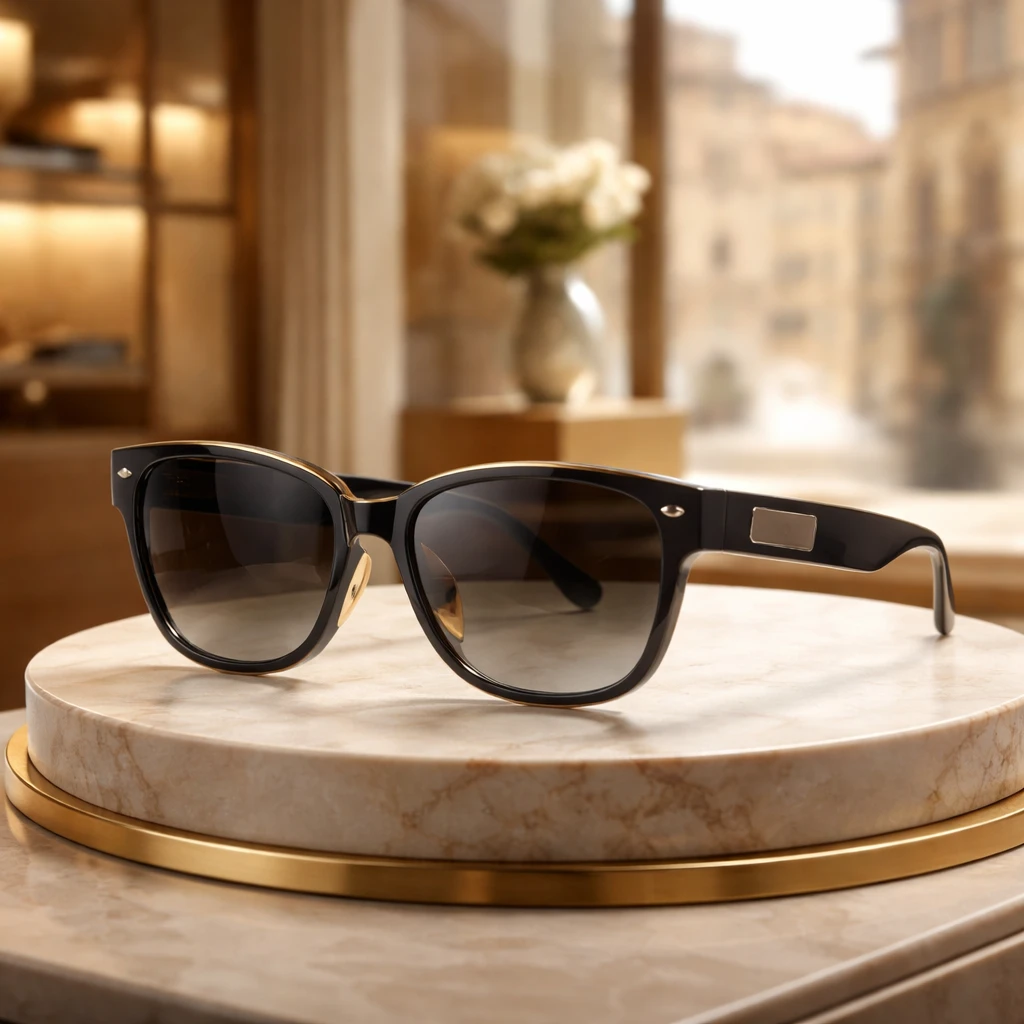
Kering intends to bring a line of smart glasses to market under the Gucci brand in partnership with Google, with a likely launch in 2027, the company's chief executive told reporters during an interview on the sidelines of the group's capital markets day in Florence. The initiative would position Gucci among the first major luxury names to enter the AI-enabled eyewear space.
The CEO said the timing for the rollout was "probably next year, 2027," when asked about the launch window for the smart glasses. Google did not immediately provide comment on the announcement.
The planned product offering will place Kering in direct competition with the eyewear market leader EssilorLuxottica, which currently produces Ray-Ban smart glasses in collaboration with Meta. Kering's move into AI-powered eyewear is part of a deliberate effort to scale up its smaller divisions, notably eyewear and jewellery, which today represent only a fraction of the group's total revenues.
Executives described the expansion of these divisions as a strategic hedge against shifting consumer tastes that have affected Gucci, the group's marquee label. Reinvigorating Gucci is central to the broader corporate agenda: the CEO reiterated plans to restore the brand to its most recognisable design codes and said management wants to re-center Gucci around its classic aesthetics.
On the financial front, the CEO set an ambition to more than double Kering's operating profit margin, aiming to align the group with its luxury industry peers. The eyewear and jewellery push is one component of that plan, intended to diversify revenue streams and strengthen the group's market positioning.
The interview also emphasized external headwinds that have influenced luxury demand. Conflict in the Middle East has depressed luxury sales in the Gulf region and reduced travel, factors the CEO said underscored the need for large luxury groups to adapt their business models to a more fragmented global environment.
"I really believe that we need to adapt our model in many dimensions to a multipolar world. It's a different game," the CEO said, observing that the world is becoming "less flat than it used to be." He added that imposing an identical retail and brand concept everywhere - from Australia to Alaska - may not be a relevant strategy in the coming decades.
The comments frame the smart-glasses collaboration with Google not only as a product innovation but also as a component of management's response to both competitive pressures and changing market dynamics. The timing and competitive set place Kering alongside established eyewear manufacturers and technology partners already active in the AI eyewear segment.
For reference, the exchange rate included in the remarks was $1 = 0.8483 euros.
What this means in context
- Kering is targeting the intersection of luxury fashion and wearable technology through a Gucci-Google alliance expected to debut in 2027.
- The product push is tied to a corporate objective to expand smaller, high-potential divisions such as eyewear and jewellery and to raise operating profitability.
- Geopolitical tensions and uneven global demand underscore the company's stated need to tailor strategies across different markets.