
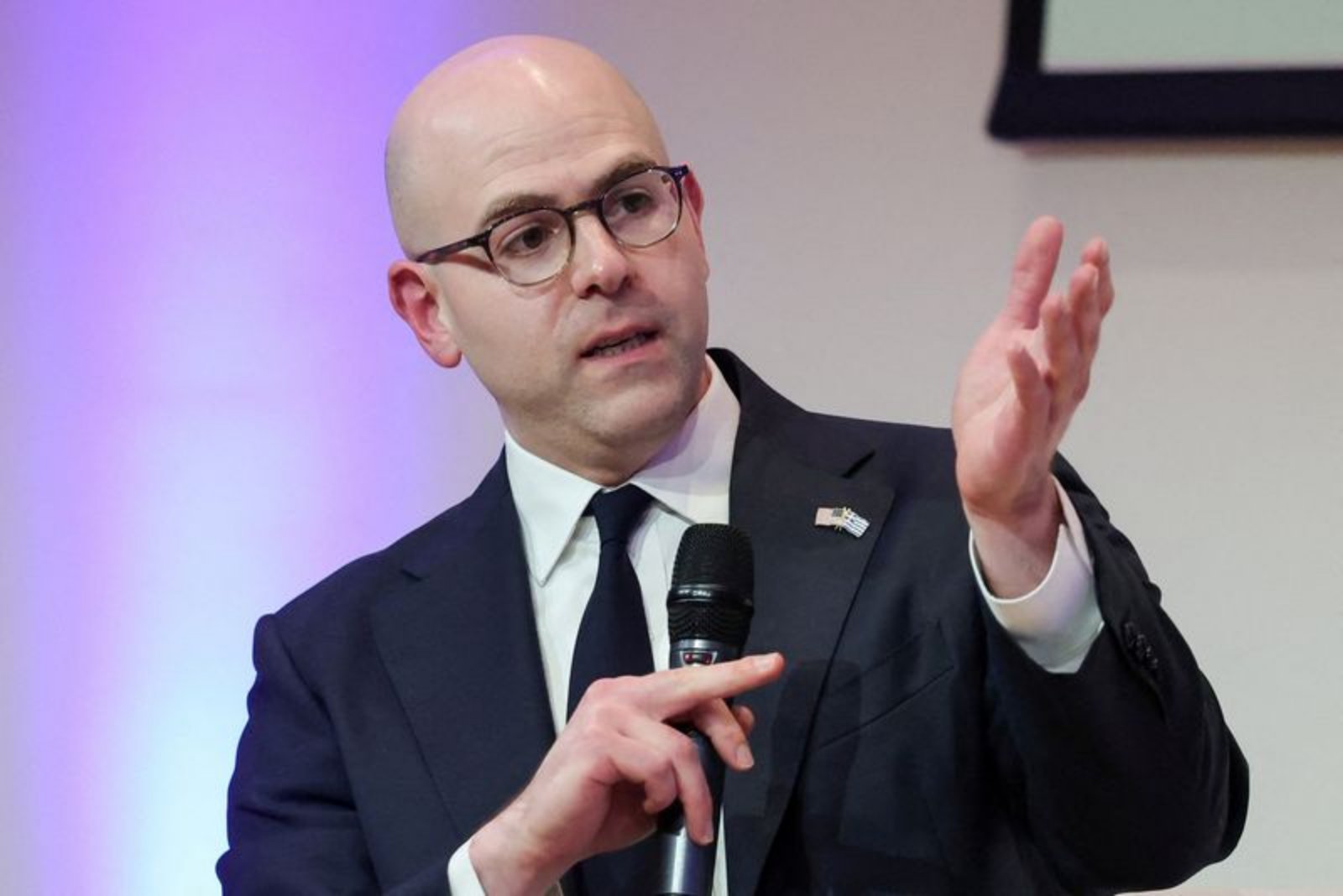
Federal Reserve Governor Stephen Miran - widely viewed as the system’s most aggressive proponent of quick, substantial interest-rate reductions - warned on Tuesday that he may again pare back his projection for how many cuts the central bank should implement, citing inflation that has not eased as rapidly as he had expected.
Speaking at an economic forum in Washington, Miran said U.S. inflation dynamics had grown "a little bit less favorable" even before the conflict between the U.S. and Iran put upward pressure on global oil prices. He said that, at last month’s policy meeting, he reduced his outlook from an ambitious six rate cuts by the end of 2026 to four.
With a key measure of U.S. price increases expected to be 3.2% as of March - above the Fed’s 2% objective - Miran said: "I might have three (rate cuts), I might have four, I haven’t made up my mind." He added that he still anticipates the Fed will reach its inflation target next year, though the Iran conflict has altered the balance of risks around that forecast.
"I think we’ll net out to being pretty close to target a year from now," Miran said, while noting he would support a rate cut at the U.S. central bank’s April 28-29 meeting because of concerns about a slowing job market. At the same time, he warned that recent energy developments "have changed the distribution of risks ... and they’ve increased the risks of higher inflation."
Miran’s remarks come from the Fed’s most dovish policymaker, and the official most closely aligned with President Donald Trump’s calls for sharply lower interest rates. They underline how the Middle East conflict has complicated a monetary policy outlook that had already been challenging for President Trump’s nominee for Fed chair, Kevin Warsh.
President Trump has expressed confidence that Warsh will move to cut rates, but Miran remains the only Fed official to explicitly support the immediate, large reductions the president has urged. Other policymakers have shown little appetite for those swift cuts.
Market participants have reacted cautiously. Contracts tied to the Fed’s policy rate currently imply the benchmark will stay in the present 3.50%-3.75% range until perhaps June 2027, reflecting investor skepticism that the central bank will swiftly lower rates to the degree some have forecast.
What are the best investment opportunities in 2026? The original article included promotional material about investment research tools. That content remains part of the record but does not alter the reporting on Fed commentary or market expectations.
Investors and market participants will be watching incoming inflation readings, labour-market indicators and energy-price developments closely. Miran’s willingness to adjust his own rate path underscores how sensitive monetary policy projections have become to new data and geopolitical shocks.