
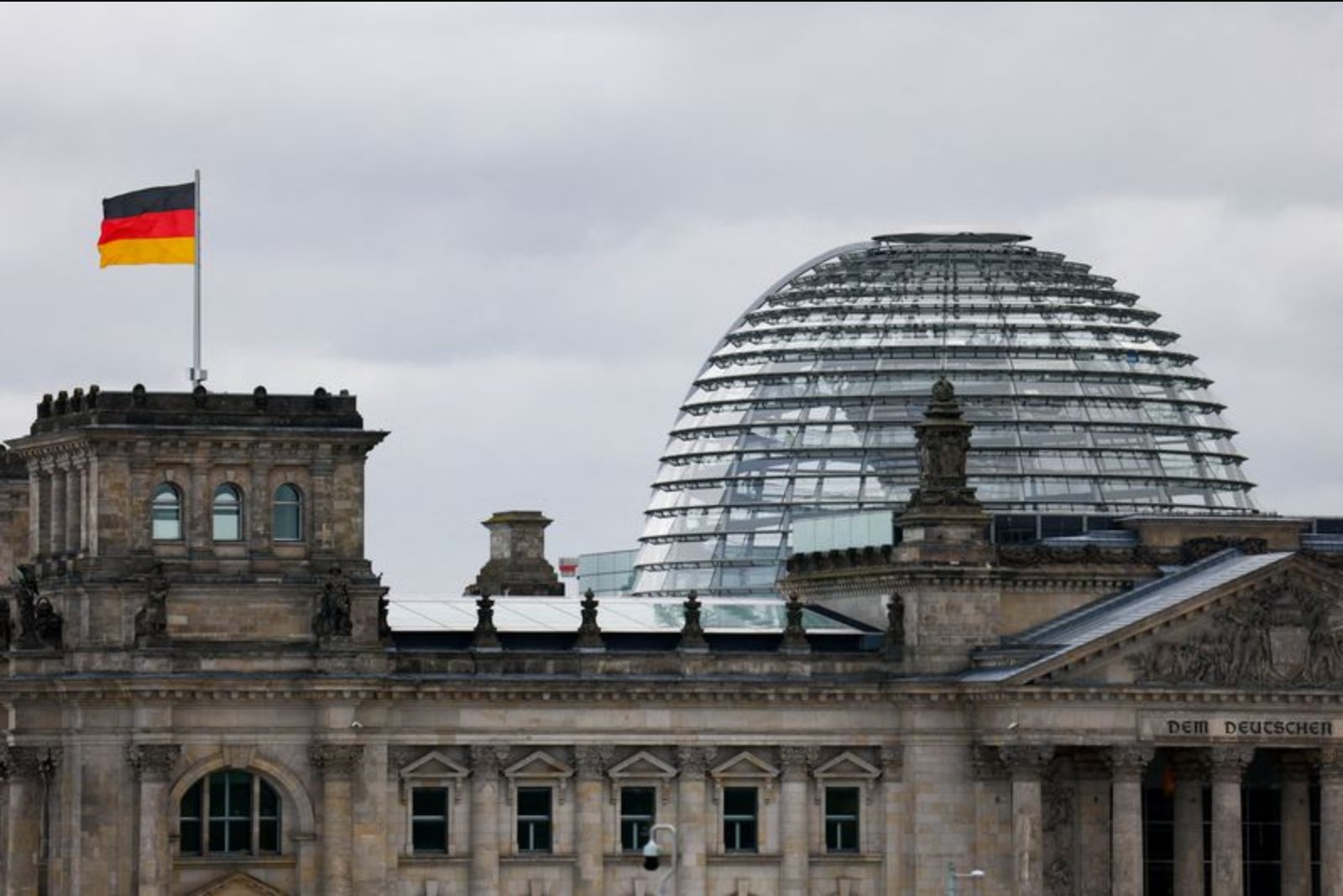
The German government has lowered its economic growth projections for 2026 and 2027 and is raising its inflation outlook as energy prices climb in response to the Iran conflict, a source with knowledge of the matter told Reuters.
Under the revised estimates, Germany's economy is expected to expand by 0.5% this year, down from an earlier 1.0% forecast. The outlook for the following year has been trimmed to 0.9%, compared with the 1.3% previously anticipated in government forecasts.
Officials cite the Iran conflict as a fresh shock to the global economy that is contributing to higher oil and gas prices and lifting inflation expectations. The government now expects consumer price inflation to come in at 2.7% this year and to rise slightly to 2.8% in 2027 - up from 2.3% in last year's figures. The updated government forecasts are due to be published on April 22. The German economy ministry declined to comment.
Separately, the International Monetary Fund has also cut its projections for Germany. In its World Economic Outlook, the IMF lowered its 2026 and 2027 growth forecasts for Germany to 0.8% and 1.2% respectively, marking a 0.3 percentage point reduction for each year and representing the largest downgrade among major euro zone economies in that review.
Summary
Germany has revised down growth expectations for 2026 and 2027 while raising its inflation forecasts in response to higher oil and gas prices driven by the Iran conflict. The government now sees 0.5% growth for this year and 0.9% for 2027, with inflation at 2.7% and 2.8% in 2026 and 2027 respectively. The IMF has issued its own downgrades, projecting 0.8% growth in 2026 and 1.2% in 2027.
Key points
- Growth forecasts have been cut - Government now projects 0.5% growth for this year (down from 1.0%) and 0.9% for 2027 (down from 1.3%).
- Inflation expectations have been raised - The government sees inflation at 2.7% in 2026 and 2.8% in 2027, up from 2.3% last year.
- International corroboration - The IMF also lowered its German growth outlook to 0.8% in 2026 and 1.2% in 2027, cutting both years by 0.3 percentage points.
Risks and uncertainties
- Energy price volatility - Rising oil and gas prices tied to the Iran conflict are cited as a driver of higher inflation, creating uncertainty for households and energy-intensive industries.
- Growth trajectory - Lower GDP expectations introduce risks for sectors sensitive to demand, including manufacturing and exports, which could see weaker activity if forecasts hold.
- Policy response and timing - With higher inflation and weaker growth, fiscal and monetary policy responses may face trade-offs; the government has declined to comment and further clarity will come with the official forecasts on April 22.
The updated government projections and the IMF's World Economic Outlook present a more modest near-term picture for Europe's largest economy, with energy-driven inflation cited explicitly as a contributing factor. The official government forecasts will be released on April 22, offering greater detail on the assumptions behind these revised numbers.