
Overview
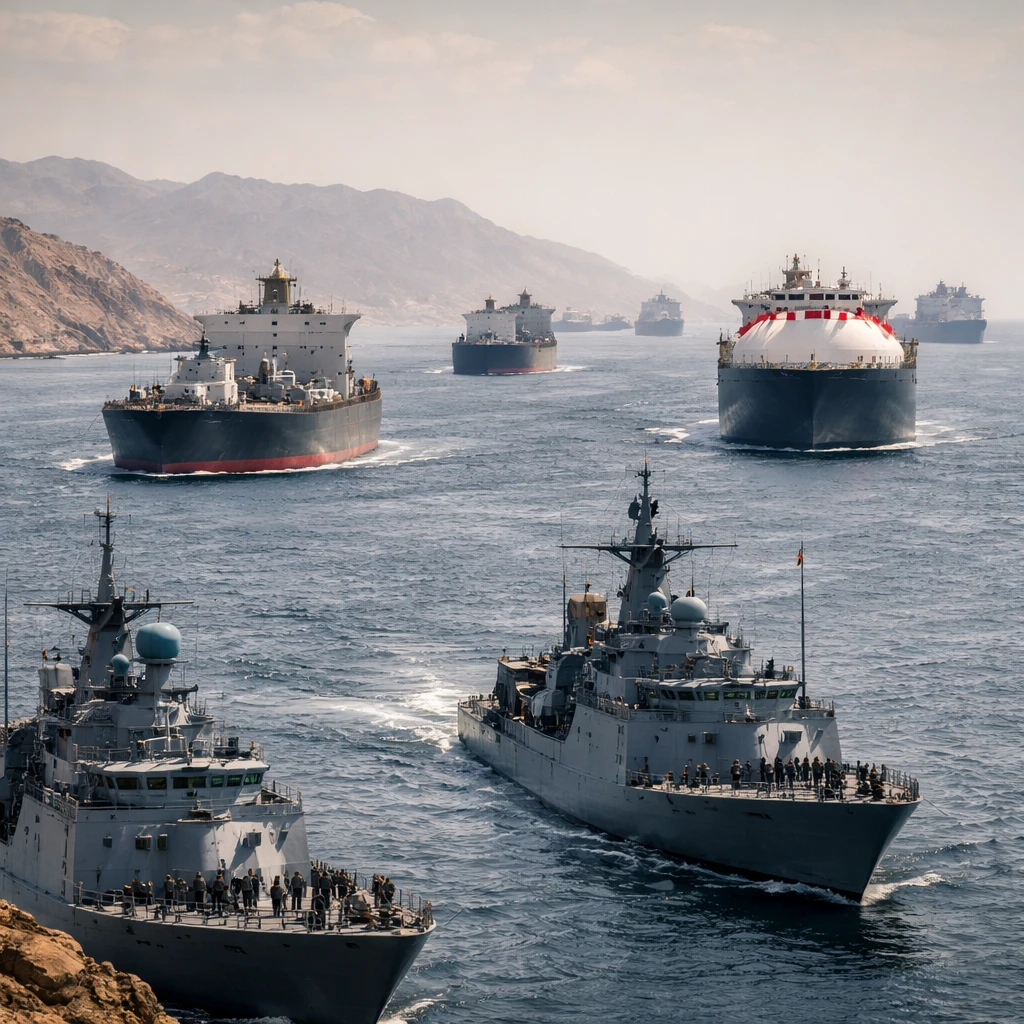
German Chancellor Friedrich Merz said on Thursday that Germany is prepared in principle to contribute to securing transit routes through the Strait of Hormuz once active hostilities end, provided there is an appropriate mandate and parliamentary approval. Merz specified a preference for a United Nations mandate as the legitimizing authority.
Conditions and political process
Merz told reporters ahead of diplomatic discussions in Paris on Friday that such an undertaking would require formal authorization and domestic clearance. "We are still a long way from all of that," he said, underscoring the gap between a stated readiness to assist and the procedural and political steps that would be necessary before any mission could proceed.
The chancellor said the talks in Paris would address the question of potential participation by U.S. armed forces. He indicated that decisions on deployment would not be unilateral but contingent on an external mandate and approval by the German parliament.
Security prerequisites
Speaking at a joint press conference with his Irish counterpart, Merz warned that any mission to secure the strait would require at least a provisional ceasefire in the wider conflict. He also stated that Iran's military nuclear programme would have to end as part of the conditions for such an operation to move forward.
Regional impact cited
The government statement linked the willingness to assist to the disruption currently affecting energy flows. The U.S.-Israeli war with Iran has caused disruption of global oil and gas supplies, halting traffic through the Strait of Hormuz, which typically carries about 20% of the world’s oil and liquefied natural gas flows.
Implications for markets and logistics
The chancellor's comments highlight that Germany's potential involvement is dependent on international and domestic political processes, and that operational participation by allied forces - including the United States - is a topic under discussion. Until the specified conditions are met - a mandate, parliamentary approval, a provisional ceasefire, and an end to Iran's military nuclear programme - there is no operational timetable for German engagement.
What comes next
Delegations meeting in Paris are expected to consider the framework for any future naval or security mission, including the role of U.S. forces. Merz's comments signal Berlin's conditional openness while also highlighting the procedural and security hurdles that remain.