
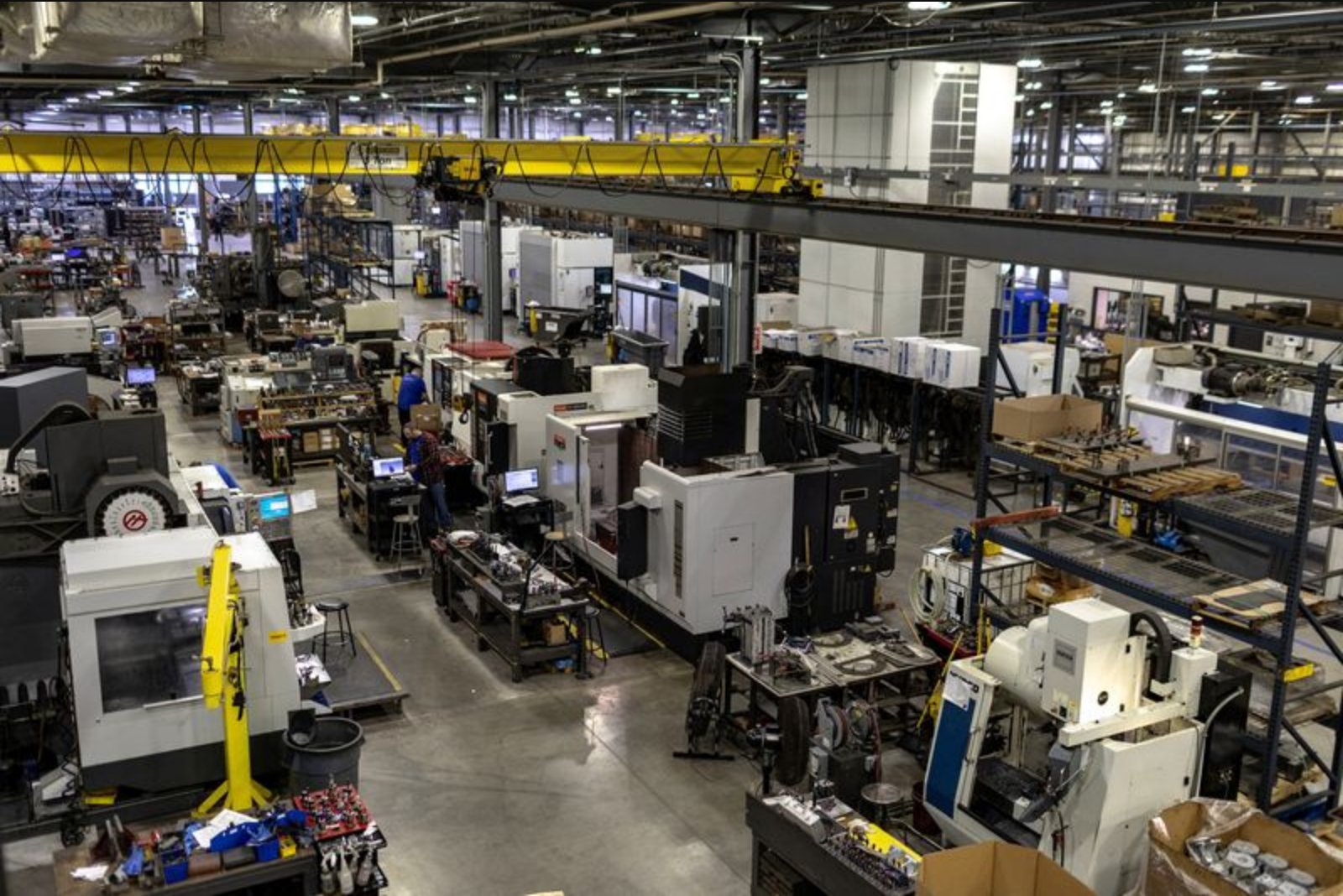
U.S. factory output unexpectedly contracted in March after recording two consecutive months of solid gains, with motor vehicle production and several other goods categories pulling manufacturing lower. The Federal Reserve reported that manufacturing output slipped 0.1% in March following an upward revision to a 0.4% increase in February.
Economists surveyed had expected factory production to rise 0.1% after an earlier report that showed a 0.2% gain in February. On a year-over-year basis, production at factories advanced 0.5% in March. For the first quarter as a whole, factory production expanded at a 3.0% annualized rate, a rebound from the fourth quarter's 3.2% pace of decline.
Manufacturing accounts for 10.1% of the overall economy. The sector had been showing signs of recovery after previous disruption from import tariffs imposed during the administration of President Donald Trump. Still, geopolitical developments have intersected with this recovery: the U.S.-Israeli war with Iran has pushed oil prices up by more than 35%, a move that the Fed's Beige Book said could complicate decisions on hiring, pricing and investment as many firms adopt a cautious, wait-and-see stance.
Motor vehicle production was a notable drag, falling 3.7% in March after a 2.6% increase in February. Several other segments of manufacturing also declined, including primary metals, machinery, and furniture and related products. The output of durable goods as a whole decreased 0.2% for the month.
Production of nondurable manufactured goods edged down 0.1%. Within that category, output of petroleum and coal products and plastics and rubber products increased, even as the broader nondurables group slipped.
Outside manufacturing, mining output declined 1.2% in March following a 2.1% rebound in February. Energy sector production fell 1.6%, driven in part by a 2.4% decrease in oil and gas well drilling. The Beige Book noted that while activity in the energy sector increased slightly in early April, many producers remained cautious about boosting drilling because of uncertainty over the persistence of higher prices.
Utilities production decreased 2.3% in March as demand for heating waned; utilities had risen 1.8% in February.
Overall industrial production, which combines manufacturing, mining and utilities, dropped 0.5% in March after an upwardly revised 0.7% increase in February. The earlier release had reported a 0.2% gain before the revision. On an annual basis, industrial output rose 0.7% in March and expanded at a 2.4% rate in the first quarter.
Measures of resource utilization also eased. Capacity utilization for the industrial sector fell to 75.7% from 76.1% in February, remaining 3.7 percentage points below its 1972-2025 average. The operating rate for the manufacturing sector dipped 0.2 percentage point to 75.3%, which is 2.9 percentage points beneath its long-run average.
The data paint a mixed picture: while year-over-year and quarterly growth in industrial production remain positive, monthly readings highlight pockets of weakness across motor vehicles, mining, energy and utilities. Firms across sectors are reporting heightened uncertainty that is influencing hiring, pricing and capital spending decisions.