
Lead
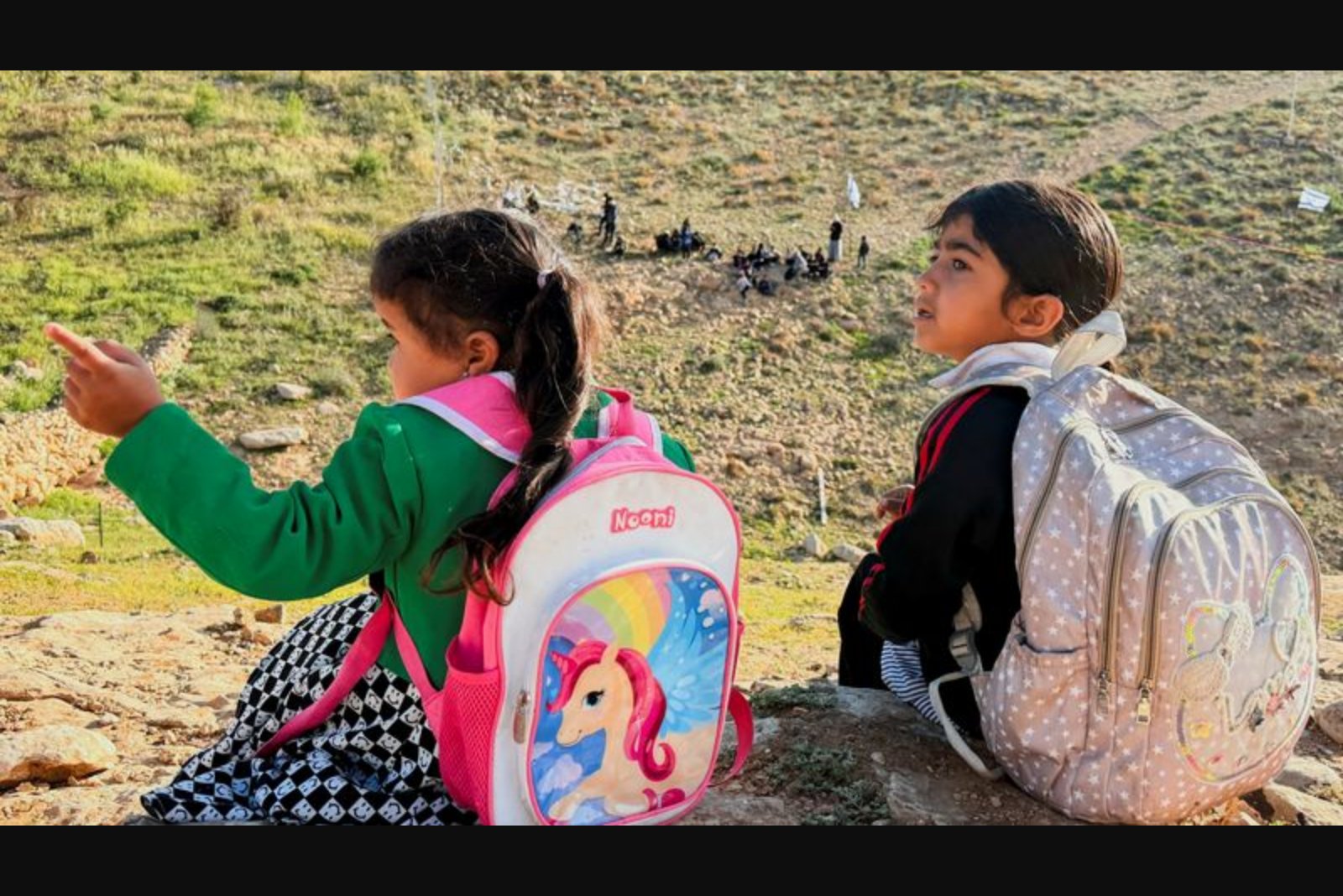
Dozens of children from the small West Bank village of Umm al-Khair were prevented this week from reaching their school by barbed wire that villagers say had been placed across the valley path they normally use. The obstruction forced families to consider an alternative route along a road that passes closer to the nearby Carmel settlement, which residents described as more hazardous.
Local accounts
Villagers said that on Monday, children attempting to attend classes for the first time since the recent U.S.-Israeli war with Iran began found the valley path they always used blocked by newly erected barbed wire. Khalil Hathaleen, who leads the Umm al-Khair village council, said the obstruction prevented children from the outskirts of the village from taking their usual safe passage through the valley to the school in the village centre.
Hathaleen framed the incident as part of a wider pattern of land appropriation, saying settlers were seeking to expand their settlement. He said, "We insist on using the main path that our children have always taken," and accused Jewish settlers of trying to take over the land so that they can expand their settlement.
Immediate effects on pupils and residents
Residents reported that some children who gathered at the barred path later experienced breathing difficulties after Israeli soldiers fired teargas in the vicinity. Several parents described the children’s symptoms as if they were suffocating. A video that a Palestinian activist said he shot on April 13 shows boys and girls sitting and standing near the newly installed barbed wire fence; in the footage, smoke is visible rising above the scene.
Classes in the area had been suspended at the start of the Iran war, and villagers said their first attempt to resume schooling was disrupted by the obstruction. Residents pointed out that debris from Iranian missiles intercepted by Israel has, at times, fallen on the West Bank during the conflict, contributing to the climate of concern.
Statements from organizations and authorities
Israeli human rights organization B’Tselem characterized the barbed wire and related actions as part of a coordinated campaign by settlers and the Israeli military aimed at intimidating Palestinians and driving them from their land in the West Bank, calling the measures "ethnic cleansing."
The Israeli military provided a statement saying that soldiers had used "riot dispersal means" against several adult Palestinians it said had tried to reach the security perimeter of the Carmel settlement. The statement acknowledged that children were present at the scene but said they were not targeted.
The Yesha Council, an organization representing West Bank settlers, told reporters that "a barrier was put in place to protect the residents of Carmel, in coordination with Israeli security authorities" after repeated attempted incursions into Carmel. The council added that there were other routes that could be used to reach the village.
Administrative and legal steps
Local Palestinians said they had filed a complaint about the barbed wire fence through an Israeli-Palestinian office. They reported that the fence stands near Israeli flags and that, despite the complaint, the wire had not been removed.
Broader context in the West Bank
Residents and observers noted that restrictions on Palestinian movement in the West Bank have increased since the attack on southern Israel on October 7, 2023, launched by the militant group Hamas from Gaza, and the subsequent Gaza war. Israeli forces have erected dozens of new checkpoints across the West Bank and established both permanent and temporary roadblocks.
The West Bank contains a population of some 2.7 million Palestinians and around 700,000 Jewish settlers. The current Israeli government, described in public accounts as the most right-wing in the country’s history, has presided over a surge in settlement expansion, and many senior ministers have openly advocated for annexation of the West Bank. Jewish settlements in the West Bank are regarded as illegal by the United Nations and much of the international community.
Violence by Jewish settlers, including attacks on Palestinian property, has increased, prompting criticism from some of Israel’s international allies, while Israeli officials have said that a "fringe minority" is responsible. Palestinians have also carried out attacks on settlers and soldiers in the West Bank.
Implications for the community
The immediate effect of the barrier was to interrupt a return to daily schooling for pupils of Umm al-Khair who had hoped to resume classes. Parents and local officials described concerns about safety on the alternative road, which runs closer to the settlement and which they consider dangerous for children to use routinely.
The fence and the responses to it underscore the fraught dynamics of access, security and land use in parts of the West Bank, where the interplay of civilian movement, settlement activity, and military operations shapes daily life for residents.
Closing
As of the most recent accounts, the barbed wire remains in place and the complaint lodged by local Palestinians had not resulted in its removal. The episode is part of continuing tensions that affect mobility, schooling and the safety of civilians in the West Bank.