
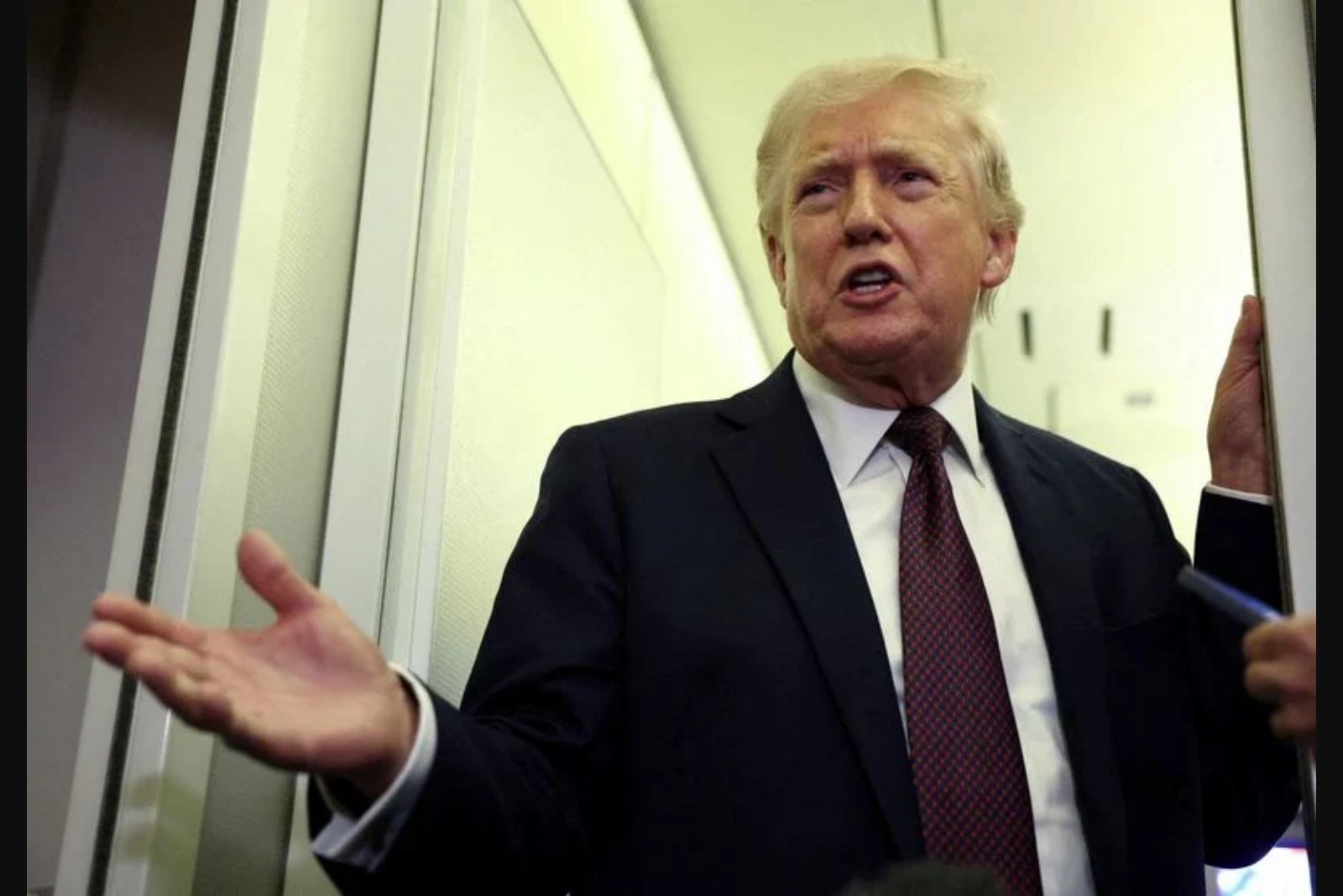
President Donald Trump has signaled he will accept a Pakistani-mediated memorandum of understanding intended to move the United States toward an exit from the war with Iran, a shift that could ease recent global energy shocks while provoking political backlash at home.
The framework, finalized after more than three months of hostilities following U.S. attacks on the Islamic Republic, reportedly includes Iran's agreement to reopen the Strait of Hormuz and a U.S. commitment to lift a naval blockade of Iranian ports. The memorandum - whose text was not immediately released - is set to be signed on Friday and is designed to extend the current ceasefire for 60 days to allow detailed talks aimed at reaching a permanent settlement.
Officials and participants have offered differing accounts of the framework's provisions. Some elements appear to offer significant concessions by the United States, including a deferral of intensive negotiations over Iran's nuclear activities, which had been the stated primary objective of the U.S. military campaign. The preliminary accord also reportedly addresses Iran's near-bomb-grade uranium stockpile through a commitment to dilute or downblend the material, but the mechanism and timetable for that process remain unclear.
Trump announced the agreement in a social media post on his 80th birthday, writing, "The Deal with the Islamic Republic of Iran is now complete. Congratulations to all!" Iran confirmed the accord shortly after the announcement. The two sides, however, have released different interpretations of the framework and the steps that will follow.
Domestic politics and pressures to end the conflict
The president's move toward an exit plan comes amid mounting domestic pressure to end a war that has incurred steep human and economic costs. The conflict has killed thousands, primarily in Iran and Lebanon, and has taken 13 U.S. service members. At home, the campaign has contributed to economic pain and declining presidential approval ratings as midterm elections approach this November, when Republicans are seeking to hold control of Congress.
Trump has portrayed the memorandum as a major victory, a message that aligns with his broader campaign emphasis on prioritizing domestic economic concerns and avoiding prolonged foreign entanglements. Yet many analysts and political opponents note that the agreement falls short of several objectives the president articulated at the start of the conflict. Those aims included the dismantling of Iran's ballistic missile program, an end to its support for regional proxy groups, and broad restraints on its nuclear program.
For critics within his own party who had pushed for a harder line on Tehran, the preliminary deal could become a focal point for political attacks. Some hawks in Washington had already warned against concessions that might strengthen Tehran's hand.
What the memorandum does and does not resolve
Key components of the Pakistani-mediated framework include an Iranian commitment to begin reopening the Strait of Hormuz and both sides agreeing to a ceasefire extension of 60 days for further negotiations. Reopening the strait could help lower markedly elevated U.S. gasoline prices by restoring a critical chokepoint for global oil and gas shipments.
Yet the memorandum appears to defer several contentious issues. The fate of Iran's near-bomb-grade uranium remains unresolved in practical terms. President Trump stated in a social media post that the United States would obtain, downblend, and destroy the material, but he did not offer a timeline. Iranian officials have described their commitment in different terms, saying Iran would dilute the stockpile itself but without yet specifying the mechanism or verification steps.
A U.S. official told reporters the preliminary agreement meets Trump's core objectives. Other observers argue the outcome represents a truncated victory at best and say it might not improve on the 2015 agreement reached under former President Barack Obama, which Trump withdrew from in 2018.
Strategic and military implications
There is broad acknowledgment that U.S. and Israeli strikes significantly degraded Iran's military capabilities during the conflict. Even so, Tehran demonstrated an ability to withstand sustained attacks while retaining the capacity to throttle roughly one-fifth of the world's oil and gas supplies, a fact that highlighted the global market vulnerability tied to the region.
Analysts warn that Iran's capacity to interdict the Strait of Hormuz could remain a persistent strategic threat. "Iran has demonstrated that even in a starkly weakened state, it can shut the Strait of Hormuz at will. That’s not going away," said Jon Alterman of the Center for Strategic and International Studies in Washington.
The war's toll extended beyond immediate battlefield losses. The U.S. military operation carried a financial cost in the tens of billions of dollars, and munitions inventories were significantly drawn down. Relations with European allies suffered because they were not consulted extensively before the United States initiated hostilities.
Regional politics and allied reactions
Israel, a close wartime partner of the United States, has publicly distanced itself from the memorandum. Israeli Prime Minister Benjamin Netanyahu said his country will not be a party to the MOU, and leaders in Jerusalem and Washington clashed over Israel's ongoing military campaign in Lebanon.
Gulf Arab states, which were targets of Iranian missile and drone attacks during the conflict, had been pressing for a negotiated settlement to halt violence. Yet the framework leaves the region facing a neighbor that, while militarily and economically weakened, retains an arsenal capable of threatening Gulf energy infrastructure and shipping lanes.
Unanswered questions and the path forward
The memorandum aims to buy time - a 60-day extension of the ceasefire - to negotiate a permanent settlement. But many essential details remain unsettled. The final text of the agreement has not been published, and both Washington and Tehran have offered differing accounts of what the document requires of each side.
It is also uncertain whether any unfreezing of Iranian funds or easing of sanctions will be gradual and conditioned on verifiable Iranian actions, as some U.S. officials have insisted, or whether Tehran will receive more immediate financial relief, as it has suggested it expects.
Observers caution that even a limited agreement could be portrayed domestically as giving Tehran a political and economic lifeline, a critique that echoes past accusations leveled against earlier administrations. "This deal is likely the best possible outcome to avert further conflict, but it is no better than what could have been achieved had the United States pursued diplomacy rather than war in the first place," said Victoria Taylor, a former deputy assistant secretary of state now at the Atlantic Council.
Bottom line
The Pakistani-mediated memorandum of understanding represents the most consequential step yet toward ending the war initiated after U.S. attacks on Iran. It offers the prospect of reduced energy-market stress by reopening the Strait of Hormuz and lifting a naval blockade, while providing a 60-day window for more detailed talks. Yet the agreement defers or leaves ambiguous several central U.S. goals, including definitive limits on Iran's nuclear program, ballistic missile forces, and proxy networks.
As the parties prepare to sign the document on Friday, key questions remain about verification, timelines for handling fissile material, the pace and conditions for any sanctions relief, and the broader strategic balance in the Middle East. The deal may reduce the immediate risks of further escalation, but it also raises political and security uncertainties at home and across the region.