
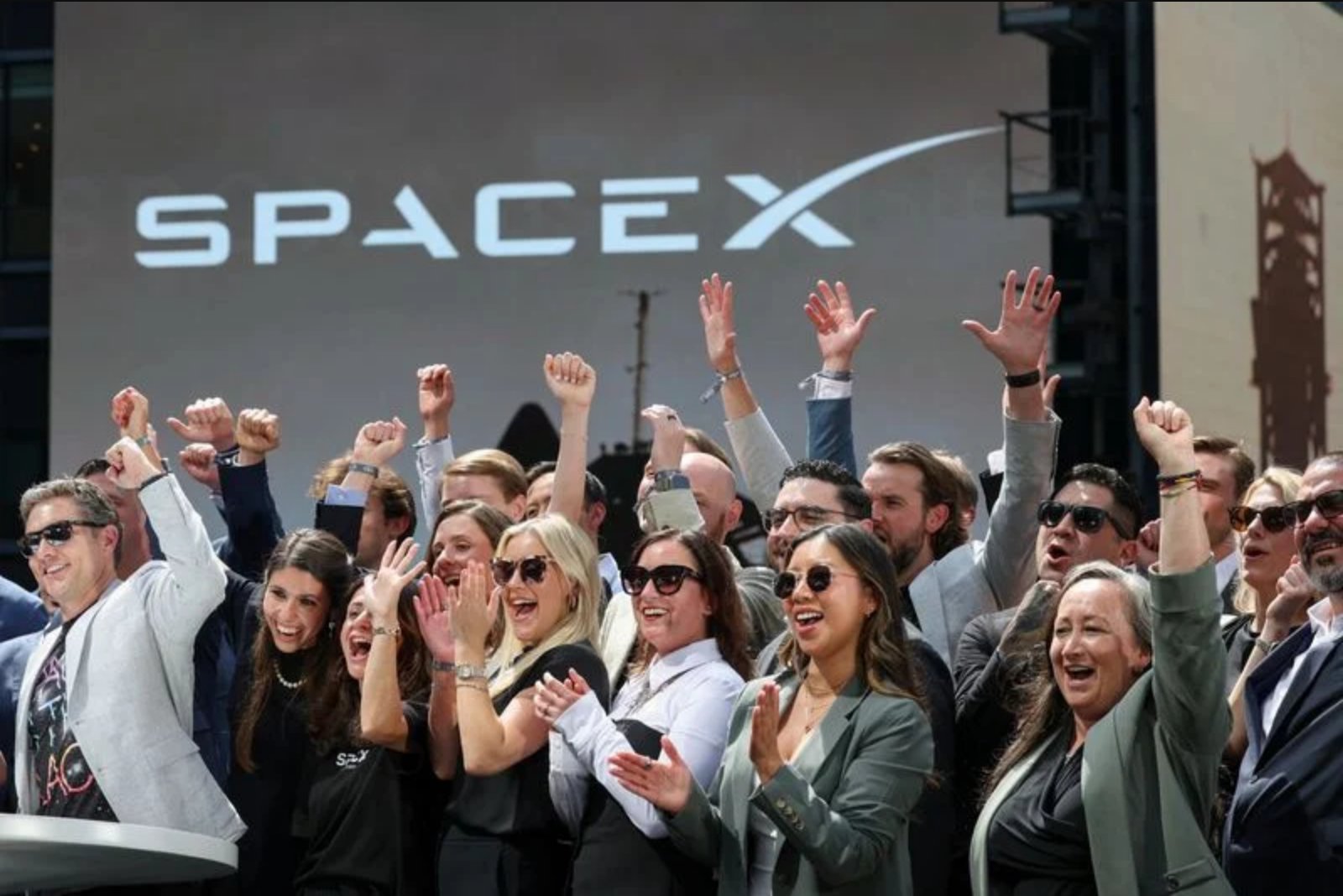
Wall Street breathed a collective sigh of relief after SpaceX’s high-profile Nasdaq launch unfolded without major technical disruption, offering a potential blueprint for the trading infrastructure preparing for very large initial public offerings later this year. The debut, which dwarfed the previous largest U.S. flotation by nearly three times, raised concerns beforehand because of memories of a chaotic IPO rollout more than a decade ago.
Despite the sheer scale of orders, the trading systems operated by banks underwriting the deal, the exchanges, market makers, clearinghouses and other market infrastructure providers successfully processed millions of client instructions. The overall stability undercut fears that the listing could devolve into the kind of operational meltdown that has haunted Wall Street in the past.
"People go back to the Facebook ... days and ’was this going to turn into one of those companies,’ but I honestly think the banks in the U.S. did a fantastic job, the SpaceX crew did a fantastic job telling the story when they did their rounds. And as you can see it went extremely smoothly," said Jeff Parks, CEO of Canadian investment firm Stack Capital Group. Parks noted that nearly a third of Stack’s portfolio is SpaceX, an investment the firm began making in 2021.
Citadel Securities, the largest U.S. retail market maker, said SpaceX’s debut produced the highest retail order activity ever recorded for an IPO auction. A spokesperson for Citadel Securities said the firm handled the majority of retail orders for the listing.
Morgan Stanley served as the deal’s stabilization agent and carried the central responsibility of managing the stock’s opening on the market. In that role the bank would typically buy shares in the open market to support prices that suffer steep declines on opening day, a function that took on heightened importance given the unprecedented investor demand.
One of the lead underwriters advising SpaceX, speaking on condition of anonymity because the matter is confidential, characterized the offering as a monumental event for exchanges and banks and emphasized how crucial it was to execute the rollout correctly.
Trading platform Charles Schwab reported receiving well over a million orders for SpaceX in the first few hours of trading, a number the company’s spokesperson said is significant when compared with past IPOs.
In advance of the listing, Wall Street traders, brokers and exchanges had been stress-testing their trading systems for several weeks to prepare for the blockbuster debut. Those preparations appeared to pay off as the infrastructure absorbed intense order flow without the kinds of breakdowns seen in earlier large listings.
Despite extensive oversubscription headlines ahead of the opening, volatility was muted during initial trading. "SpaceX shares are not going up in huge blocks, but they’re bleeding higher, and a lot of that is due to a little bit more of a boring and softer opening print than a lot of folks expected," said Mike Dickson, head of research & quantitative strategies at Horizon Investments. "I’m a little surprised there’s not more volatility, given a lot of the oversubscription headlines."
Smooth rollout and timing
Large IPOs often face processing delays because exchanges must first match enormous volumes of buy and sell orders before determining an opening price. In SpaceX’s case, trading began shortly before noon on Friday - an earlier start than other recent public debuts such as Cerebras Systems and Quantinuum, which commenced trading later in the afternoon on their respective debut days.
Aside from some reported early trading issues on Robinhood on Friday, the broader market largely avoided the technical glitches that marred the Facebook IPO in 2012. The relative calm was welcomed by Nasdaq, market makers and investors alike.
"We all worked really well together. We did a lot of preparation with our banking partners," Nasdaq CEO Adena Friedman said in an interview on Friday. "We made sure that we were talking to all of the firms throughout the process of preparing for this, and it came off really flawlessly."
What the outcome means
Market participants are treating the SpaceX debut as a practical demonstration that complex, high-demand offerings can be introduced without the kinds of technical failures that have previously undermined investor confidence. The successful mechanics of the listing - from order handling by retail brokers to the market-making responsibilities carried out by firms such as Citadel Securities and the stabilization role played by Morgan Stanley - are being cited as a potential template for the much-anticipated public market debuts of other large private companies.
At the same time, several participants noted the unique circumstances of this event, including the scale of orders and the intense preparation behind the scenes. Anonymity requested by some underwriting participants underscores the sensitivity around operational execution of deals of this magnitude.
Contextual note
The article also included the question: "Is NDAQ a bargain right now?" which appeared as a prompt in the original text.