
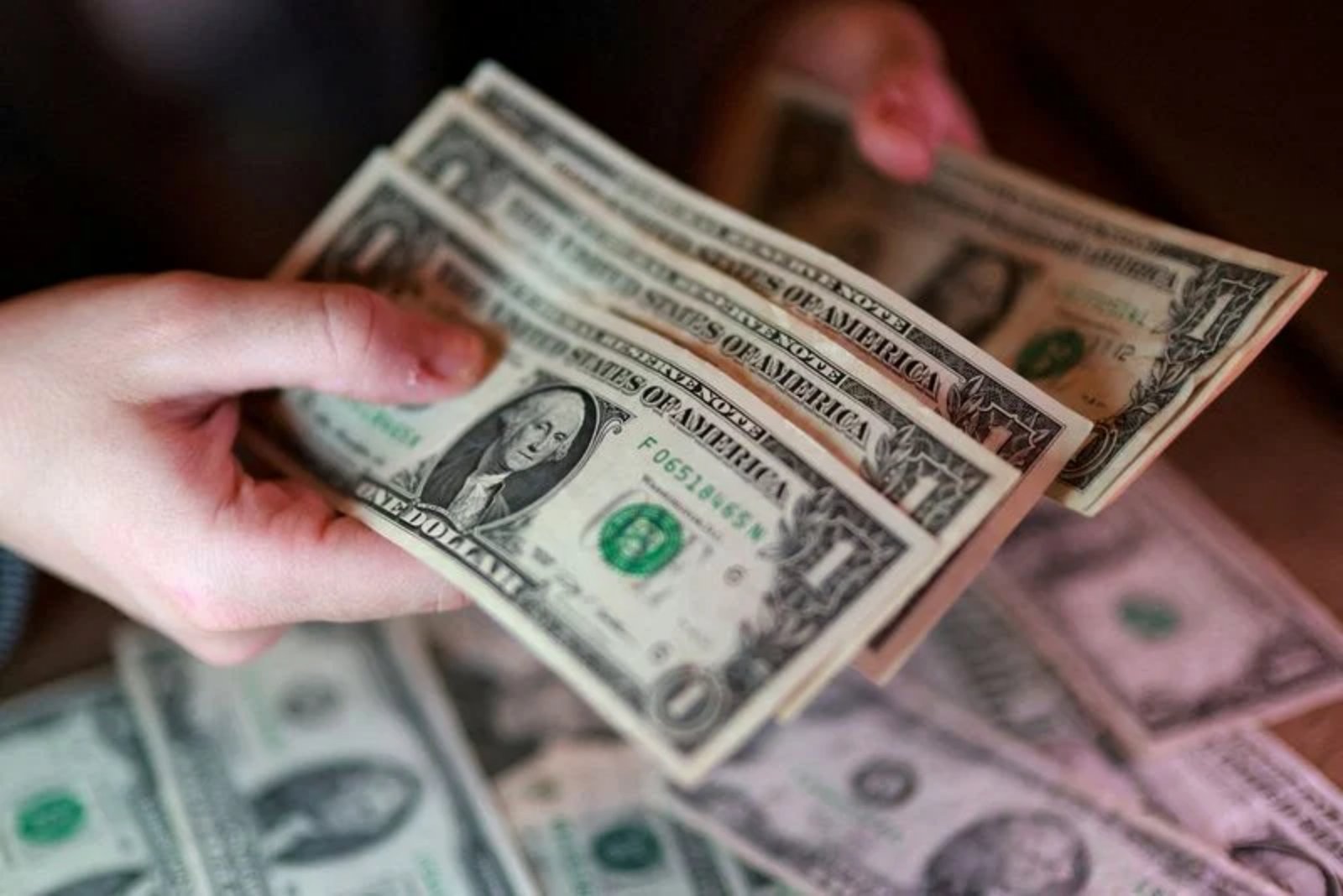
The U.S. dollar faced renewed selling pressure on Monday, retreating to a 10-day low against its major global peers. The sharp depreciation of the greenback was triggered by breaking news that the United States and Iran have reached a preliminary agreement to end their prolonged conflict. U.S. and Iranian officials confirmed on Sunday that they have established a framework for a comprehensive deal aimed at ending the war, lifting the U.S. blockade on Iran, and fully reopening the strategic Strait of Hormuz.
The immediate market reaction saw oil prices plummet, with Brent crude futures shedding more than 4% to trade at $83.82. The drop in energy costs, combined with the de-escalation of geopolitical tensions, spurred a broad rally in riskier assets. Investors rotated capital away from safe-haven currencies like the U.S. dollar and into higher-yielding or growth-sensitive instruments.
In the foreign exchange market, the euro gained ground, strengthening by 0.35% to reach $1.1607 during Asian trading hours. Similarly, the British pound saw appreciation, climbing 0.3% against the dollar to trade at $1.3448. The Australian dollar, a currency often viewed as a proxy for global risk sentiment, rose 0.50% to $0.7075. The New Zealand dollar also posted gains, moving up 0.4% to $0.5854.
The U.S. dollar index, which tracks the greenback against a basket of major currencies including the Japanese yen and the euro, fell 0.31% to 99.492. This level marks the weakest performance of the index since June 5.
Market Caution and Geopolitical Uncertainties
Despite the immediate relief brought by the peace framework, market participants remained cautious. President Donald Trump issued a stark warning to the New York Times on Sunday, indicating that the current agreement is contingent upon Iran reaching a final nuclear accord with the United States. He cautioned that failure to secure such a deal could result in the restart of military attacks on Tehran. Alternatively, he suggested the United States could assume the role of "the guardian of the Middle East" in exchange for 20% of the region's revenues.
Nick Twidale, chief market strategist at ATFX Global in Sydney, noted that while the dollar is likely to remain under pressure in the near term, significant volatility may be tempered by the slow pace of geopolitical normalization. "I think we’ll see the dollar fall over the course of the next few sessions. We’ll probably see some of the risk currencies like Aussie and yen appreciate a little bit. But I don’t think we’re going to see any huge moves," Twidale explained. He emphasized that markets will adopt a wait-and-see approach, particularly regarding the timeline for the Strait of Hormuz to fully reopen. "There’s going to be a lot of wait and see, on how quickly the Strait really reopens and how long it’s going to take for oil flow to really get back to normal. It’s certainly going to be months rather than weeks," he added.
Central Bank Divergence and the Yen
The Japanese yen also reacted to the shifting geopolitical landscape, weakening to as much as 160.150. The currency continues to trade near the 160 level, a threshold widely monitored by market analysts as a potential trigger for official intervention by Japanese authorities.
In a significant shift in monetary policy, the Bank of Japan is scheduled to conclude its two-day meeting on June 16. The central bank is expected to raise interest rates to a 31-year high. Furthermore, the Bank of Japan is anticipated to signal its readiness to continue hiking borrowing costs. This decisive move will be made undeterred by the temporary absence of its governor, as the central bank prioritizes countering inflation risks stemming from the Middle East war.
The anticipated tightening by the Bank of Japan aligns it with other major central banks, including the European Central Bank, which delivered a much-anticipated interest rate hike on Thursday. This coordinated shift towards tighter policy underscores the persistent challenge of inflation across global economies, even as geopolitical tensions begin to ease.