
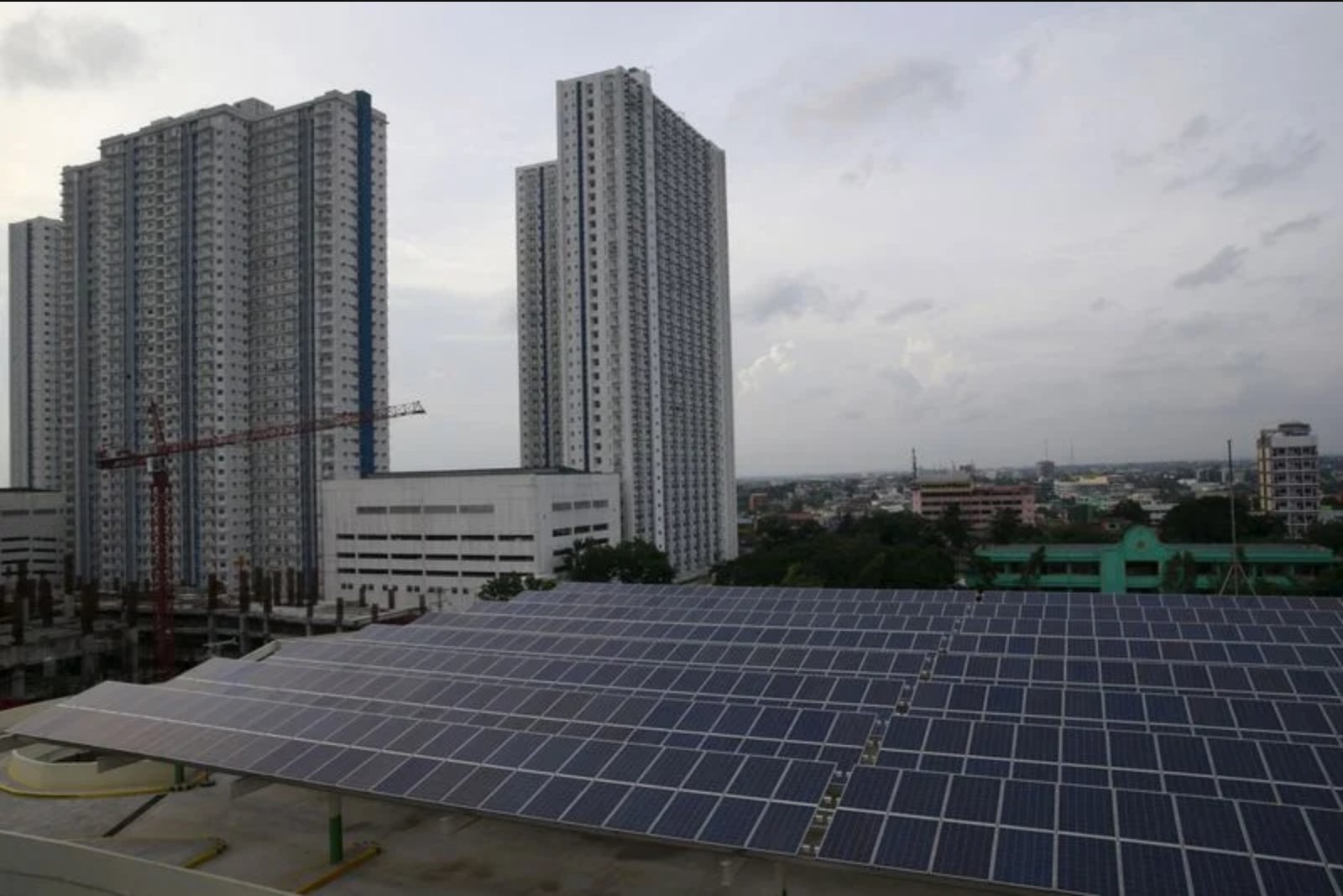
Residents across the Philippines are increasingly turning to rooftop solar systems to escape sharply higher electricity bills, creating a national buying wave that has made the country the largest global spender on solar panels since the start of the conflict in Iran. That surge reflects a combination of elevated retail tariffs, reduced module prices and growing awareness of payback economics.
Top power distributor Meralco has raised consumer tariffs by 10% since the Middle East conflict began in late February. As a result, a median household that consumes about 200 kilowatt-hours - the approximate monthly average for three people - now spends roughly 12% of monthly income on electricity. The Philippines stands out in Southeast Asia for having almost no residential power subsidies and the region's highest household tariffs, with only Singapore approaching similar nominal prices but with citizens who have nearly 13 times greater average purchasing power.
For some households, the shift to solar has become financially tangible. Adrian Sabatera, a 39-year-old software engineer, had postponed a solar purchase for years because it felt unaffordable, but falling equipment prices and rising retail power costs changed the calculation. He went ahead with a 570,000 peso installation at his Manila home, a system cost the article cites as equivalent to $9,300. Sabatera commented, "I wouldn’t be shocked if a third of the middle-class population eventually finds their way to this setup." He shares the house with three others.
Trade statistics point to a sharp expansion of the market: imports of solar panels reached $407 million in the three months through May, a 145% increase from a year earlier, based on Chinese trade data. China supplies most of the world’s modules. Even though Chinese panel shipments fell 13% in May after removal of a tax rebate, exports to the Philippines climbed by almost a third. Analysts note that the Netherlands still appears larger on paper but that is influenced by its role as a transshipment hub rather than final consumption.
Installer firms report dramatic growth in customer interest. Philergy German Solar, based in Manila, said it handled more than two-and-a-half times the enquiries in the first five months of this year compared with the same period last year, with a peak of 3,000 inquiries a day, according to managing partner Jochen Staudter. "Customers are deciding to buy much faster than before," Staudter said. "Demand will continue to be driven by high electricity prices."
Industry analysis suggests the expansion could be rapid. Alnie Demoral, an analyst at the energy think tank Ember, estimates that distributed solar capacity could nearly triple to 3,500 megawatts in two years, equaling the current scale of the Philippines' utility-scale solar fleet. Demoral points to shorter loan payback periods as a catalyst, with payback times falling to 3.1 years from 4 years. Government data shows solar still accounts for under 4% of national power consumption.
From an operations and supply perspective, the market faces strains. A weakening Philippine peso has amplified the impact of rising power costs because the country's electricity mix relies on imported coal and gas. The currency pressure has, in turn, contributed to multi-year high inflation and slower economic growth.
Some Philippine customers report sharp savings once systems are installed. Entrepreneur Jason Porciuncula installed a 12-kilowatt system with battery storage in January; as retail electricity prices hit record highs in May, his monthly bill fell to one-fifth of last summer’s 21,000 pesos.
However, supply-side frictions are slowing installations. Brenda Valerio, Philippines director at New Energy Nexus, cited component hoarding, swings in equipment prices and weak quality control as factors causing installations to lag demand. Access to finance is a mixed picture: the government offers loans of up to 500,000 pesos at a 5% interest rate, below prevailing market rates, but these loans exclude private-sector workers. That exclusion, together with the high upfront cost of systems - typically higher than the average annual household income of 353,200 pesos - remains a barrier for many households and businesses.
Ember’s Demoral summarized the constraint succinctly: "The opportunity is real, but the upfront cost is often too high for a household or business, no matter how quick the payback time is."
The dynamics unfolding in the Philippines highlight tensions that matter for multiple sectors: household finances and consumer spending; solar installers and their supply chains; importers and freight channels; utilities managing demand and distributed generation; and financial institutions assessing credit for residential energy investments. While falling payback periods and record import levels point to rapid adoption, material constraints on supply and affordability suggest the transition will be bumpy and uneven.