
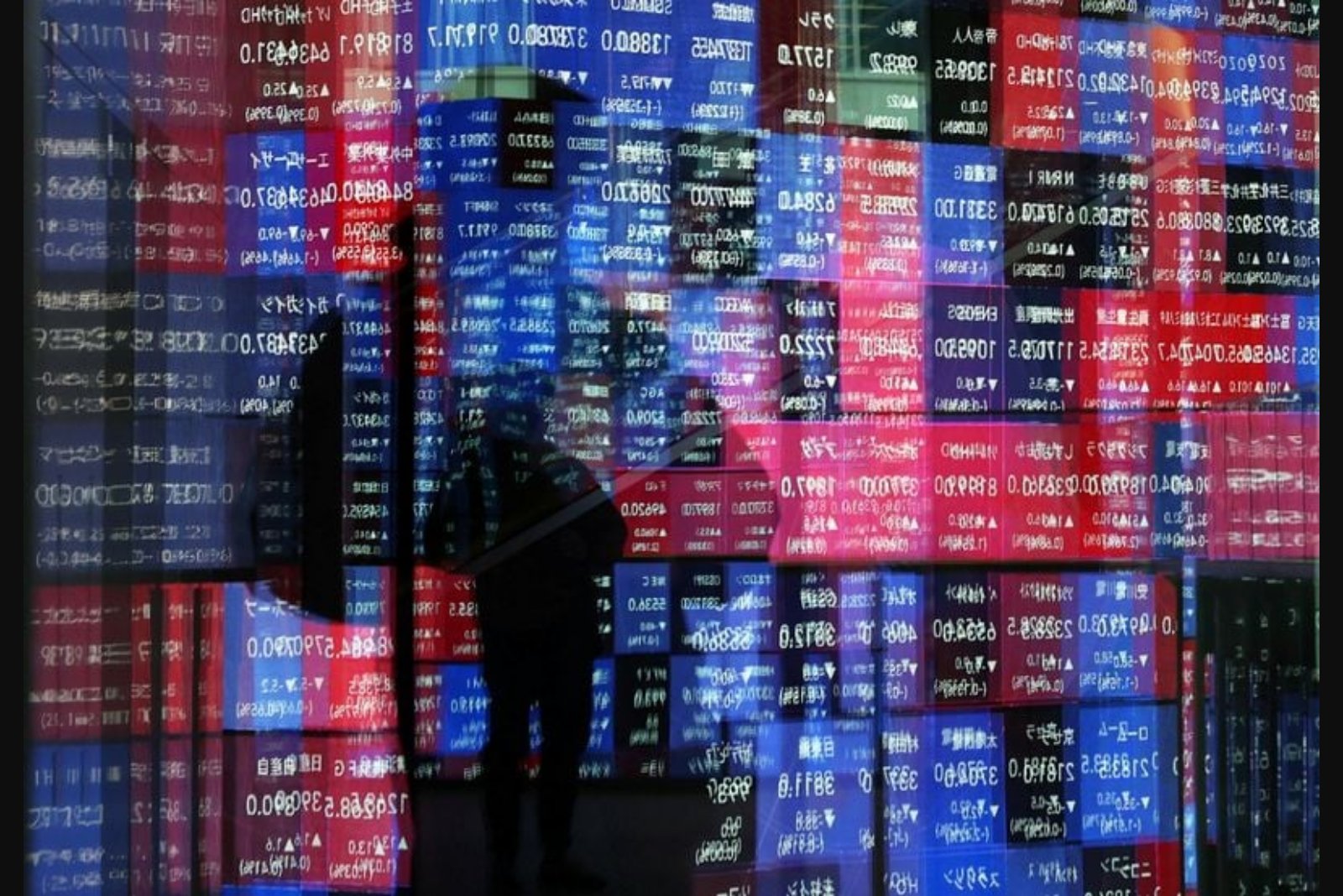
Asian equity markets displayed volatility on Monday, influenced by a temporary truce agreed upon by the United States and Iran, which paused recent military engagements that had overshadowed an interim peace accord. This development contributed to a rise in oil prices, reflecting ongoing uncertainty, while the US dollar maintained its strength near its highest level in a year. The resumption of diplomatic dialogue in the Middle East follows a series of retaliatory attacks that began last week after an Iranian projectile struck a cargo ship in the Strait of Hormuz. Both nations have accused one another of violating a prior ceasefire arrangement.
Early trading saw futures for the S&P 500 and Nasdaq rise by 0.4%. In contrast, South Korea's KOSPI declined by nearly 2%, and Japan's Nikkei slipped by 1%, resulting in a 0.4% decrease in MSCI's broad index of Asia-Pacific equities. Nick Twidale, chief market strategist at ATFX Global in Sydney, noted a lack of clear market direction, suggesting that positive news from the Middle East could provide a boost later in the day. However, he characterized the current trading day as being driven by flows without significant directional moves.
Concerns regarding the durability of the peace agreement contributed to a 0.85% increase in Brent crude futures to $72.6 per barrel, while US West Texas Intermediate crude rose by over 1% to $70.01 per barrel. Oil prices have nearly reversed all gains made during the conflict as markets quickly adjust to the possibility of a supply easing. The 14-point interim peace accord, established on June 17, was designed to stop the fighting initiated by the US and Israel on February 28 and to reopen the strait while negotiations on Iran's nuclear program continued. The recent strikes have raised fears of escalation, although traders generally anticipate a resolution. Marc Chandler, chief market strategist at Bannockburn Capital Markets, observed that markets are entering July with a ceasefire that lacks full trust.
Investor anxiety over the high valuations of AI-related companies, following years of substantial gains, is exerting downward pressure on markets. Recent events, including Micron's robust earnings forecast and Apple's price increases, highlight the differing challenges within the sector. Strategists at BofA Global Research noted that markets are experiencing a tactical rotation away from large-cap AI stocks towards smaller, more cyclical segments, indicating early signs of broadening following a period of extreme concentration.
Tony Sycamore, market analyst at IG, highlighted renewed investor concerns regarding the significant capital expenditure being made by major firms in the AI sector. There is increasing uncertainty about when these investments will result in earnings growth sufficient to justify current valuations. Analysts also suggest that month-end and quarter-end rebalancing activities may have contributed to the weakness observed in large tech firms, which have significantly outperformed for much of the second quarter.
While easing oil prices could alleviate some inflationary pressure, elevated levels are expected to maintain pressure on the US Federal Reserve to raise interest rates. Investors are currently pricing in at least one rate increase for the year. This has led to a rise in the dollar index, which measures the US currency against six other major currencies, to 101.33, just below the one-year high reached last week.
The Japanese yen is trading at 161.77 per US dollar, with fears of further intervention from Japanese authorities preventing the currency from falling to its lowest level in 40 years. The strengthening dollar has negatively impacted gold prices, which declined by 0.4% to $4,072 per ounce. Gold is on track for a 13% decline in the second quarter, marking its largest quarterly drop since 2013.