
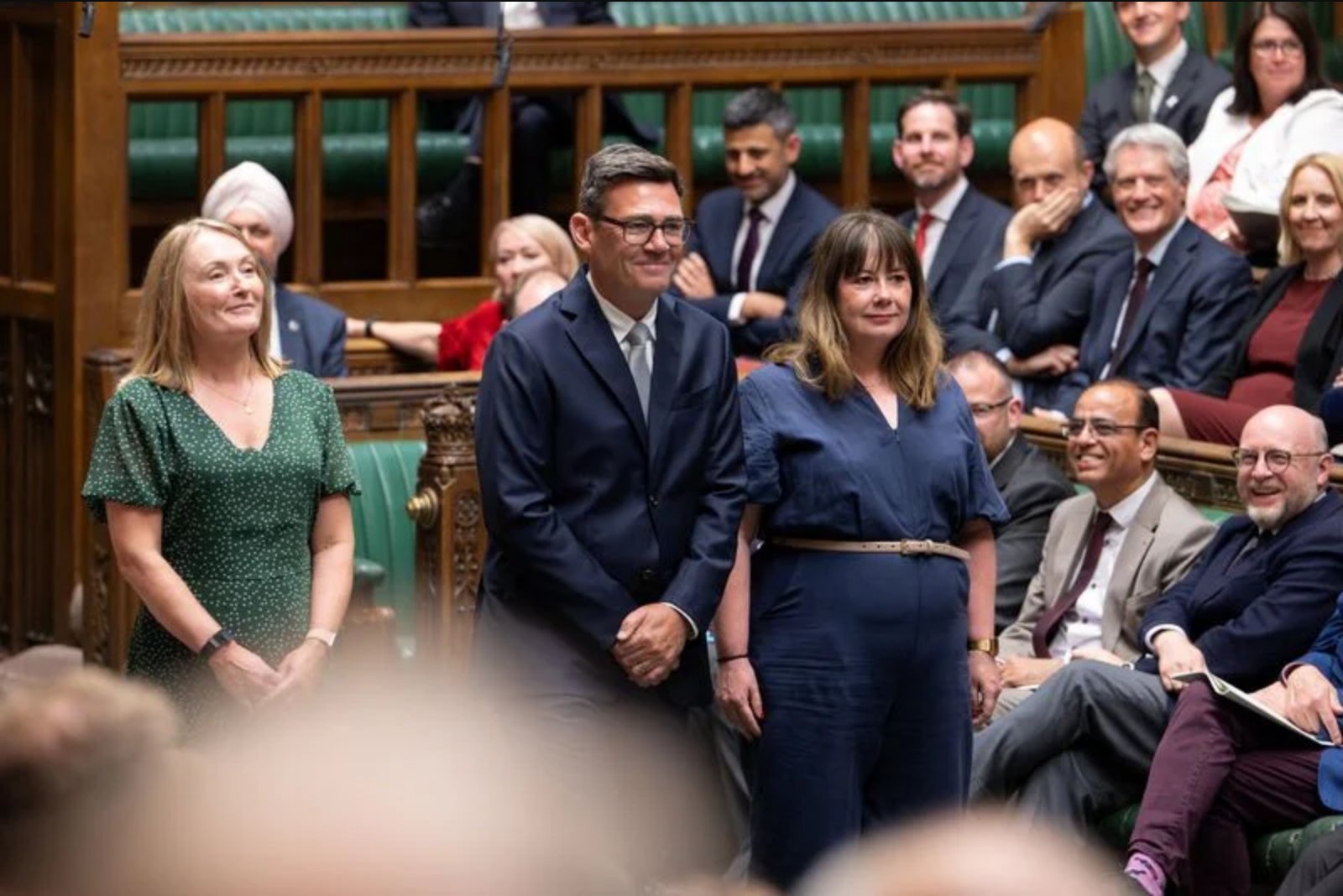
LONDON, June 28 - Andy Burnham, the Labour lawmaker widely expected to succeed Keir Starmer as the British prime minister, will present his comprehensive vision for the nation on Monday, his office confirmed. The plan centres on a fundamental restructuring of governance by transferring authority from London to the regions across the UK. Burnham, who rejoined Westminster earlier this month following his parliamentary election victory, stands as the sole declared candidate to assume the premiership from Starmer. He is poised to move into Downing Street within the coming weeks, following Starmer's announcement last week that he would step down. This transition occurs merely two years after Labour secured a substantial parliamentary majority, amid a noticeable decline in Starmer's public approval ratings.
Having gained prominence as the mayor of Greater Manchester and earning the moniker "King of the North," Burnham will leverage Monday's address to establish the devolution of power to regional and local communities as his primary objective. The agenda will include a ten-year strategic mission aimed at elevating living standards through a multifaceted approach. This approach encompasses reindustrialisation, expanded housing provision, enhanced infrastructure, and comprehensive reform of the utilities sector. His office emphasised that the focus extends beyond merely identifying who governs Britain to fundamentally altering how the country is administered. The initiative aims to "lift Britain back up to where it should be" and serve as the necessary "circuit-breaker" for the nation's economic trajectory. Additionally, a pledge to reform public procurement processes is included, designed to bolster British jobs and domestic industry.
Upon taking office, Burnham would become the seventh prime minister in the UK over the past decade. Within his party, there is a prevailing belief that he alone possesses the charisma and strategic vision required to reconnect with voters and effectively counter the electoral momentum of Nigel Farage's Reform UK party, which has gained traction on anti-immigration platforms. Market indicators as of the latest close show the GB1MT yield at 3.85%, up 0.023 points or 0.60%, while the GB3MT and GB6MT yields are at 0.36% and 1.61% respectively.
Fiscal Pressures Limit Scope
Despite the ambitious scope of Burnham's proposed governance reforms, the fiscal capacity for radical spending adjustments remains constrained. The British economy continues to grapple with the aftershocks of the war in Ukraine and the more recent energy shock triggered by the US conflict with Iran. These external pressures significantly limit the government's ability to pursue expansive fiscal policies. Burnham has previously stated that the government needs to "get beyond this thing of being in hock to the bond markets," though he later clarified that his remarks were taken out of context. Furthermore, he has retreated from earlier suggestions advocating for large-scale nationalisation or an imminent return to the European Union.
Housing Minister Steve Reed affirmed on Sunday that Burnham will adhere strictly to Labour's pre-2024 election commitments and the government's established fiscal rules. These rules mandate balancing day-to-day expenditure with tax revenues and working to reduce debt as a proportion of economic output. "When it comes to the fundamentals, Andy has been clear he will stick to the fiscal rules that have delivered this country stability in the economy for the first time in over 15 years," Reed stated during an interview with Sky News. This adherence to fiscal discipline suggests a cautious approach to economic management, prioritising stability over transformative spending changes in the near term.