
Stock Markets June 28, 2026 02:35 PM

Putin: Fuel Shortages Across Regions Linked to Drone Strikes; Task Force Working on Supplies

Government officials meet to coordinate distribution, consider diesel export ban and protect farm fuel needs amid reported attacks on oil infrastructure

By Ajmal Hussain
Share
Twitter Reddit Facebook LinkedIn

President Vladimir Putin said fuel supply disruptions have produced shortages in multiple Russian regions and that a government task force is working to secure adequate quantities nationwide. He linked the problem to Ukrainian drone strikes on oil-related facilities, said gasoline reserves are being drawn down to 1.7 million metric tons, and indicated that a full ban on diesel exports is under consideration while production in July is expected to exceed June levels.

Putin: Fuel Shortages Across Regions Linked to Drone Strikes; Task Force Working on Supplies
Summarize with
ChatGPT Perplexity Claude Grok Gemini

Key Points

  • President Putin said fuel supply problems have led to shortages across Russian regions and a task force is working to ensure adequate supplies.
  • Putin linked the shortages to Ukrainian drone strikes on oil installations and said gasoline reserves are being used, currently at 1.7 million metric tons; July production is expected to exceed June's level.
  • Authorities are considering a complete ban on diesel exports to protect domestic supply and ensure fuel availability for the farm sector, though Deputy Prime Minister Alexander Novak reportedly said there was no need for such a ban.

President Vladimir Putin told senior officials on Sunday that fuel supply problems have created shortages across regions of Russia and that a specially tasked group is working to guarantee sufficient deliveries throughout the country.

Speaking at a meeting focused on fuel supply and distribution, Putin said the government needs to limit the effects of Ukrainian drone strikes on oil installations, which he linked to the shortages currently being felt. He urged concrete measures to ensure that agricultural operations receive necessary fuel allocations and said authorities are weighing a possible ban on diesel exports.

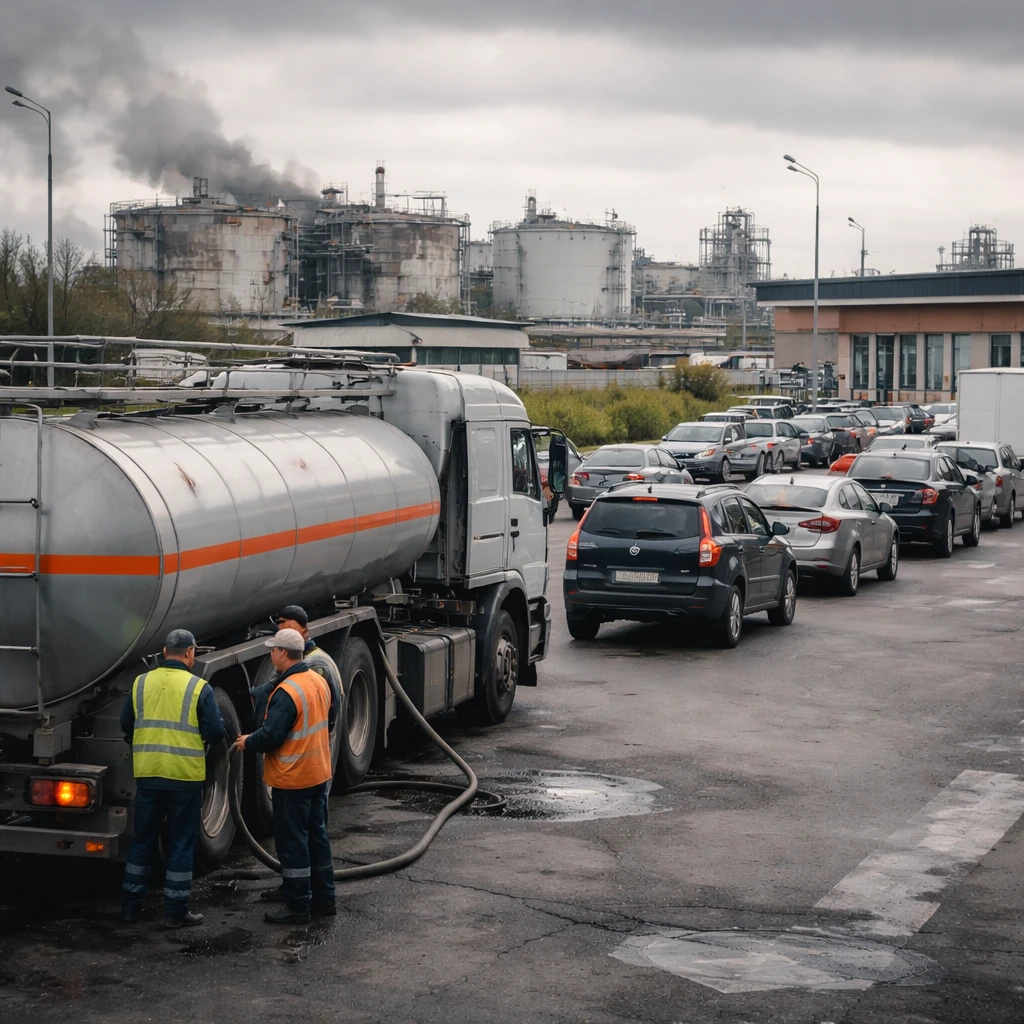
"You are well aware that problems for drivers and for businesses persist," he told meeting participants, according to accounts published by Russian news agencies. "Unfortunately, there are still queues at gas stations too." The president reported that gasoline reserves are being used and currently stand at 1.7 million metric tons, and he stated that production in July should be higher than in June.

Putin described the work of a round-the-clock task force on fuel supplies and called for "systemic measures that match the scale of current challenges" to boost supply and keep prices at a reasonable level. He said the government is considering "the need to introduce a complete ban on the export of diesel fuel."

The comments came as Ukraine has stepped up medium and long-range attacks on industrial targets in Russia and on Russian-controlled territories inside Ukraine, with the strikes focusing primarily on the oil sector, the president said. That pattern was presented in the meeting as a direct factor contributing to the distribution and availability problems being observed.

Russian Deputy Prime Minister Alexander Novak was reported earlier as saying there was no need for Russia to prohibit diesel exports. The report attributed that statement to Interfax news agency.


With gasoline reserves drawn down to the level cited by the president and officials reporting intensified targeting of oil-related infrastructure, the government has prioritized both supply coordination and potential policy tools - including export restrictions - to address regional shortages and to protect vulnerable sectors such as agriculture. The task force is positioned as the operational arm to monitor flows and implement the measures discussed at the meeting.

Risks

  • Continued attacks on oil infrastructure - could further disrupt supply and distribution, affecting transportation and energy sectors.
  • Potential policy response of a diesel export ban - could create market distortions and affect sectors reliant on traded diesel, including logistics and agriculture.
  • Challenges keeping prices reasonable amid constrained supplies - risks for consumer-facing sectors and businesses dependent on fuel.

More from Stock Markets

BofA Sees Apple AI Revamp Feeding Hardware Upgrade Cycle and Long-Term Upside Jun 28, 2026 Volkswagen to End Bosch-Cariad Automated Driving Collaboration, Report Says Jun 28, 2026 Volkswagen to End Automated-Driving Partnership with Bosch, Sources Say Jun 28, 2026 Morningstar trims Reece fair value to A$10.30, cites WACC and time-value assumptions Jun 28, 2026 Deutsche Bank: U.S. Positioned to Keep Global Leadership Despite Growing Headwinds Jun 28, 2026