
Russian President Vladimir Putin told a state television interviewer that Russia will continue pursuing its battlefield objective of fully taking four Ukrainian regions, rejecting a recent proposal from Kyiv that he said would limit hostilities. Putin said the proposal, which he described as calling for a mutual halt to long-range strikes, would primarily relieve pressure on Ukrainian forces along the roughly 1,250-km front line and therefore would not change Moscow's course.
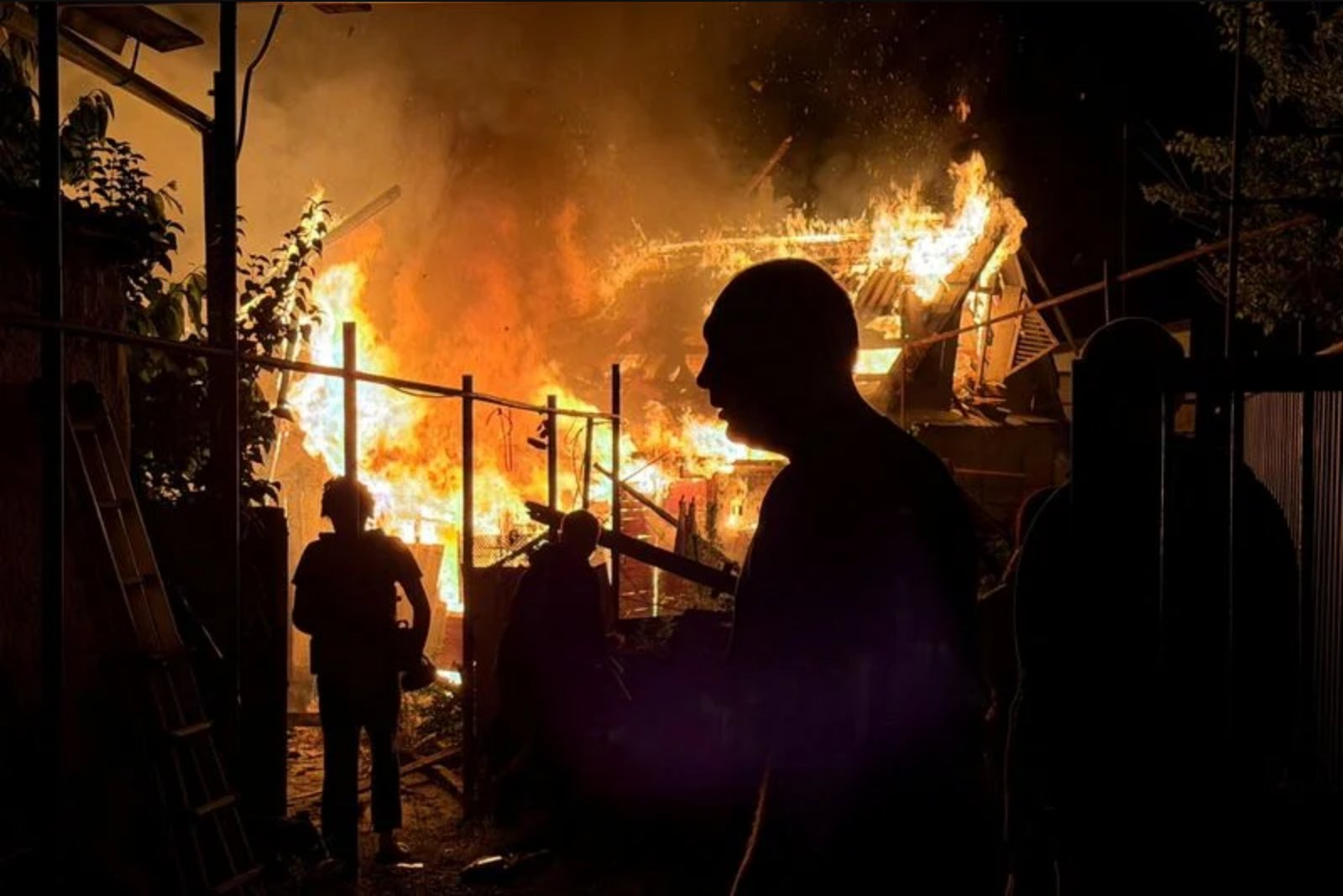
Speaking after a Kremlin meeting with government ministers and other officials earlier on the same day, Putin acknowledged that recent Ukrainian strikes had produced fuel shortages in several Russian regions, but said authorities were managing the problem. He reiterated that intensified Ukrainian drone attacks have primarily targeted Russia's oil industry and said Moscow needed to boost its air defence capacity to blunt those campaigns.
On the proposal from Kyiv, Putin said: "It is clear why this proposal is being made, because our counter-strikes deep into Ukrainian territory are much stronger, have greater impact and are, frankly, more destructive. Given their catastrophic shortage of personnel, the Ukrainian Armed Forces apparently believe this could be their salvation. But saving the Kyiv regime is not part of our plans."
The presidential office of Volodymyr Zelenskiy did not immediately reply to a request for comment that was submitted late at night in Ukraine. Earlier this month, Zelenskiy wrote an open letter to Putin proposing a direct, face-to-face meeting, a proposal the Russian leader has declined.
Objectives and front-line dynamics
Putin framed the Ukrainian proposal as a tactical move intended to distract Russian forces from achieving what he described as the "main objectives - the complete liberation of Donbas and Novorossiya." In this context he referenced the Donbas area and the adjacent regions of Zaporizhzhia and Kherson. He has repeatedly set the withdrawal of Ukrainian forces from their remaining positions in Donetsk Region as a key precondition for any peace arrangement.
The Russian leader noted that, seven months after the 2022 invasion, Moscow ratified the annexation of four regions: Donetsk and Luhansk in Donbas, plus Kherson and Zaporizhzhia - the latter two of which are only partly under Russian control.
Ukrainian drone attacks and air-defence response
Addressing the intensifying campaign of medium- and long-range drones from Ukraine, Putin stressed the need to scale up production of air-defence systems. "The first task is to quickly and significantly ramp up production of those air defence systems that are most needed," he said, adding that the strikes, regardless of where they hit infrastructure, "absolutely do not affect the situation on the front, on the line of combat contact."
Putin also said Russian forces were coping with fuel supply disruptions linked to the strikes. He acknowledged earlier remarks made at a Kremlin meeting that those attacks had led to shortages in various regions, but repeated that Russia was addressing the logistical and supply issues.
Diplomatic signals and third-party roles
Putin said he anticipated a resumption of U.S.-led diplomatic efforts to bring the war to an end and expected a new visit to Moscow by U.S. envoys Steve Witkoff and Jared Kushner once he judged the "hot phase" of the U.S.-Israeli conflict with Iran to be resolved. He also commented on past talks between U.S. and Russian leaders, saying, "Nobody signed anything, but we talked about certain possibilities for ending the conflict in Ukraine." He added that the U.S. side had asked for compromises which, he said, were reflected in proposals discussed during those talks.
Putin suggested Belarusian President Alexander Lukashenko could play a role in future peace discussions after two days of talks between the two leaders. He made no mention of Ukrainian claims that Russia is seeking greater Belarusian involvement in the fighting. Belarus has allowed its territory to be used to launch Russia's February 2022 invasion of Ukraine, while Lukashenko has said he will not send Belarusian forces into combat.
Putin's comments reiterate Moscow's insistence on continuing its offensive aims while publicly acknowledging the operational impact of Ukrainian drone strikes on energy infrastructure and regional fuel supplies. He framed Kyiv's ceasefire-type proposal as a maneuver to relieve military pressure and signaled continued emphasis on bolstering air-defence production to protect critical facilities.