
In the low-lying pastures of southern Bulgaria, farmer Nikolay Vasiliev voices a frustration common across many rural communities: local officials, he says, have obstructed efforts to grow his cattle operation for years. He and others blame cyclical government turnover in the capital, Sofia, for failing to eliminate corruption or revive economies that have declined after long-term neglect.
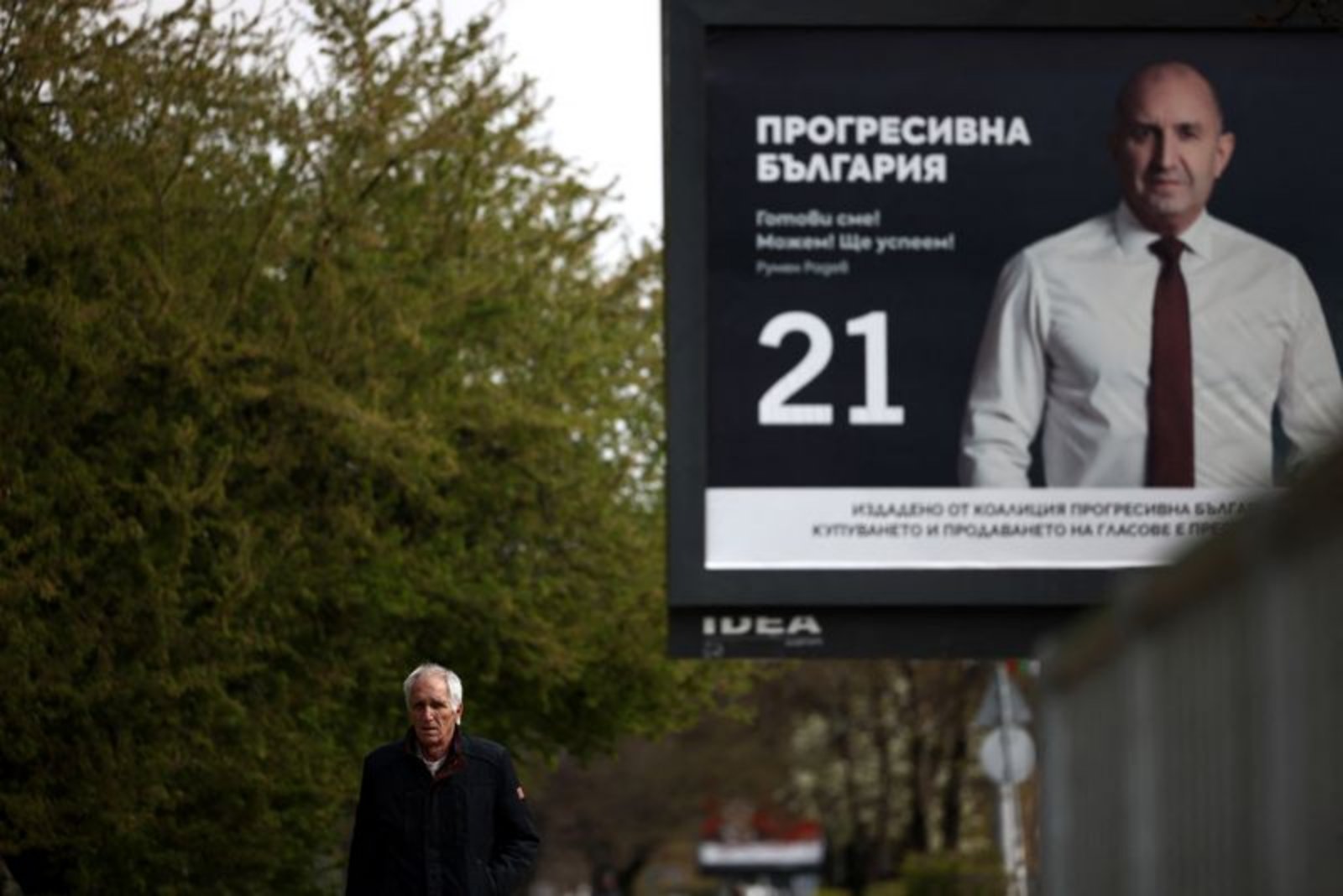
Outside Vasiliev’s farm in Haskovo province, a campaign poster bearing the unsmiling face of Rumen Radev hangs on a post. Radev, a former fighter pilot who left the largely ceremonial presidency in January to contest the April 19 parliamentary election, is leading opinion polls and drawing strong backing from older, rural voters who view him as a potential antidote to what he calls an “oligarchy” of entrenched political figures.
"I see a leader who can make this drastic change and provide security for people," Vasiliev said in an interview on his land. "The time has come for us to fundamentally solve the problems in the country." That sentiment reflects a broader sense of disillusionment that has built up as successive unstable coalitions in Sofia have failed to deliver lasting reform.
Bulgaria, a Black Sea nation of roughly 6.5 million on the European Union’s southeastern edge, is holding its eighth national vote in five years amid a continuing political crisis. The repeated turnouts reflect the fragility of coalitions and a loss of confidence in the ability of elections alone to produce stable governance.
Radev’s appeal rests on two central themes: a promise to end corruption that permeates public life, and a pledge to bring stability. Since his election to the presidency in 2016, a position with limited executive power, he has emerged as one of the few political figures in recent years who remains broadly unscathed in the public eye and who is now seeking a mandate to pursue change from the parliamentary arena.
Transparency International’s Corruption Perceptions Index places Bulgaria at 84th for 2025, tying it with Hungary as the lowest-scoring member of the EU, and experts described corruption as present in everything from procurement contracts to local electoral processes. On the campaign trail Radev has vowed to stamp out what he described on Wednesday as "the local feudal lords and strongmen who are suffocating entire regions of Bulgaria." That framing has struck a chord in areas where families and small businesses have encountered bureaucratic obstruction and perceived favoritism.
Radev’s political platform also raises questions about Bulgaria’s international alignment. The candidate has been a vocal critic of recent policy moves made by governments broadly loyal to Brussels, including the country’s January entry into the euro zone and a security agreement signed last month with Ukraine - both initiatives he opposes. During a Wednesday rally, he told voters: "The coalition-makers introduced the euro in Bulgaria without asking you. And now, when you pay your bills, always remember which politicians promised you that you would be in the ‘club of the rich’." That remark sought to channel public frustration over rising household costs.
After the electoral defeat of Hungary’s long-serving pro-Kremlin prime minister Viktor Orban, Radev has positioned himself as one of the remaining EU figures open to improving ties with Moscow despite Russia’s continuing war in Ukraine. In a television interview with Bulgarian journalist Martin Karbovski, Radev said: "We are the only member state of the European Union that is both Slavic and Eastern Orthodox. We can be a very important link in this whole mechanism...to restore relations with Russia."
Despite his polling lead - Progressive Bulgaria (PB) sits at around 30%, approximately 10 percentage points ahead of the country’s largest party, GERB - Radev is far from commanding an outright majority in parliament. PB has reported receiving in excess of 650,000 euros in private campaign donations, which account for 67% of total contributions recorded by Bulgaria’s National Audit Office.
That cash injection bolsters PB’s campaign but does not obviate the need for coalition partners. Analysts warn that Radev’s aversion to alliances with certain parties could limit his options. He has explicitly ruled out forming a coalition with GERB, led by former prime minister Boyko Borissov, and with the Movement for Rights and Freedoms, whose leader Delyan Peevski faces sanctions from the United States and the United Kingdom on corruption grounds.
Tihomir Bezlov, a senior fellow at Sofia’s Centre for the Study of Democracy, said the election outcome will likely lead to coalition talks, though he cautioned that the durability of any government formed remains uncertain. Much will depend on turnout, which is expected to climb above 50% and could reflect either energized support for change or continued fragmentation across political lines.
The caretaker government in Sofia has taken steps intended to shore up electoral integrity by cracking down on vote buying and seeking assistance from EU partners to counter online misinformation, including content it attributes to Russian sources. Radev dismissed those efforts as an attempt to manipulate the results, saying: "No one from outside can come and tell us who and what to vote for. That is decided here, by us Bulgarians." Russia has denied interfering in foreign elections.
Economic conditions in Bulgaria present a study in contrasts. Since the fall of communism and Bulgaria’s accession to the EU in 2007 the country has recorded gains in public health measures and employment indicators. Life expectancy has risen, and official unemployment rates are among the lowest in the European Union. Entry into the euro zone has been accompanied by additional macroeconomic safeguards, and the streets of central Sofia show signs of vibrancy with cafes, bars and well-tended parks filling in spring evenings, while ski resorts continue to draw tourists.
Yet those national improvements have not reached many rural towns and villages, particularly in provinces like Haskovo. Long-term underinvestment and the outflow of younger residents have left local infrastructure in disrepair - from unpaved or potholed roads to sagging roofs on farm buildings. Farmers such as Vasiliev say they want a leader who is, above all, "dignified." "The first word that comes to mind when I think of a leader is ’dignified'," he said. "To be a dignified leader, you must be a dignified person."
As Bulgarians head to the polls on April 19, Radev’s campaign frames the vote as a chance to break with entrenched networks of influence and to restore faith in governance. Whether his party’s lead in the polls translates into a workable parliamentary majority - and whether coalition partners will allow him to pursue changes to both domestic governance and foreign relations - will be decided in the weeks after the vote.