
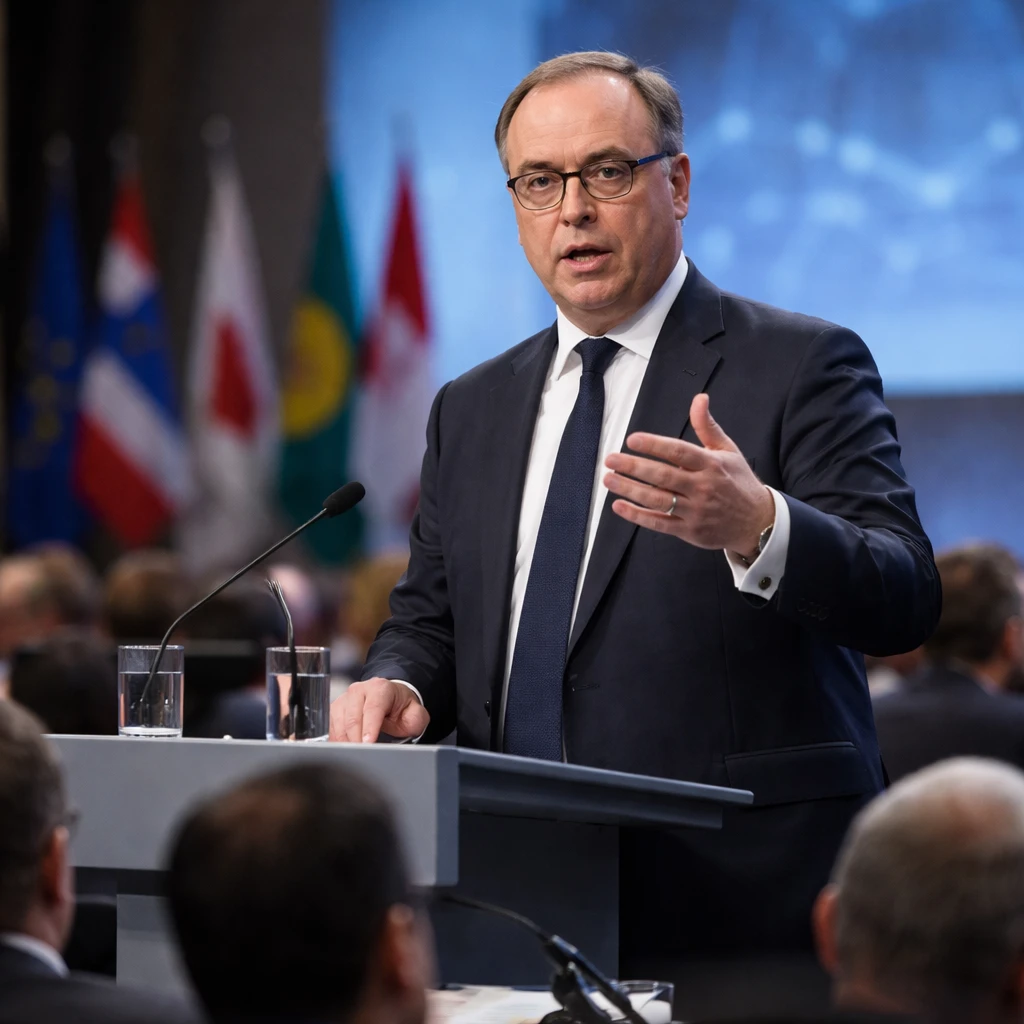
The Bank of England faces complex choices on interest rates as higher energy prices arising from the Middle East conflict threaten to push consumer prices higher, Governor Andrew Bailey said in remarks to the BBC delivered at the International Monetary Fund meeting in Washington.
Bailey described the situation as a "very big energy shock," noting that increases in oil and gas costs will likely filter through to prices. He emphasised, however, that the central bank would not rush to a decision ahead of its 30 April meeting, reflecting the many uncertainties around how the shock will unfold and how it will transmit to the UK economy.
"There’s really difficult judgments to be made," Bailey said. "We’re not going to rush to judgments on those things, because there are a lot of uncertainties around this, not just how it’s going to play out, but also how it’s going to pass through into the UK economy."
The governor said the Bank is continuing to gather and assess data on how the conflict is affecting UK prices and activity. He highlighted the UK's dependence on gas as a source of energy, saying that dependence would amplify the impact, and that the duration of the conflict will be a key determinant of the ultimate effect.
Bailey said the Bank has taken into account guidance from the IMF, which warned central banks not to hastily raise borrowing costs in the wake of the Middle East conflict.
He also pointed to domestic signs that predated the conflict: the labour market had been showing signs of softening, and companies were finding it harder to pass cost increases through to customers. Those conditions, Bailey suggested, reduce the likelihood that inflation will become persistent.
Turning to the financial system, Bailey said he had no current concerns about banking stability. At the same time, he warned that the resilience underpinning the system could be exhausted if the conflict continued for an extended period.
The governor’s comments framed the Bank's approach as cautious and data-driven, prioritising a clearer picture of economic developments ahead of formal policy decisions.