
Market reaction and election dynamics
Peruvian financial markets fell sharply after left-wing congressman Roberto Sanchez made a late surge in the presidential ballot count, reviving investor concerns tied to the country’s recent experience with anti-establishment governance. Sanchez, who served as a cabinet minister during the short presidency of Pedro Castillo, had secured around 12% of the vote while conservative frontrunner Keiko Fujimori stood at about 17% as vote tallies reached nearly 92% as of Wednesday evening. The top two candidates advance to a runoff, currently scheduled for June 7 once official counting is complete.
The market impact was immediate. The sol dropped 1.46% against the U.S. dollar to its weakest level since late September, and the benchmark Lima stock index declined nearly 5%. Traders and portfolio managers moved quickly to adjust exposures, reflecting concern about Sanchez’s policy proposals and his apparent alignment with Castillo’s political movement.
Sanchez’s platform and political posture
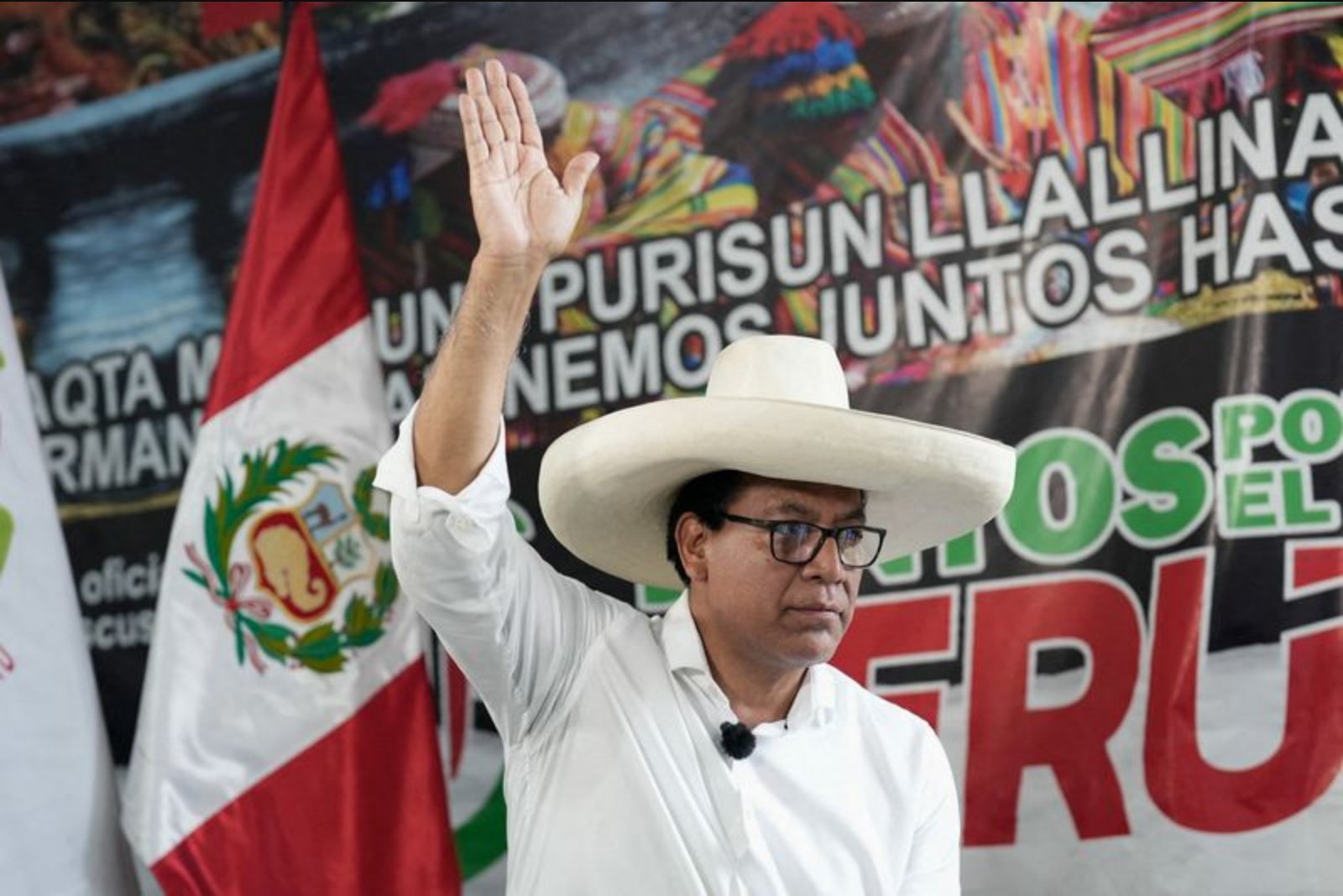
In an interview conducted before last Sunday’s vote, Sanchez framed his campaign as a bid for a “new beginning,” arguing that Peru’s current economic model has excluded marginalized populations. He urged a reimagining of the social contract and advocated for a plurinational state that recognizes the diversity of Peru’s population. Speaking from an office of the Together for Peru party in Lima, Sanchez displayed a wide-brimmed straw hat he attributed to Castillo, a symbolic item tied to the former president’s rural support base.
Central elements of Sanchez’s agenda include convening a constituent assembly to draft a new constitution that would replace the charter adopted in the 1990s under Alberto Fujimori, Keiko Fujimori’s father. Economically, Sanchez favors stronger state control over natural resources, proposals to review mining and gas contracts, taxation on windfall profits, and a wealth tax. He stressed that his proposals were not intended to expropriate property, saying: "We are not talking about expropriating anyone’s property."
Rural vote and electoral mechanics
Observers noted the potential for Sanchez’s share of the vote to increase as rural ballots are fully counted, a demographic that tends to lean left. Sanchez emphasized the historic exclusion of remote and Indigenous communities in his remarks, pointing to persistent poverty in mining towns despite decades of extractive activity. "The rural vote, the Andean vote, the Quechua, Aymara and Amazonian vote was never respected," he said. "We sell stones. Thirty years of mining and the mining towns are still the poorest in our country."
Ties to Castillo and institutional concerns
Sanchez’s association with ex-President Pedro Castillo deepens investor unease. Castillo, who remains in prison after being charged with rebellion and conspiracy following a failed attempt to dissolve Congress in 2022, endorsed Sanchez from detention. During the interview, Sanchez frequently referred to Castillo as "president," reinforcing perceptions of continuity between their political projects. Sanchez said he would not cede power to Castillo if elected but acknowledged they remain closely aligned and in regular contact. He also stated he would pursue Castillo’s release and press for justice for those killed during protests after Castillo’s removal.
Additional market anxiety stems from Sanchez’s comments regarding the central bank. He has said he does not support the current head of the central bank, a stance that unsettled investors who view the institution as a key stabilizing force for macroeconomic policy.
Legislative makeup and checks on change
Analysts have pointed out that Peru’s fragmented political landscape may act as a constraint on radical policy pivots, regardless of who wins the presidency. Partial results and pre-election polls project that the composition of Peru’s upper and lower legislative chambers for the 2026 to 2031 term would see increased representation from right-wing parties, though fragmentation would remain. Eileen Gavin, principal Americas analyst at Verisk Maplecroft, summarized the scenario by saying: "The only certainty in Peru’s chaotic 2026 election is that Keiko Fujimori has a place in the June runoff, and that Congress and the new Senate will lean strongly conservative." She added that the conservative tilt in the legislature suggests economic policy is likely to remain steady, which could help markets look beyond near-term political uncertainty.
Market implications and investor behavior
Market participants have already begun "recalibrating their positions," according to Cesar Huiman, an analyst at Renta4 SAB, who described Sanchez as "less business-friendly." The most directly affected financial sub-sectors to date include currency markets, local equities, and mining-related assets given Sanchez’s stated intent to review mining and gas contracts. Concerns over central-bank independence have also influenced sentiment in fixed-income and broader macro positioning.
While the immediate market response has been negative, observers note that legislative constraints and the final tally of rural votes will shape the trajectory of both political outcomes and investor sentiment in the weeks ahead. With the runoff set for June 7, the next phase of the campaign will determine whether markets continue to price in higher political risk or if attention shifts back to fundamentals.