
Fourteen-year-old Fadel al-Naji, once an avid football player, has been largely confined to his home in Gaza City since both legs were severed in a drone strike in September. He sits listlessly on a couch with one hollow pant leg dangling and the other tucked into his waist beside his 11-year-old brother, who lost an eye in the same attack. "He has become withdrawn and isolated," their mother Najwa al-Naji said, showing old videos of him doing kick-ups on her phone. "It is as if he is dying slowly, and I wish that they would fit him with prosthetic limbs."
But prosthetic limbs are in short supply across Gaza, where nearly 5,000 people have lost limbs in the course of the war, and roughly one quarter of those amputees are children. Aid and medical sources say that restrictions on materials such as plaster of Paris have severely limited the capacity of Gaza's rehabilitation and orthotics services to meet demand.
Israeli authorities cite security concerns as the basis for controls on imports into the enclave. The restrictions pre-date the two-year conflict and target items that may have civilian and military uses. Documents used in export control processes list broad categories such as "construction products," which officials say can include components that are also needed for prosthetic manufacture.
Military authorities responsible for coordinating access to Gaza say they facilitate the regular entry of medical equipment but will not allow items they judge could be repurposed by armed groups. The same agency says it is engaged in dialogue with the United Nations and aid organizations to identify mechanisms that would permit an adequate medical response while addressing security concerns.
At Gaza’s principal prosthetics facility, the Artificial Limbs and Polio Centre, the International Committee of the Red Cross reports that imports of plaster of Paris have been almost completely restricted for more than four months. Remaining supplies, the centre says, are projected to last only through June or July. "What we are producing now are very small quantities compared to the actual need," said Hosni Mhana, the centre’s spokesperson.
The Qatari-funded Sheikh Hamad Hospital, another major provider of prosthetic services, reported that it has received no prosthetic manufacturing supplies during the war and has exhausted its stock. The hospital’s general director, Ahmed Naim, said it can now only provide maintenance on existing prostheses. "There are no local alternatives for prosthetic manufacturing materials," he said.
Faced with mounting needs and shrinking inventories, two medical centres said they have tried to reuse prosthetic limbs recovered from people killed in the conflict. Other practitioners have resorted to makeshift artificial limbs fashioned from plastic piping or wooden planks, a practice that health professionals warn can damage the residual limb and raise the risk of infection.
Humanity & Inclusion, an international aid group that has been fitting temporary prostheses in Gaza, said it has provided 118 such devices since early 2025 but that supplies from its last shipment in December 2024 are dwindling. Medical personnel on the ground described an urgent gap between the scale of need and the small number of prostheses they are currently able to produce.
The situation also highlights a broader shortfall in medical capacity. Only eight prosthetists remain in Gaza, according to the World Health Organization, limiting the volume of custom fittings and follow-up care that can be provided. Follow-up is especially critical for children, who require frequent refittings as they grow.
Prosthetic limbs are not simple consumer items that can be shipped complete. Each device is custom-built for the patient: plaster is used to take an exact cast of the residual limb, which is then used to shape a socket that must fit precisely. Without access to the materials and technical expertise required to create that tailored interface, patients cannot receive safe, long-lasting devices.
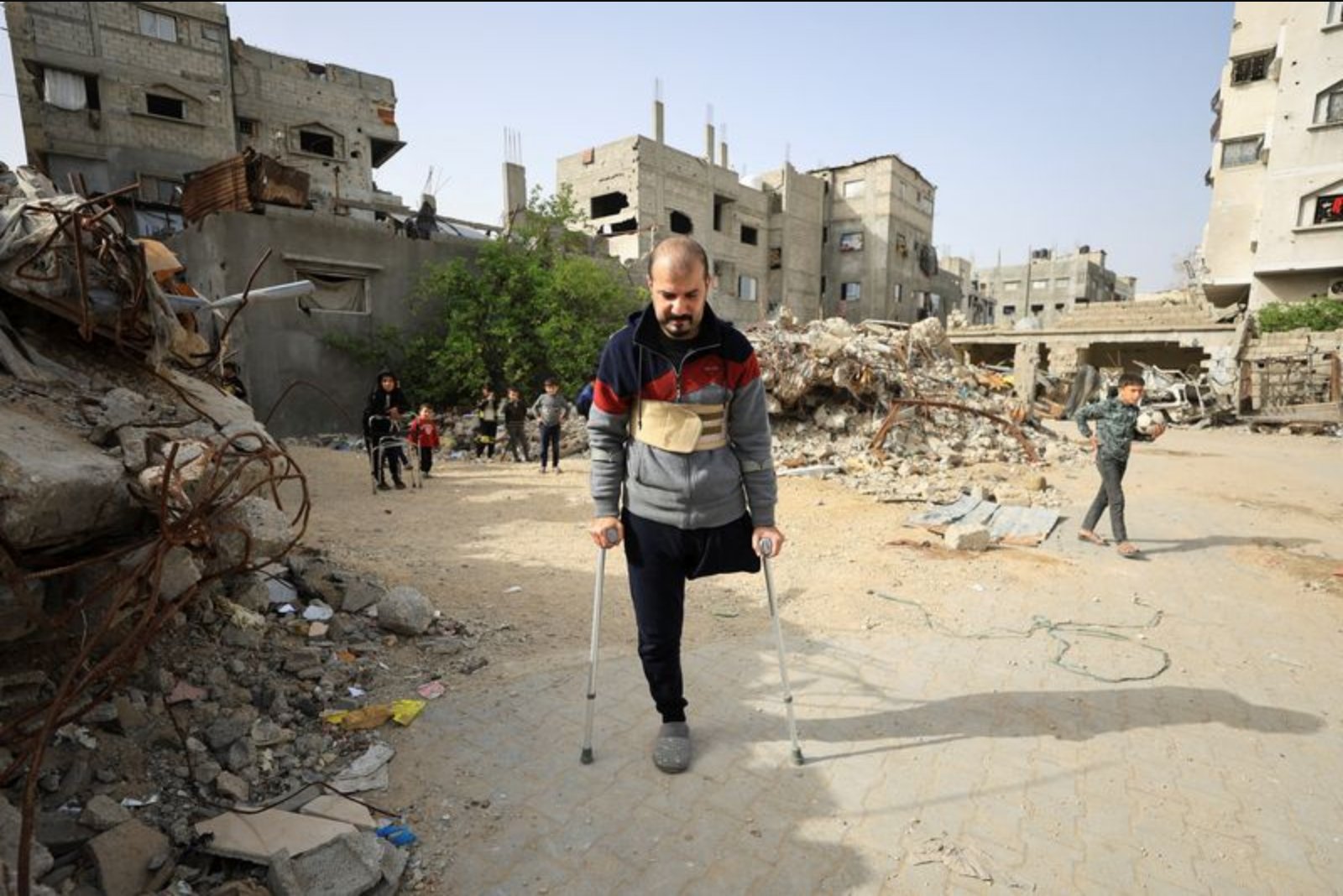
Three other amputees interviewed in Gaza described how the lack of prostheses has left them unable to resume everyday activities. Some are on waiting lists, and a portion have undergone preparatory procedures such as stump revisions, a surgery to refine the shape of the residual limb in anticipation of a prosthesis. Among them is Hazem Foura, a 40-year-old former office worker who lost his left leg above the knee in December 2024 when he says his home was bombed. "I am not asking for the luxuries of life, I am asking for a limb so I can regain my humanity," he said.
Medical staff say the shortage of prostheses not only undermines physical rehabilitation but also prolongs psychological trauma. Many patients, they add, might have avoided limb loss if more specialist surgeons had been available. In addition, ongoing hostilities continue to endanger civilians; Palestinian health officials report that 750 Palestinians have been killed by attacks since the ceasefire.
Some restrictions have eased for particular items such as wheelchairs since the ceasefire, humanitarian organizations report, yet navigating Gaza’s rubble-strewn roads remains a practical obstacle for people with mobility impairments. The combination of damaged infrastructure and limited equipment constrains access to health services across the territory.
International and local organizations have called attention to the discrepancy between ceasefire pledges and on-the-ground realities. The ceasefire agreement and an associated 20-point plan put forward by U.S. political actors envisioned the sustained flow of humanitarian, commercial and medical supplies and the reopening of the Rafah crossing to facilitate passage out of the enclave. In practice, medical evacuations - including for amputees - have been irregular and small in number.
The Trump-led Board of Peace, which has aimed to expand aid into Gaza, issued a statement emphasizing the severity of hardships faced by amputees and other patients in the territory. It described these as "urgent civilian needs" and said restrictions and delays are addressed regularly with the relevant authorities. The board added that there are "significant guarantees and commitments that these restrictions will be eased and eliminated as armed parties agree to decommission their weapons and hand over authority to a Palestinian technocratic government in Gaza."
For many families, the lack of prosthetic services compounds a broader collapse of livelihoods and prospects. Parents of injured children confront not only the medical task of securing a limb but also the longer-term challenge of maintaining follow-up care in an environment where technical staff and supplies are scarce.
Heba Bashir, prosthetic and orthotic technical officer for Humanity & Inclusion, summed up the stakes: "The amputation itself is not just a lost limb, it’s lost hope, it’s lost independence. For the kids, it means losing their future."
Key sectors affected: healthcare and rehabilitative services, medical supply logistics, humanitarian aid operations.